Opening a clothing boutique is an exciting business opportunity, but success requires careful planning. From choosing the right products and location to designing your store, every decision can affect your business.
Without proper preparation, boutique owners may face high startup costs, inefficient store layouts, unsuitable display fixtures, and inventory challenges. These issues can affect customer experience and profitability.
This guide explains how to open up a clothing boutique business in 10 practical steps, covering market research, business planning, budgeting, boutique interior design, clothing store fixtures, and marketing to help you create a functional and attractive fashion boutique.
1. Research Your Target Market
Before opening a clothing boutique, research your target customers, local competitors, and market demand. Understanding customer demographics, fashion preferences, shopping habits, and spending power helps you select suitable clothing categories and pricing strategies.
Competitor research is equally important. Visit nearby boutiques, fashion retailers, and shopping malls to compare their product selections, store layouts, pricing, and customer experiences. Identifying gaps in the market can help you develop a boutique that stands out from competitors.
Focus on these key areas:
- Target Customers: Identify customer demographics, fashion preferences, and spending habits.
- Market Demand: Research popular clothing categories and seasonal trends.
- Competitor Analysis: Compare nearby boutiques, pricing, merchandise, and store designs.
- Pricing Strategy: Set prices based on product costs, customer expectations, and profit margins.
- Shopping Preferences: Understand customer expectations for product quality, service, and shopping experience.
Market research also helps determine your boutique’s design direction. For example, a premium fashion boutique may require spacious displays and elegant finishes, while a casual clothing store boutique may benefit from flexible garment racks and higher merchandise capacity.
2. Define Your Boutique Concept and brand identity
A clear boutique concept helps differentiate your business from competitors and attract the right customers. Decide whether your store will specialize in women’s clothing, men’s fashion, luxury apparel, streetwear, or other categories. Your boutique concept should also consider product pricing, customer preferences, and the overall shopping experience.
Develop a consistent brand identity through your logo, store colors, interior design, packaging, and retail display fixtures. For example, a luxury boutique may use elegant glass showcases and metal finishes, while a casual fashion store may prefer adjustable clothing display racks and practical shelving. For clothing chains, standardized store designs and fixtures help maintain brand consistency across multiple locations.
3. Create a Clothing Boutique Business Plan
A detailed business plan provides a foundation for launching and managing your clothing boutique. It helps organize startup investments, estimate operating expenses, establish sales targets, and identify potential business risks.
Your plan should cover both financial and operational requirements. In addition to merchandise and marketing, consider store renovation, boutique interior design, boutique store fixtures, lighting, fitting rooms, and checkout equipment. These investments influence your initial budget and daily store efficiency.
Important elements of a clothing boutique business plan include:
- Startup Budget: Estimate rent, renovation, inventory, display fixtures, and equipment.
- Product Strategy: Plan clothing categories, suppliers, purchasing quantities, and pricing.
- Sales Forecast: Set realistic revenue targets and expected profit margins.
- Marketing Strategy: Plan advertising, social media, and promotional activities.
- Operations Management: Organize staffing, inventory control, and daily store operations.
- Growth Strategy: Consider online sales, additional locations, and future expansion.
A practical business plan should also include a contingency budget for unexpected expenses. This helps retailers prioritize essential investments and maintain sufficient working capital after opening.
4. Register Your Clothing Boutique Business
Before opening your clothing boutique, complete the necessary business registration, tax requirements, licenses, and insurance. These requirements vary depending on your location, business structure, and local retail regulations. Research local requirements early and obtain the necessary permits to avoid legal issues or delays during the store opening process.
You should also establish business banking, accounting procedures, and supplier agreements to support daily operations. If your boutique requires renovation or custom store fixtures, confirm applicable building, fire safety, and accessibility regulations before construction. Proper preparation helps ensure that your store design, fixture installation, and business operations meet local requirements, reducing potential risks and unexpected costs.
5. Choose the Right Boutique Location
Your store location affects customer traffic, rental expenses, brand visibility, and sales potential. Choose a location that matches your target customers, business positioning, and available budget.
Shopping malls, commercial streets, and neighborhood retail centers can all be suitable locations. However, high pedestrian traffic does not always guarantee strong sales. Consider whether nearby customers are likely to purchase your clothing collections and whether the space supports your planned retail environment.
Important factors to consider include:
- Customer Traffic: Choose locations frequently visited by your target audience.
- Store Visibility: Evaluate storefront exposure and window display opportunities.
- Accessibility: Consider parking, public transportation, and pedestrian access.
- Rental Costs: Compare rent, deposits, utilities, and service charges.
- Store Space: Ensure sufficient room for displays, fitting rooms, checkout areas, and storage.
- Lease Conditions: Review renovation restrictions, signage requirements, and permitted uses.
Before signing a lease, confirm that the space can accommodate your planned boutique store layout and clothing store fixtures. Unusual floor shapes, structural columns, and limited storage may increase renovation and customization costs.
6. Plan Your Clothing Boutique Store Layout
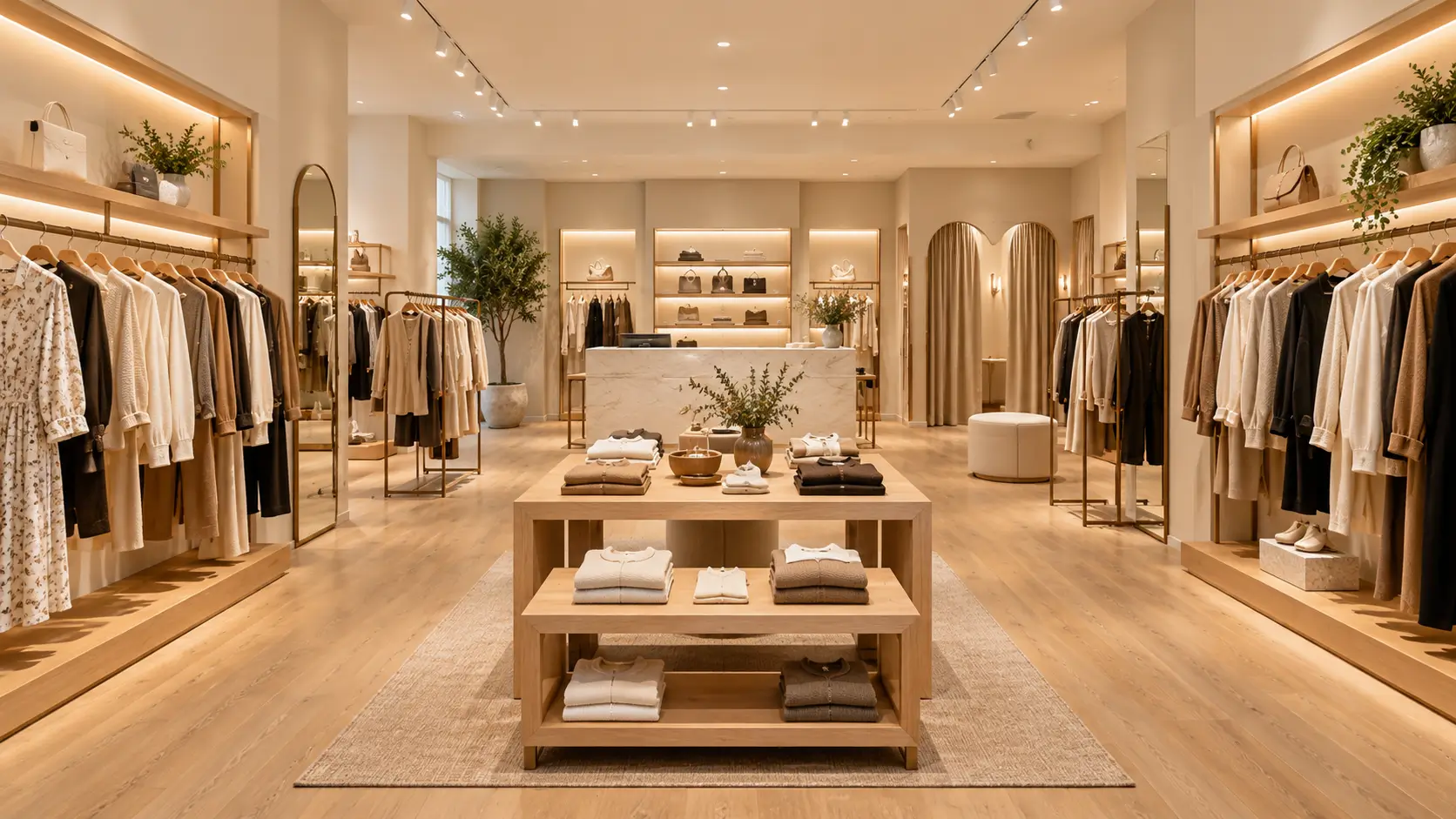
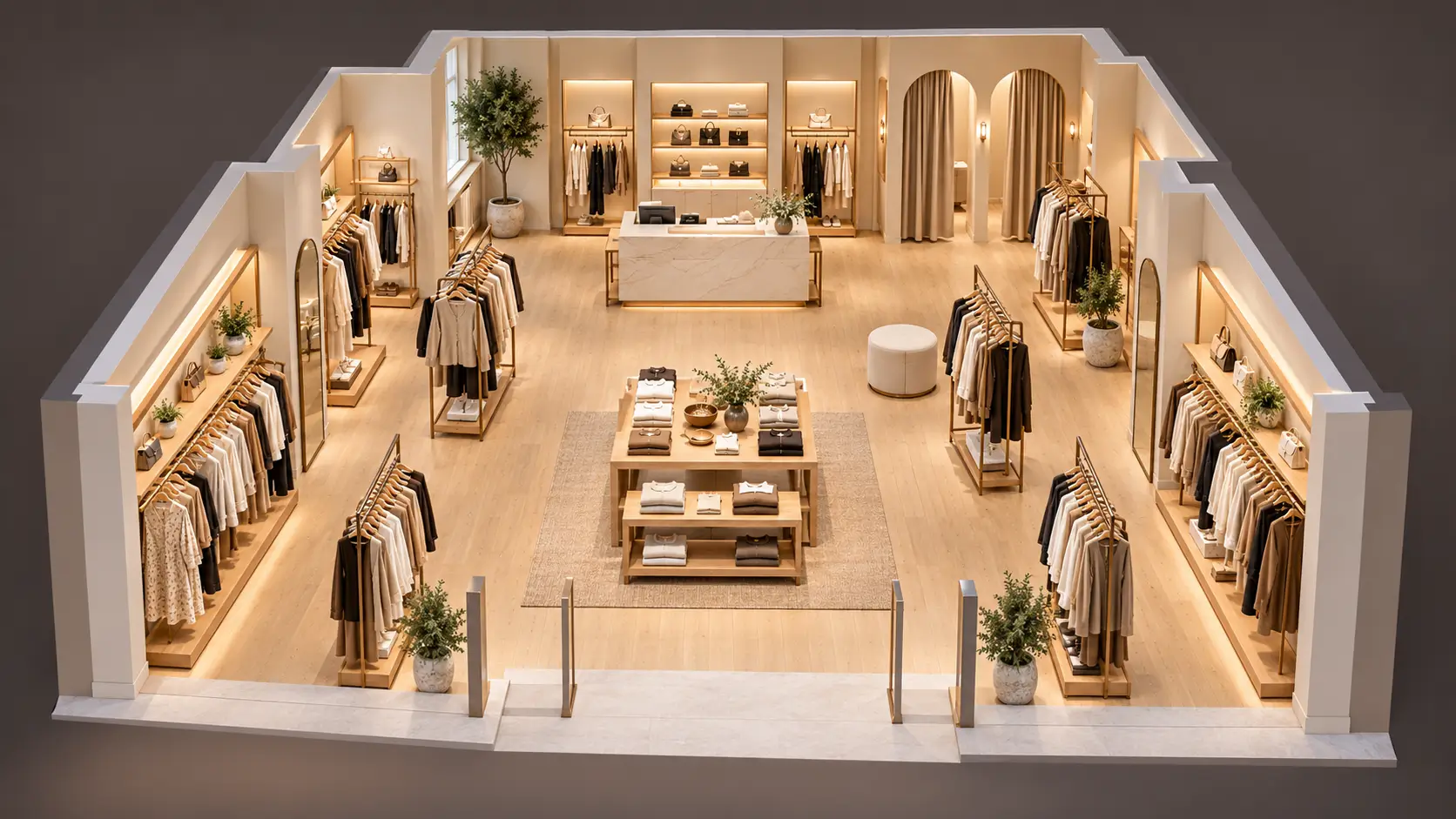
A well-planned boutique store layout improves product visibility, customer movement, and daily operations. Arrange clothing display racks, display tables, fitting rooms, and checkout counters to create a comfortable shopping environment.
small boutiques can use wall-mounted displays and compact furniture to maximize space, while larger fashion boutiques may require separate merchandise zones and promotional displays.
Key areas of a clothing boutique layout include:
- Entrance & Window Displays: Attract customers with mannequins, featured clothing, and seasonal collections.
- Main Clothing Display Area: Organize garment racks, shelving, and displays by product category.
- Promotional Displays: Highlight new arrivals, best-selling products, and seasonal merchandise.
- Fitting Rooms: Provide comfortable changing areas with mirrors, suitable lighting, and privacy.
- Checkout Counter: Position payment and customer service areas for convenient transactions.
- Storage Areas: Reserve space for additional inventory, packaging, and daily operations.
- Customer Flow: Maintain clear walkways and convenient product access.
Modular boutique store fixtures and adjustable shelving allow retailers to update displays for seasonal collections. For clothing chains, standardized layouts support consistent store designs across multiple locations.
7. Choose the Right Clothing Store Display Fixtures
clothing store fixtures help organize merchandise, improve product visibility, and maintain a consistent boutique appearance. Different products require different display solutions, from garment racks for hanging clothes to shelves and display tables for folded collections.
Choosing suitable boutique store fixtures also helps maximize space and improve product presentation. For a clothing boutique women shoppers visit, coordinated displays can highlight dresses, accessories, handbags, and seasonal collections.
Essential Clothing Store Display Fixtures
| Display Fixture | Main Function | Suitable Applications |
|---|---|---|
| Clothing Display Racks | Hang and organize garments | Dresses, shirts, jackets, coats |
| Wall-Mounted Displays | Maximize wall space and product visibility | small boutiques, fashion stores |
| Clothing Display Shelves | Organize folded clothing and accessories | Sweaters, jeans, T-shirts |
| Display Tables | Present featured and folded collections | Central displays, promotions |
| Freestanding Display Stands | Highlight selected merchandise | New arrivals, seasonal collections |
| Glass Display Cabinets | Display and protect premium products | Handbags, jewelry, accessories |
| Checkout Counters | Support payments, service, and storage | Checkout and customer service areas |
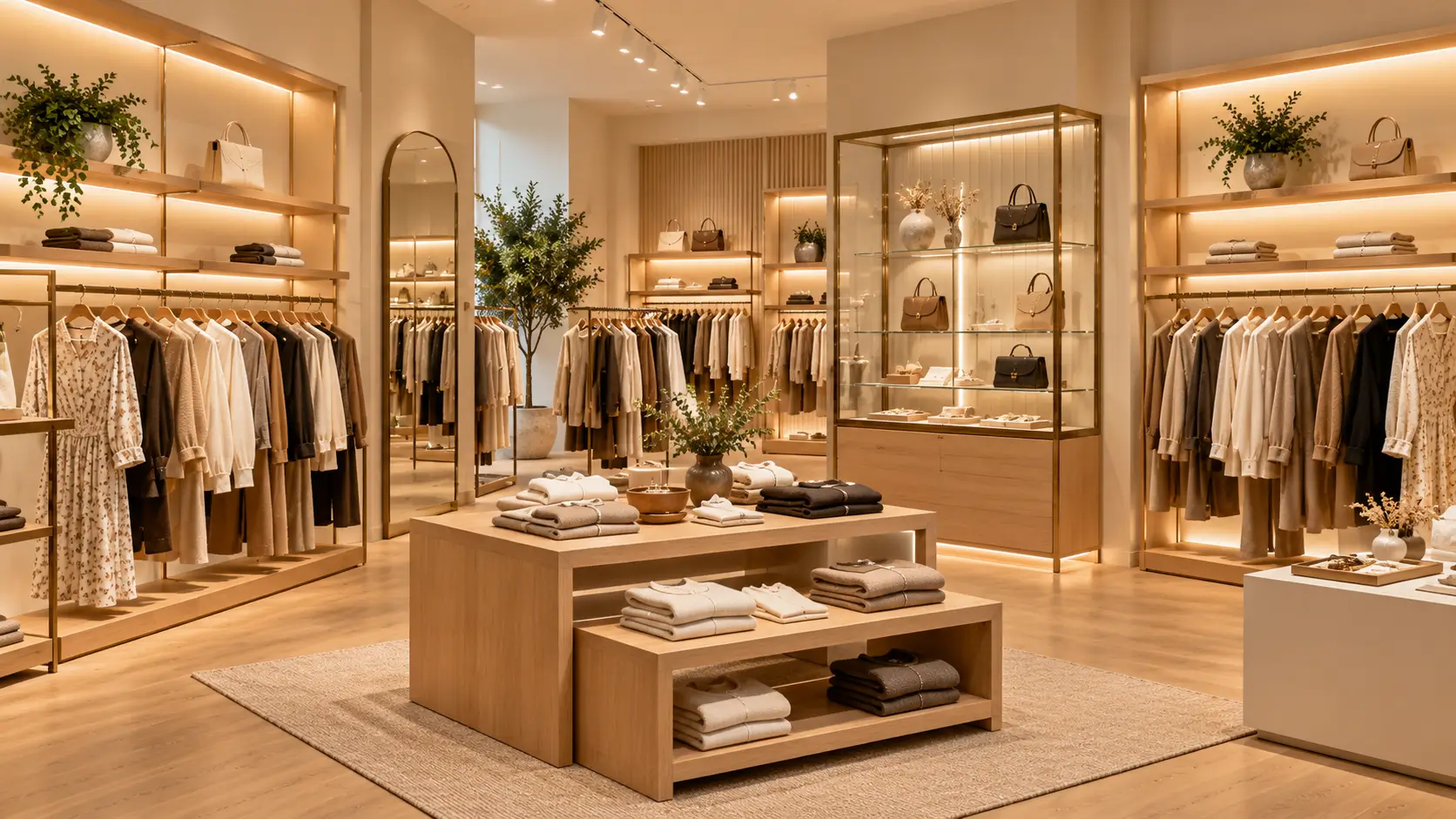
When selecting fixtures, consider dimensions, durability, display capacity, and materials. Custom store fixtures can be tailored in size, materials, finishes, and lighting. Working with a professional store fixtures manufacturer helps retailers create coordinated displays for independent boutiques, clothing chains, and multi-store rollout projects.
8. Design an Attractive Boutique Interior
boutique interior design should reflect your brand identity while creating a comfortable and visually appealing shopping environment. Store colors, lighting, materials, mirrors, and display furniture should complement each other to highlight clothing collections and maintain a consistent appearance.
Lighting and material selection are particularly important in fashion store design. General lighting provides overall visibility, while accent lighting highlights featured products and promotional areas. Durable materials such as metal, MDF, plywood, laminate, and tempered glass can be selected according to design requirements and budget.
Important boutique interior design considerations include:
- Brand Colors: Coordinate interior finishes, furniture, and displays with your brand identity.
- Lighting: Combine general and accent lighting to improve product presentation.
- Materials: Select durable metal, wood-based panels, glass, and suitable surface finishes.
- Space Optimization: Use wall-mounted racks, compact displays, and integrated storage.
- Visual Merchandising: Organize clothing collections and create attractive focal points.
- Customer Comfort: Provide comfortable walkways, suitable mirrors, and fitting rooms.
For premium boutiques, customized metal finishes, glass showcases, and integrated lighting can create a sophisticated retail atmosphere. Smaller stores can use modular custom clothing store fixtures to improve functionality without overcrowding the interior.
9. Source Clothing Products and Manage Your Budget
Reliable suppliers and careful budget planning are essential when opening a clothing boutique. Compare product quality, wholesale pricing, minimum order quantities, and delivery schedules before placing orders.
Prepare a complete startup budget covering merchandise, renovation, clothing store fixtures, equipment, marketing, and operating expenses.
Clothing Boutique Startup Budget
| Cost Category | Main Expenses |
|---|---|
| Business Registration | Licenses, permits, insurance |
| Store Rental | Deposits, monthly rent, utilities |
| Interior Design & Renovation | Flooring, lighting, walls, decoration |
| clothing store fixtures | Garment racks, shelving, display tables, counters |
| Opening Inventory | Clothing, accessories, seasonal collections |
| Store Equipment | POS systems, security equipment, payment devices |
| Branding & Marketing | Signage, packaging, advertising, promotions |
| Logistics & Installation | Transportation, delivery, fixture installation |
| Working Capital | Staff wages, inventory replenishment, operating expenses |
Prioritize durable retail display fixtures that match your store layout, merchandise, and budget. When purchasing imported custom store fixtures, consider material selection, shipping, customs duties, and installation costs. Comparing complete supplier quotations can help control your overall investment.
10. Market Your Boutique and Prepare for Opening
A well-planned marketing strategy helps attract customers and build brand awareness before opening day. Use social media, local advertising, product photography, and promotional campaigns to showcase your fashion boutique, clothing collections, and store interior.
Before opening, ensure your boutique is ready for daily operations. Completing store renovation, fixture installation, merchandise organization, and staff training in advance helps create a smooth opening and a positive customer experience.
Before opening, complete these preparations:
- Store Preparation: Finish renovation, cleaning, signage, and interior decoration.
- Fixture Installation: Install and inspect clothing display racks, shelves, tables, and counters.
- Product Merchandising: Organize clothing collections, pricing labels, and promotional displays.
- Inventory Management: Confirm stock quantities and product information.
- Technology Setup: Test POS systems, payment equipment, and inventory software.
- Staff Training: Prepare employees for customer service and daily operations.
- Opening Promotions: Announce opening dates, special offers, and marketing campaigns.
For boutiques requiring custom clothing store fixtures, coordinate fixture production, quality inspection, shipping, and installation with your store renovation schedule. Confirming these arrangements early helps avoid delays and ensures your retail displays are ready for merchandise setup before opening day.
In Conclusion
Learning how to open up a clothing boutique business requires careful planning, from market research and budgeting to store design and marketing. Choosing the right clothing store fixtures, creating a functional boutique store layout, and maintaining consistent branding can help retailers build attractive stores that support customer experience and long-term growth.
FAQ
1. How Much Does It Cost to Open a Clothing Boutique?
Costs depend on store size, location, inventory, renovation, and clothing store fixtures. small boutiques may require tens of thousands of dollars, while larger stores with customized interiors can cost considerably more.
2. What Equipment Do You Need to Open a Clothing Boutique?
Essential equipment includes garment racks, shelving, display tables, mirrors, fitting room fixtures, checkout counters, and POS systems. Custom clothing store fixtures and glass display cabinets can provide additional display options for premium clothing and accessories.
3. How Long Does It Take to Open a Clothing Boutique?
Opening timelines depend on registration, renovation, inventory sourcing, and fixture production. Small stores with minimal renovation may open relatively quickly, while larger retail shopfitting projects can take several months.
Custom clothing store fixtures for Your Boutique Project
Planning to open a fashion boutique, renovate a clothing store, or expand a retail chain? ONI Shopfitting is a professional store fixtures manufacturer specializing in custom clothing store fixtures, including garment racks, wall displays, shelving, display tables, glass showcases, and checkout counters. We support independent boutiques, clothing chains, and multi-store rollout projects.
Our one-stop retail shopfitting services cover layout review, 3D design, material selection, manufacturing, quality inspection, and worldwide delivery. Contact ONI Shopfitting to discuss your store requirements and request a customized quotation.
 Get in touch with us today to start your project.
 WhatsApp/Call: +86 186 2096 3396
 Email: sales1@onishopfitting.com
 Factory Location: Guangzhou, China