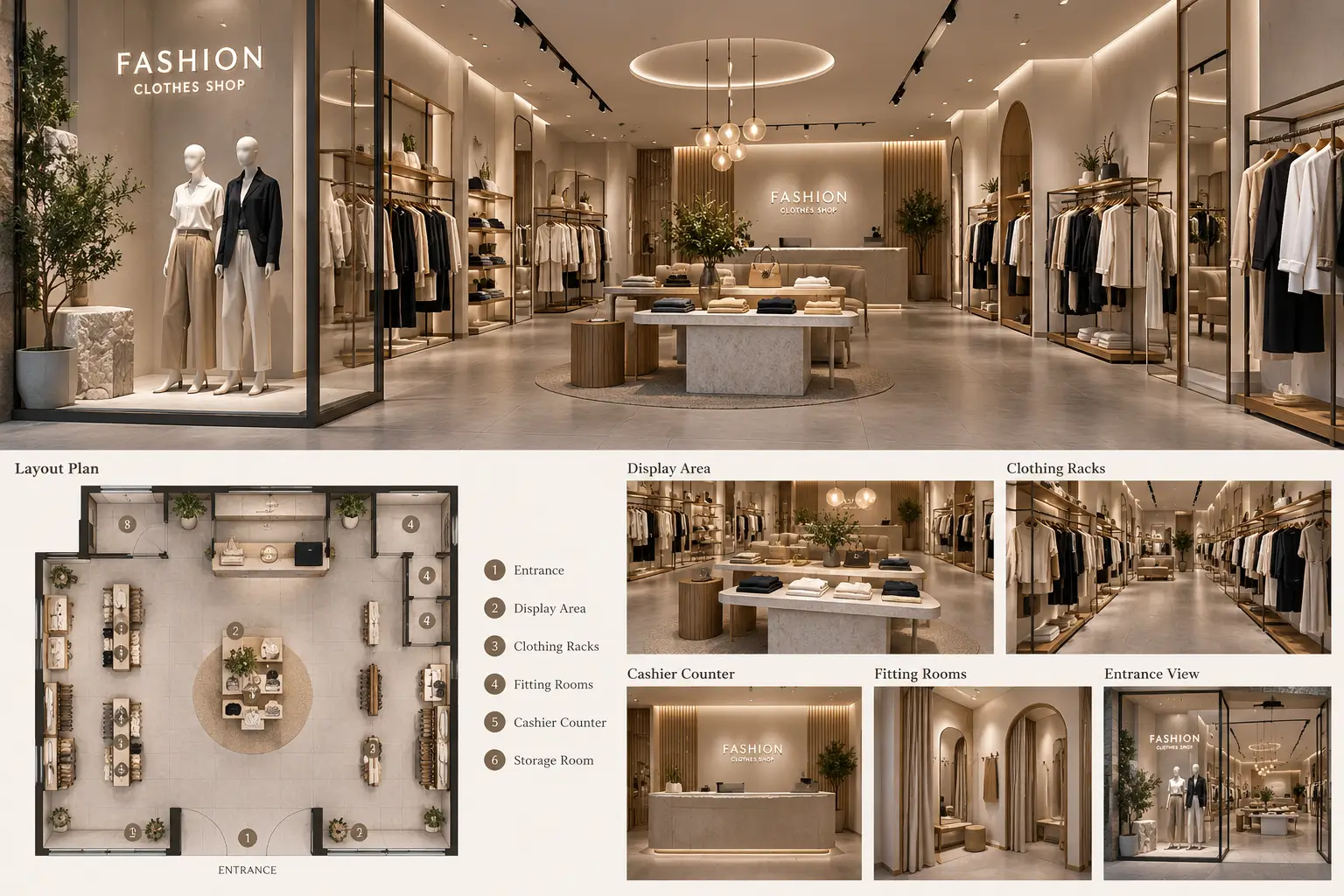
Clothes shop interior design plays an important role in creating an attractive, functional, and comfortable retail environment. A well-designed clothing store helps retailers organize merchandise, improve customer flow, strengthen brand identity, and present clothing collections more effectively. From store layouts and lighting to clothing display racks, shelving, and checkout counters, every element contributes to the overall shopping experience.
Whether you are opening a small clothing boutique, renovating an existing fashion store, or planning a chain store rollout, choosing the right interior design and display fixtures is essential. This guide explores practical clothes shop interior design ideas, layout planning, custom clothing store fixtures, and different retail design concepts to help retailers create a functional and visually consistent retail space.
Why Is Clothes Shop Interior Design Important?
Clothes shop interior design affects how customers experience a store, browse merchandise, and interact with a fashion brand. A practical design should balance appearance, functionality, product presentation, and everyday operations.
- Better Product Presentation: Well-organized clothing racks, shelves, and display tables make different collections easier to browse and compare.
- Improved Customer Flow: A carefully planned layout provides comfortable walking routes and convenient access to merchandise.
- Stronger Brand Identity: Coordinated colors, materials, lighting, and retail fixtures create a recognizable store environment.
- Efficient Space Utilization: Wall-mounted displays, adjustable racks, and multifunctional fixtures help maximize available retail space.
- Flexible Merchandising: Modular display systems allow retailers to update merchandise arrangements for seasonal collections and promotions.
- Better Store Operations: Properly positioned checkout counters, fitting rooms, and storage areas support efficient daily operations.
Clothes Shop Interior Design 10 Ideas
A successful clothes shop interior design combines practical store layouts, attractive merchandise presentation, coordinated materials, and functional display fixtures. The right design should reflect the brand’s identity while providing a comfortable shopping experience and supporting daily retail operations.
The following clothes shop interior design ideas can help retailers plan different areas of a clothing store, improve space utilization, and create a visually consistent retail environment.
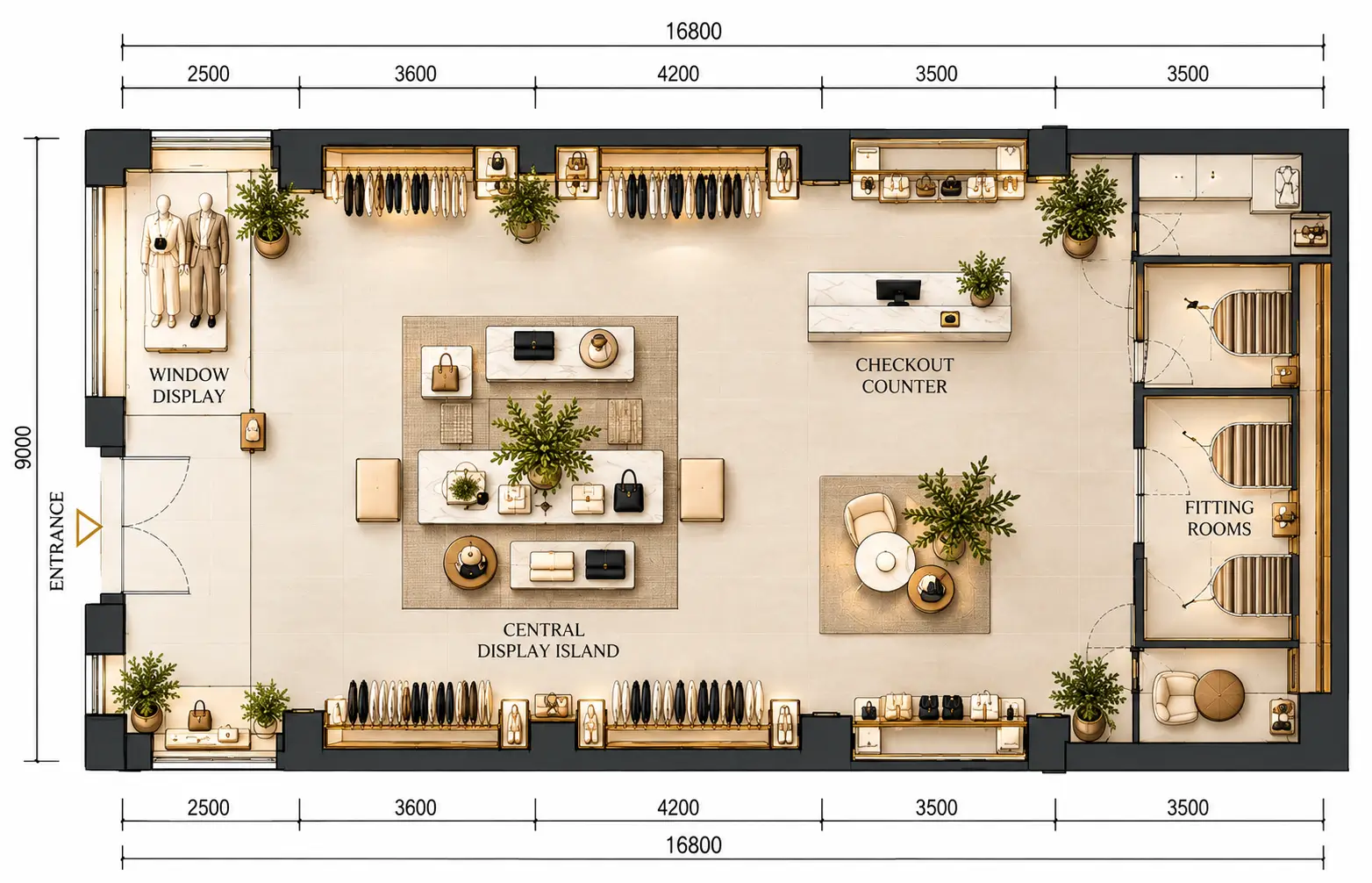
1. Choose the Right Clothing Store Layout
The store layout determines how customers move through the retail space and interact with merchandise. A practical clothing store layout design should consider the store’s dimensions, entrance position, product categories, and display requirements.
Common clothing store layouts include:
- Grid Layout: Uses straight aisles and regularly positioned clothing racks. Suitable for clothing outlets and stores with extensive merchandise ranges.
- Free-Flow Layout: Arranges display fixtures flexibly to create a natural shopping experience. Ideal for fashion boutiques and luxury clothing stores.
- Loop Layout: Creates a main circulation route that guides customers through different merchandise sections. Suitable for medium-sized and large fashion stores.
- Mixed Layout: Combines wall-mounted displays, freestanding racks, and flexible merchandising areas to accommodate different product categories.
The most suitable layout depends on the store format, available floor space, customer flow, and merchandising needs.
2. Create an Attractive Store Entrance and Window Display
The entrance and window display are among the first elements customers notice. An attractive storefront helps communicate the brand’s identity and introduces the clothing collections available inside.
Use mannequins, coordinated lighting, seasonal collections, and selected decorative elements to create an appealing entrance. Avoid overcrowding the space with excessive merchandise or oversized display fixtures.
A well-designed entrance should also provide a clear view into the store and encourage customers to explore different product areas.
3. Develop a Consistent Brand Identity
Clothing store interior design should reflect the brand’s positioning, target customers, and overall visual identity. Colors, materials, lighting, display fixtures, and decorative elements should work together to create a recognizable shopping environment.
For example, luxury fashion stores may use premium surface finishes, decorative metal structures, and carefully controlled lighting. Casual fashion retailers may prefer practical shelving, modular clothing racks, and flexible display arrangements.
For chain clothing stores, standardized fixture designs, materials, and finishes help maintain brand consistency across multiple retail locations.
4. Use Wall Space for Clothing Displays
Wall-mounted clothing displays help retailers maximize vertical space while maintaining open circulation areas. They are particularly useful for smaller clothing stores where efficient space utilization is essential.
Custom wall display systems can combine hanging rails, adjustable shelves, decorative panels, mirrors, and integrated lighting. Different configurations can accommodate shirts, jackets, trousers, folded garments, and fashion accessories. Using coordinated wall fixtures also helps create a clean and organized appearance throughout the store.
5. Create Eye-Catching Feature Displays
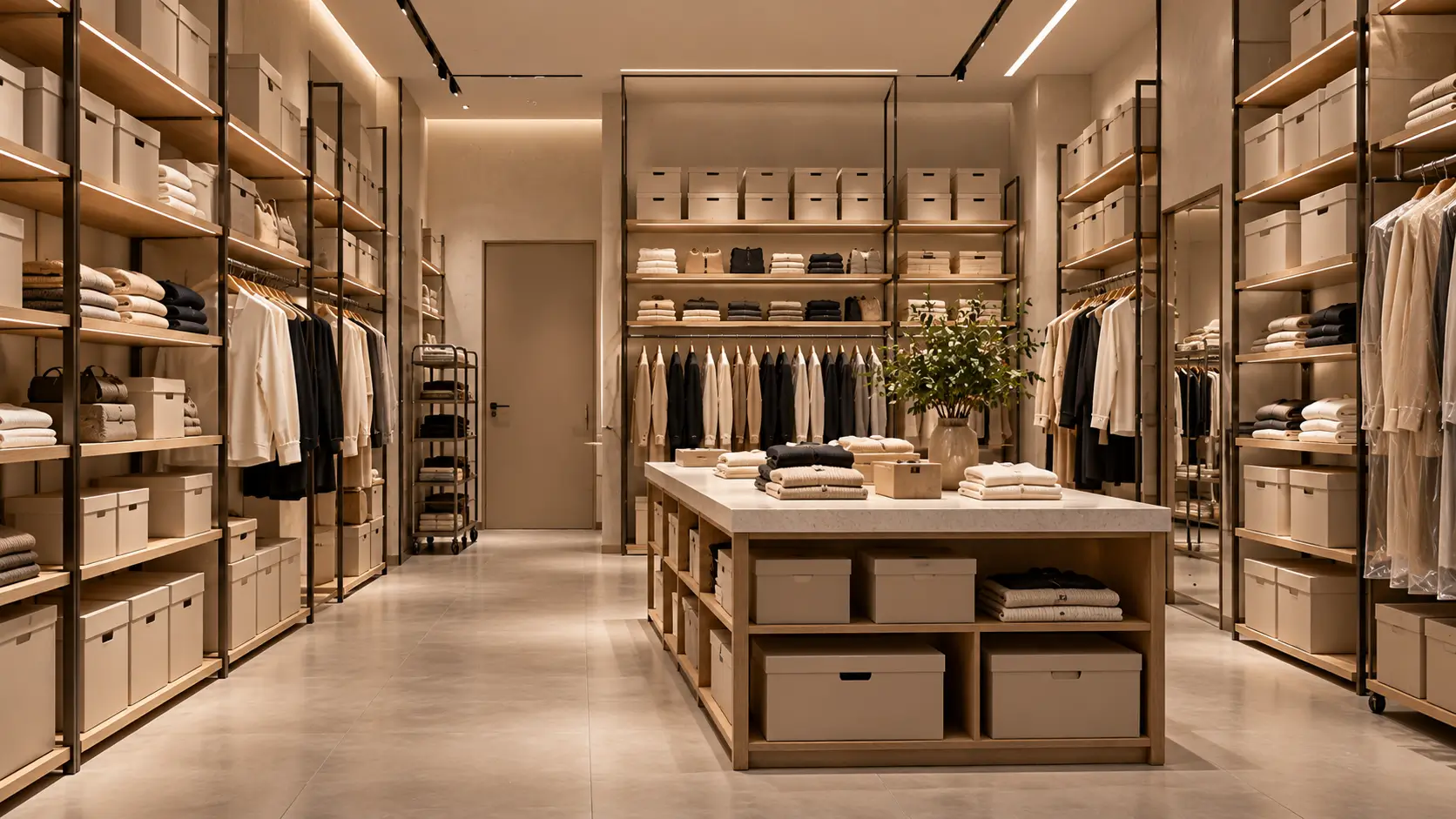
Feature displays help highlight new arrivals, seasonal collections, promotional products, and selected merchandise. They create visual focal points that encourage customers to explore specific clothing collections.
Freestanding clothing display racks, mannequins, display tables, and custom retail display stands can be positioned near entrances, along main walking routes, or within designated promotional areas. These fixtures should be flexible enough to accommodate different product arrangements as merchandise changes throughout the year.
6. Choose Suitable Colors and Materials
Colors and materials influence the overall atmosphere of a clothing store. A coordinated combination of wall finishes, flooring, furniture, and retail fixtures helps create a consistent visual identity.
Wood finishes can provide a warm and natural appearance, while metal structures and neutral colors support modern and minimalist clothing store interior design. Glass, mirrors, and decorative surfaces can also be incorporated into selected display areas. When choosing materials for custom clothing store fixtures, retailers should consider appearance, durability, maintenance requirements, and budget.

7. Plan Effective Lighting for Merchandise Displays
Lighting is an important element of clothes shop interior design because it affects product visibility, clothing colors, and the shopping atmosphere.
General lighting provides overall illumination, while accent lighting highlights mannequins, feature displays, and selected merchandise. Adjustable spotlights and track lighting can accommodate changing clothing collections. Custom clothing store display cabinets and wall fixtures may also incorporate LED lighting to improve merchandise presentation. Lighting should be positioned carefully to avoid excessive glare and uncomfortable shadows.
8. Maximize Space with Multifunctional Fixtures
Efficient space utilization is especially important for small clothes shop interior design. Multifunctional fixtures can help retailers display more merchandise without overcrowding the sales floor.
For example, a custom display unit may combine clothing hanging rails, adjustable shelving, drawers, and storage compartments. Wall-mounted systems can also reduce the need for additional freestanding furniture. Choosing suitable fixture dimensions and keeping circulation routes clear helps maintain a comfortable and organized shopping environment.
9. Use Modular and Adjustable Display Systems
Fashion merchandise changes frequently throughout the year, making flexibility an important consideration in clothing store interior design. Modular clothing racks, adjustable shelving, and movable display stands allow retailers to update merchandise arrangements for seasonal collections, promotions, and different product categories.
These systems are particularly useful for chain clothing stores and multi-store rollouts, where standardized fixtures can support consistent store presentation and efficient future updates.
10. Organize Products with Clear Merchandise Zoning
Merchandise zoning helps customers locate different clothing categories and makes the store easier to navigate. Products can be grouped according to clothing type, collection, gender, season, or brand concept.
For example, a fashion store may establish separate sections for casual wear, formal clothing, accessories, and new arrivals. Coordinated display racks, shelving, signage, and lighting can help distinguish these areas. A clear merchandising arrangement improves product presentation while maintaining a consistent clothes shop interior design throughout the store.
Custom Clothing Store Fixtures and Display Solutions
Custom clothing store fixtures are essential to clothes shop interior design, helping retailers improve product presentation, maximize space, and create an organized shopping environment. From clothing display racks and shelving to display tables and checkout counters, each fixture supports both functionality and store aesthetics.
At ONI Shopfitting, we provide custom clothing store fixtures for boutiques, fashion retailers, chain stores, and multi-store rollouts. Our solutions can be tailored to your store layout, brand identity, materials, finishes, dimensions, and budget. The table below outlines common clothing store display fixtures, their main functions, and suitable applications in different retail environments.
Display Fixture | Main Function | Suitable Applications |
|---|---|---|
Clothing Display Racks | Hanging and organizing garments for easy browsing | Shirts, dresses, jackets, coats, trousers |
Wall-Mounted Clothing Displays | Maximizing vertical space while keeping floor areas open | Boutiques, fashion stores, compact retail spaces |
Clothing Display Shelves | Organizing and displaying folded garments and accessories | Sweaters, jeans, T-shirts, bags, accessories |
Clothing Display Tables | Presenting folded collections, featured products, and promotional items | Central display areas, seasonal promotions, new collections |
Freestanding Display Stands | Creating flexible merchandising areas and highlighting selected products | New arrivals, promotional zones, seasonal collections |
Clothing Gondola Displays | Providing double-sided product displays in central shopping aisles | Fashion chains, department stores, large clothing retailers |
Glass Display Cabinets | Protecting and presenting premium merchandise with optional lighting and locks | Handbags, watches, jewelry, luxury accessories |
Mannequin Display Platforms | Showcasing complete outfits and creating visual merchandising focal points | Store entrances, window displays, featured collections |
Fitting Room Fixtures | Providing changing areas with mirrors, hooks, seating, and storage | Fashion boutiques, clothing stores, department stores |
Checkout Counters | Supporting payment transactions, customer service, and storage | Cashier areas, service counters, checkout zones |
Storage Cabinets & Drawers | Organizing stock, packaging, and daily retail supplies | Behind-counter storage, stockrooms, fitting room areas |
Modular Clothing Display Fixtures | Allowing flexible layouts and adjustable merchandising configurations | Chain stores, franchise stores, multi-store rollouts |
Window Display Fixtures | Creating attractive storefront presentations to showcase collections | Shopping mall stores, fashion boutiques, branded retail outlets |
Accessory Display Stands | Organizing and highlighting smaller fashion accessories | Belts, scarves, hats, sunglasses, handbags |
Clothes Shop Interior Design Ideas for Different Store Types
Different fashion retailers have different requirements for store layouts, merchandise presentation, decorative materials, and retail display fixtures. The most suitable clothes shop interior design depends on the available space, brand positioning, target customers, and merchandise categories.
- Small Clothes Shop Interior Design: Small clothing stores benefit from compact display racks, wall-mounted shelving, multifunctional fixtures, and strategically positioned mirrors. Maximizing vertical space while keeping circulation routes clear helps maintain a comfortable shopping environment.
- Modern Clothes Shop Interior Design: Modern clothing stores often feature clean lines, minimalist fixtures, neutral colors, and coordinated lighting. Metal clothing racks, wood-based shelving, and modular display systems create a contemporary appearance while supporting practical merchandising.
- Luxury Clothing Store Interior Design: Luxury fashion stores typically emphasize premium materials, spacious displays, refined lighting, and carefully selected decorative elements. Glass display cabinets, metal structures, wood veneer finishes, and custom display furniture help reinforce an upscale brand identity.
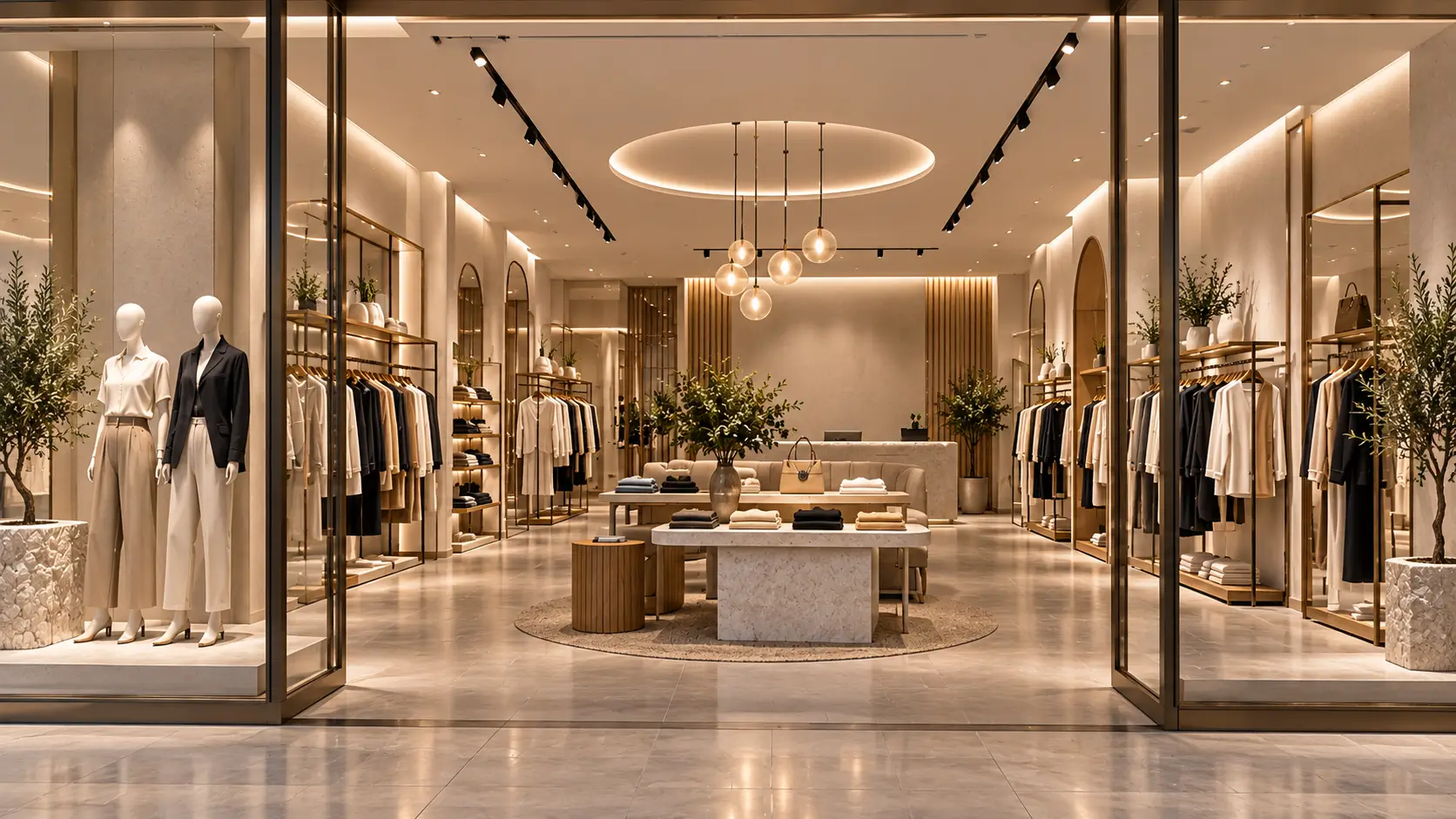
- Boutique Interior Design: Independent boutiques often use distinctive design concepts to reflect their brand personality. Custom clothing display racks, feature tables, decorative finishes, and coordinated checkout counters can create a recognizable shopping environment.
- Casual Fashion Store Interior Design: Casual fashion retailers generally require flexible fixtures that accommodate different garment types, sizes, and seasonal collections. Adjustable racks, modular shelving, and practical display tables help maintain organized merchandise presentation.
- Sportswear and Activewear Store Design: Sportswear stores often feature clearly defined sections for clothing, footwear, and accessories. Metal display structures, wall-mounted shelving, product platforms, and integrated lighting support a functional and modern retail environment.
- Chain Clothing Store Interior Design: Chain fashion retailers require standardized fixtures, consistent materials, coordinated finishes, and practical store layouts. Modular clothing racks, wall displays, and custom checkout counters help maintain brand consistency and support multi-store rollouts.
Common Clothes Shop Interior Design Mistakes to Avoid
Even an attractive clothes shop interior design can create practical problems when layouts, display fixtures, and merchandise requirements are not carefully considered. Avoiding common design mistakes can help retailers improve shopping comfort, product presentation, and long-term store operations.
- Overcrowding the Store with Fixtures: Too many clothing racks, display tables, and shelves can restrict customer movement and create a cluttered appearance. Balance display capacity with comfortable circulation space.
- Choosing an Unsuitable Store Layout: A poorly planned layout can result in inconvenient walking routes and poorly organized merchandise areas. Consider store dimensions, entrance positions, and product categories before selecting a layout.
- Ignoring Product Display Requirements: Different garments require different hanging heights, shelf dimensions, and display arrangements. Select clothing store fixtures based on actual merchandise sizes and presentation needs.
- Using Unsuitable Materials: Choosing materials based only on appearance or initial price may lead to unnecessary maintenance or durability issues. Evaluate structural requirements, expected usage, and surface finishes.
- Poor Lighting Design: Inadequate lighting can affect clothing visibility and create uncomfortable shopping conditions. Coordinate general lighting, accent lighting, and fitting room illumination with the store layout.
- Limited Merchandising Flexibility: Fixed fixtures can make seasonal collection changes difficult. Modular clothing racks, adjustable shelves, and movable display stands provide greater flexibility.
- Insufficient Storage and Checkout Planning: Poorly positioned counters or inadequate storage can interfere with daily operations. Plan these areas according to available space and staff requirements.
- Starting Manufacturing Without Accurate Drawings: Incomplete measurements and unclear fixture specifications can cause production and installation problems. Confirm dimensions, materials, finishes, and construction details before manufacturing.
In Conclusion
Successful clothes shop interior design combines practical layouts, attractive merchandise presentation, coordinated colors and materials, comfortable lighting, and functional retail display fixtures. Whether you are developing a small clothing boutique, a modern fashion store, or a chain retail project, carefully selected clothing display racks, shelves, display cabinets, and checkout counters can create an organized and visually consistent retail environment. By considering design, merchandising, and manufacturing requirements together, retailers can develop durable, flexible, and attractive clothing stores that support their brand and long-term operations.
FAQs About Clothes Shop Interior Design
What Is the Best Interior Design for a Small Clothes Shop?
The best small clothes shop interior design depends on the available space, product categories, and target customers. Wall-mounted clothing racks, compact display tables, mirrors, and multifunctional fixtures can help maximize merchandise presentation while maintaining comfortable customer circulation.
What Display Fixtures Are Commonly Used in Clothing Store Interior Design?
Common clothing store fixtures include hanging racks, wall-mounted shelving, freestanding display stands, display tables, glass display cabinets, mirrors, and checkout counters. Custom fixtures can be manufactured according to store dimensions, merchandise requirements, materials, finishes, and brand preferences.
Can Clothing Store Fixtures Be Customized for Chain Stores and Multi-Store Rollouts?
Yes. Custom clothing store fixtures can be manufactured using standardized dimensions, materials, colors, and construction specifications to maintain consistent store presentation across multiple locations. Modular display systems and coordinated technical drawings can also help simplify manufacturing and installation for chain store projects.
Custom Clothing Store Fixtures for Your Next Retail Project
Planning a new clothing store, renovating an existing boutique, or preparing a chain store rollout? ONI Shopfitting provides custom clothing store fixtures and shopfitting solutions, including clothing display racks, wall-mounted shelving, display tables, glass display cabinets, checkout counters, and coordinated retail fixture systems.
Share your store floor plan, fixture drawings, reference images, product categories, estimated quantities, and target delivery date. Our team will review your requirements and help develop a practical custom clothing store fixture solution and quotation for your retail project.
 Get in touch with us today to start your project.
 WhatsApp/Call: +86 186 2096 3396
 Email: sales1@onishopfitting.com
 Factory Location: Guangzhou, China