Choosing the right custom perfume display stand is about more than creating an attractive product presentation. For fragrance brands and retailers, the display needs to combine brand identity, product visibility, customer interaction, lighting, durability, cleaning, and day-to-day store operations.
A custom perfume display should also fit the actual dimensions of the store, accommodate different bottle sizes and testers, and support the brand’s visual merchandising requirements. For larger retail projects, manufacturing quality, installation, delivery, and consistency across multiple locations are equally important. Whether you are opening a new fragrance boutique, renovating an existing beauty store, or planning a multi-location retail rollout, the right store fixtures can help create a consistent shopping environment while supporting practical merchandising requirements.
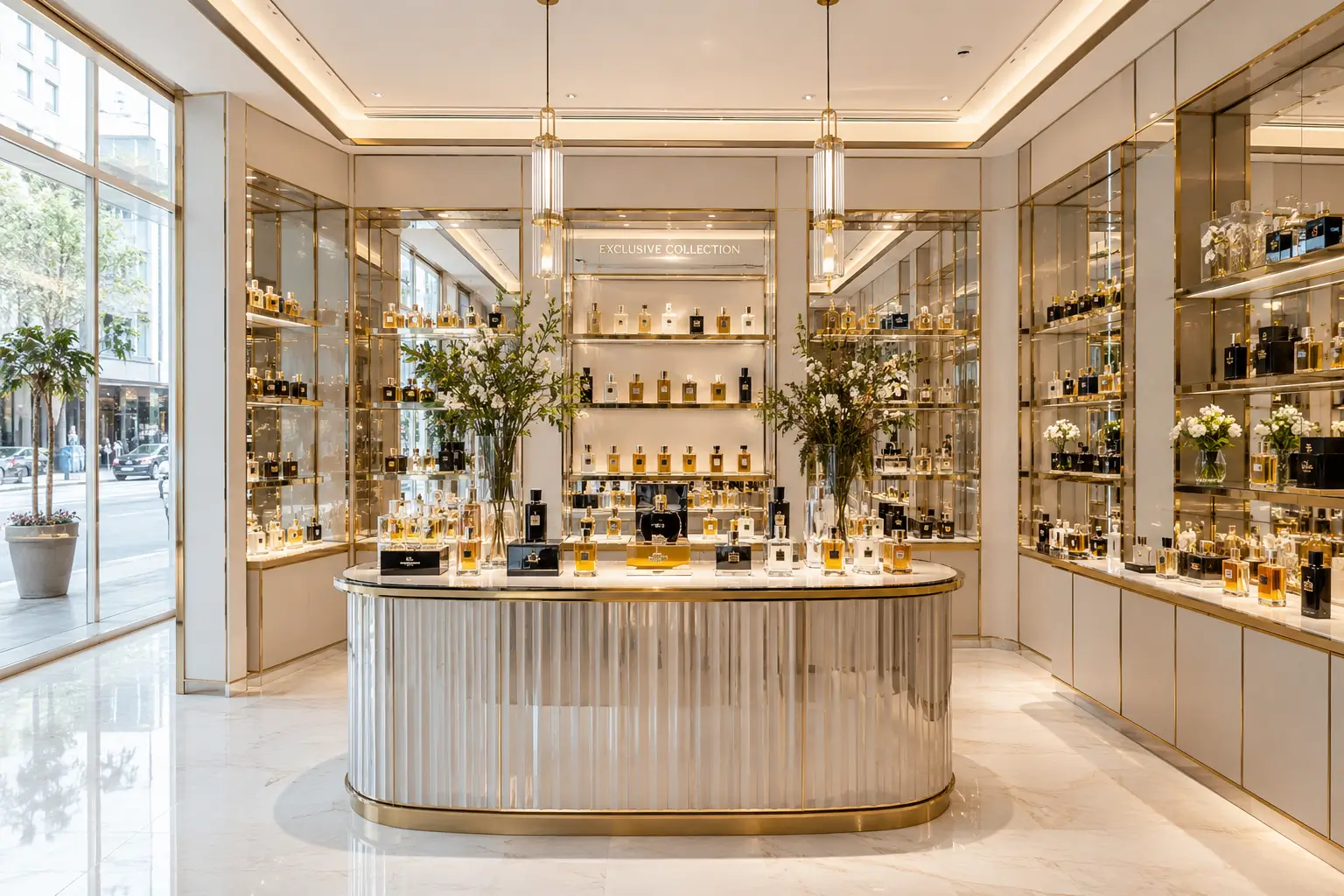
This guide explains the key factors to consider when selecting a custom perfume display stand and how to evaluate display fixtures, materials, lighting, manufacturing capabilities, and suppliers before placing an order.
Define Your Requirements Before Choosing Materials
A good perfume display stand should balance visual presentation and operational performance. It should provide enough space for your perfume collection and testers, make products easy for customers to view and access, support efficient staff replenishment, and fit the available floor and wall space. At the same time, the display may need to incorporate lighting, security features, brand guidelines, and requirements for use across multiple store locations. Defining these practical requirements in advance helps a manufacturer develop a truly customized solution rather than adapting a standard cabinet to your project.
Ask these questions before requesting a quotation:
- How many perfume SKUs need to be displayed?
- What are the dimensions and weight of the bottles?
- How many testers will each display need?
- Will customers have direct access to the products?
- Does the fixture require integrated lighting?
- How often will products be replenished?
- Does the store require lockable or security features?
- How much floor and wall space is available?
- Will the fixture be used in one store or multiple locations?
- Does the design need to follow existing brand guidelines?
Providing this information early allows a manufacturer to develop a more accurate display solution instead of quoting a generic cabinet. It also gives the design and engineering team a clearer basis for determining dimensions, materials, finishes, lighting, storage, security, and other custom features. For larger projects, you may need more than individual display units. A complete custom store fixture solution can help create a more consistent and practical retail space. ONI provides custom retail display solutions designed around brand identity, space constraints, customer experience, and merchandising requirements.
Compare the Main Materials for Perfume Display Stands
Material selection is an important part of customizing a perfume display stand because it affects more than appearance. The right combination of materials can influence product visibility, structural strength, durability, cleaning requirements, brand presentation, and overall project cost.
Instead of asking which material is simply the “best,” consider which material is most suitable for each part of the display and how different materials can work together to meet your store’s functional and aesthetic requirements.
- Glass
Glass is a popular choice for perfume displays because it provides excellent product visibility while creating a clean and premium appearance. It can be used for shelves, cabinet doors, display panels, and enclosed showcases, allowing customers to see fragrance products clearly. Glass also works well with integrated LED lighting, although reflections, fingerprints, cleaning requirements, and safety specifications should be considered during the design process.
- Acrylic
Acrylic is a lightweight and flexible option for product risers, trays, dividers, holders, and other merchandising components. It can be customized into different shapes, sizes, and configurations, making it useful for creating visually lightweight product displays. However, Acrylic can be more susceptible to scratching than some other materials, so its suitability should be evaluated according to the expected level of customer contact and cleaning frequency.
- Metal
Metal can provide the structural strength required for custom perfume displays while adding a refined or contemporary visual element. It can be used for frames, supports, trims, shelving structures, and decorative details. Depending on the brand’s requirements, Metal can be finished in different colors, textures, or surface treatments to complement the overall store design.
- MDF, Plywood and Wood-Based Materials
MDF, plywood, and other wood-based materials are suitable for the main structure of larger custom perfume cabinets and retail fixtures. They offer considerable flexibility in terms of dimensions, shapes, and finishes, including paint, laminate, veneer, and other decorative treatments. These materials can also be combined with glass and metal to create a substantial yet visually refined display.
- Combining Multiple Materials
Custom perfume displays often benefit from using several materials rather than relying on a single option. Glass can maximize product visibility, metal can provide structural support, wood-based materials can form the main cabinet body, and acrylic can be used for lightweight merchandising elements. A well-planned combination allows the display to achieve the right balance between brand aesthetics, functionality, durability, and budget.

Lighting Is Part of the Display Specification
Lighting should be considered as part of the perfume display specification rather than added after the fixture has already been designed. Because perfume bottles often feature transparent glass, reflective caps, metallic details, colored liquids, and printed labels, the wrong lighting position can create glare and reduce product visibility. Here are some key points to consider when planning retail lighting:
- LED Integration
Consider integrating LED lighting directly into shelves, side panels, top panels, niches, or back panels to create a cleaner appearance and more consistent product illumination.
- Product Visibility
Lighting should highlight the perfume bottle, packaging, and label without creating excessive reflections or bright spots that make the product difficult to view.
- Color Temperature
Choose a color temperature that complements the brand identity and the atmosphere of the store. Different fragrance brands may require different lighting moods depending on their positioning.
- Glare Control
Pay attention to the relationship between LED positions, glass surfaces, bottle shapes, and customer viewing angles. Increasing brightness is not always the best way to improve product visibility.
- Lighting Consistency
For brands with multiple stores, consistent LED specifications and installation methods can help maintain a similar visual presentation across different locations.
- Maintenance Access
Make sure LED drivers, wiring, and replaceable components can be accessed when maintenance is required without unnecessarily dismantling the entire display.
- Electrical Integration
Lighting requirements should be coordinated with the fixture structure and the store’s electrical plan before production begins.
- Product Highlighting
Lighting can also be used to create visual hierarchy by drawing attention to hero products, new launches, premium collections, or specific fragrance categories.
Consider Cleaning and Daily Store Operations
A perfume display stand may look impressive when first installed, but its real performance depends on how well it functions during everyday retail operations. Perfume stores typically experience frequent customer interaction, fingerprints, dust, fragrance residue, and occasional spills. Materials and finishes should therefore be selected with regular cleaning and maintenance in mind.
The display should allow staff to clean shelves, product surfaces, tester areas, and glass panels efficiently without damaging the finish. Easy access to frequently touched areas can reduce maintenance time and help the display maintain a premium appearance throughout its service life.
Daily operations should also influence the design. Staff need to be able to replenish products, replace testers, rearrange merchandise, and maintain lighting or electrical components without unnecessarily complicated disassembly. For a custom fixture, these practical considerations should be incorporated into the engineering process before production.
Five Key Purchasing Factors for Custom Perfume Display Stands
Choosing a custom perfume display stand is also a supplier evaluation decision. Two manufacturers may offer visually similar products while providing very different levels of engineering, materials, quality control, logistics, and installation support.
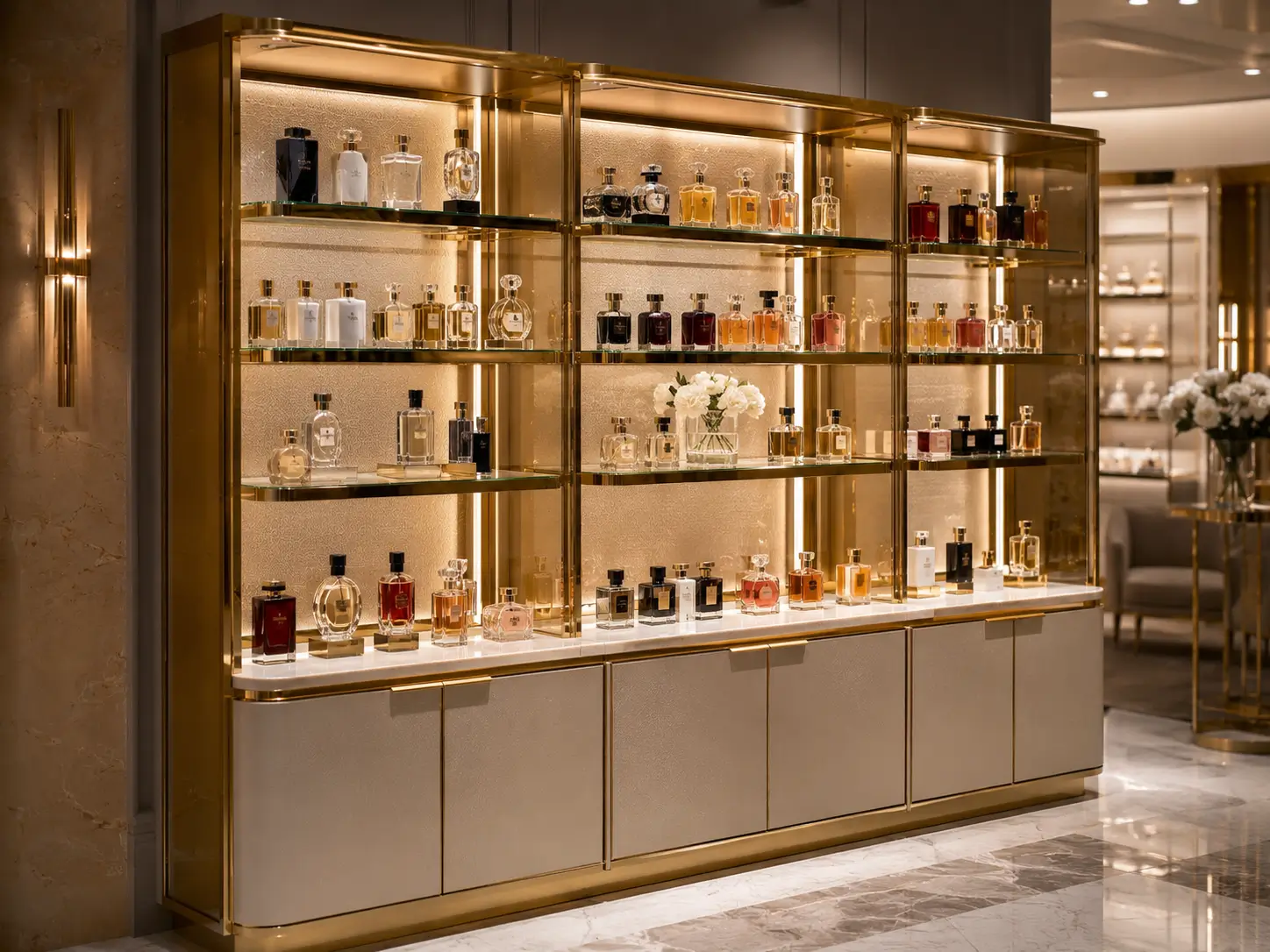
Before comparing quotations, consider the following five factors as part of the overall purchasing evaluation.
1. Material and Finish Specifications
The quotation should clearly define the materials, thicknesses, surface finishes, colors, glass specifications, metal finishes, hardware, and other important components included in the display. Avoid comparing suppliers based only on descriptions such as “premium quality” or “high-quality materials.” For customized retail projects, approved material samples and finish references can help ensure that the final production matches the intended design. When comparing retail store fixture suppliers, a clear material specification also makes different quotations easier to compare on a like-for-like basis.
2. Dimensions and Product Capacity
A custom display should be designed around the actual perfume products rather than generic shelf dimensions. Confirm the number of SKUs, bottle dimensions, shelf spacing, tester quantities, storage requirements, and overall fixture dimensions. If your product collection changes frequently, also consider whether adjustable shelves or flexible merchandising components can provide greater long-term value. These details are especially important when developing custom store fixtures for brands with multiple product collections.
3. Lighting and Electrical Integration
If lighting is required, make sure it is included in the technical specification and quotation from the beginning. Confirm the LED position, color temperature, power requirements, wiring method, driver location, maintenance access, and compatibility with the store’s electrical system. Proper planning can prevent costly modifications during installation and help ensure that the finished display fixtures deliver consistent product illumination.
4. Manufacturing and Quality Control
Manufacturing capability is particularly important for custom retail fixtures because the final product needs to match approved drawings, materials, finishes, and dimensions. Evaluate the supplier’s design and engineering capabilities, production experience, material inspection procedures, sample approval process, finished-product inspection, and packaging standards. For multi-store projects, also consider how the manufacturer maintains consistency across different production batches. A capable custom display cabinet manufacturer should be able to connect design development with engineering, production, quality control, and delivery rather than treating each stage as an isolated process.
5. Delivery and Installation Capability
Delivery and installation can have a significant impact on the total project cost and schedule, especially for international retail projects. Confirm production lead times, packaging methods, shipping responsibilities, assembly requirements, installation support, and after-sales service. A supplier capable of coordinating design, manufacturing, quality control, logistics, and installation can simplify project management and reduce communication gaps between different contractors. ONI’s retail fixture service covers the project from design and manufacturing through inspection, transportation, installation, and maintenance.
Common Mistakes When Buying Perfume Display Stands
Custom perfume displays involve many decisions, and mistakes made during the purchasing stage can become expensive once production has started. The following table summarizes common problems and more effective approaches.
| Common Mistake | Why It Causes Problems | Better Approach |
|---|---|---|
| Choosing a display based only on appearance | A visually attractive display may not provide enough product capacity, tester space, or staff access. | Evaluate appearance together with functionality, capacity, accessibility, maintenance, and daily store operations. |
| Designing before measuring the store | The finished fixture may not fit the available wall or floor space or may interfere with customer circulation. | Provide accurate floor plans, wall dimensions, ceiling heights, and relevant site conditions before approving the design. |
| Not considering perfume bottle dimensions | Different perfume bottles can vary considerably in height, width, depth, and weight. | Provide actual product dimensions and design shelf spacing, supports, and compartments around the product range. |
| Underestimating tester space | Customers may struggle to test and compare fragrances, particularly during busy periods. | Allocate dedicated tester areas and consider space for blotter strips, product information, and cleaning. |
| Adding lighting too late | Retrofitting LEDs can result in exposed wiring, structural changes, or difficult maintenance. | Plan lighting, wiring, drivers, and access points together with the fixture design from the beginning. |
| Using too many reflective surfaces | Excessive glass and glossy finishes can create reflections that make labels and products difficult to see. | Balance reflective and matte finishes according to lighting conditions and customer viewing angles. |
| Ignoring daily cleaning | Fingerprints, dust, and fragrance residue can quickly make a premium display look poorly maintained. | Select practical, easy-to-clean surfaces and ensure staff can easily access frequently touched areas. |
| Focusing only on unit price | A low fixture price may exclude engineering, packaging, shipping, installation, or other project costs. | Compare the complete scope and total project cost instead of comparing unit prices alone. |
| Approving production without detailed drawings | Misunderstandings about dimensions, materials, colors, or construction details can become expensive after production begins. | Approve 3D visuals, technical drawings, materials, finishes, and key specifications before mass production. |
| Not checking manufacturing capabilities | A supplier may produce a sample successfully but struggle with larger quantities or consistent multi-store production. | Evaluate factory capacity, quality-control systems, previous retail projects, and experience with larger rollouts. |
| Ignoring packaging and transportation | Glass and customized fixtures can be vulnerable to damage during international transportation. | Confirm protective packaging, loading procedures, inspection processes, and shipping responsibilities before production. |
| Treating installation as an afterthought | Complex displays may contain glass, lighting, electrical components, and multiple structural parts that require proper assembly. | Plan installation during the engineering stage and clearly define installation responsibilities. |
| Not planning for future product changes | Fixed shelf configurations may become inefficient when product collections or bottle sizes change. | Consider adjustable shelves, modular components, or flexible merchandising areas where appropriate. |
| Selecting materials without considering the brand environment | The finished fixture may look good independently but fail to integrate with the wider store design. | Match materials, colors, finishes, lighting, proportions, and detailing to the overall brand guidelines. |
| Comparing suppliers without checking service scope | Two quotations may appear similar while covering very different levels of design, manufacturing, QC, logistics, and installation. | Compare the complete service scope from design and engineering through production, inspection, delivery, installation, and support. |
In Conclusion
Choosing the right custom perfume display stand means considering more than appearance and price. The fixture should match your brand style while supporting product display, tester use, lighting, cleaning, restocking, durability, and daily operations. For custom projects, it is also important to evaluate materials, dimensions, manufacturing quality, packaging, delivery, and installation, as well as whether the supplier can provide complete support from design and engineering to production, quality control, logistics, and installation.
FAQ About Perfume Display Stands
What is the best material for a custom perfume display stand?
There is no single best material for every perfume display. Glass is useful for product visibility, metal provides structural strength and refined detailing, while MDF, plywood, or other wood-based materials can provide the main cabinet structure and a wide range of finishes. Acrylic can also be used for lightweight product holders, risers, and merchandising components.
What should I consider when designing a custom perfume display stand?
Start with your actual perfume bottle dimensions, SKU quantity, tester requirements, available store space, customer circulation, lighting requirements, brand guidelines, and daily maintenance needs. You should also consider how the display will be manufactured, transported, assembled, and maintained. Providing this information to the manufacturer at the beginning helps the design team develop a more practical and accurate solution.
How do I choose a custom perfume display manufacturer?
Look beyond product images and unit pricing. Evaluate the manufacturer’s design and engineering capabilities, material expertise, production capacity, quality-control process, customization experience, packaging, international delivery, and installation support. For larger retail projects, an integrated manufacturer that can coordinate the process from design and production through inspection, delivery, and installation can help reduce communication gaps and project risks.
Start Your Custom Perfume Display Fixtures Project?
For fragrance brands, beauty retailers and store-fitout projects, the right display is rarely just a shelf or cabinet. It needs to connect product presentation, customer experience, brand identity and daily store operations.
ONI Shopfitting provides custom perfume and cosmetic showcase solutions, including bespoke display design, material selection, integrated lighting, manufacturing, quality control and global installation support. Its dedicated perfume and cosmetic showcase range is designed for customized retail environments. ONI’s product page specifically highlights bespoke design, custom lighting, security features, premium materials, and global installation support.
 Get in touch with us today to start your custom store fixtures project.
 WhatsApp/Call: +86 186 2096 3396
 Email: sales1@onishopfitting.com
 Factory Location: Guangzhou, China