Choosing the right custom watch display counter can be more difficult than it seems. Dimensions, lighting, materials, locks, storage space and construction all affect how well the counter works in a real retail environment.
If these details are not planned properly, retailers may face problems such as uncomfortable viewing height, glare on watch dials, limited storage, weak security, difficult installation or poor durability. Once production has started, correcting these issues can increase costs and delay store opening, especially for multi-store or rollout projects.
The best way to avoid these problems is to confirm the key specifications before mass production. This guide explains what retailers should check when sourcing a custom watch display counter, including dimensions, materials, lighting, security, storage, construction and manufacturing requirements.
Custom Watch Display Counters for Different Retail Environments
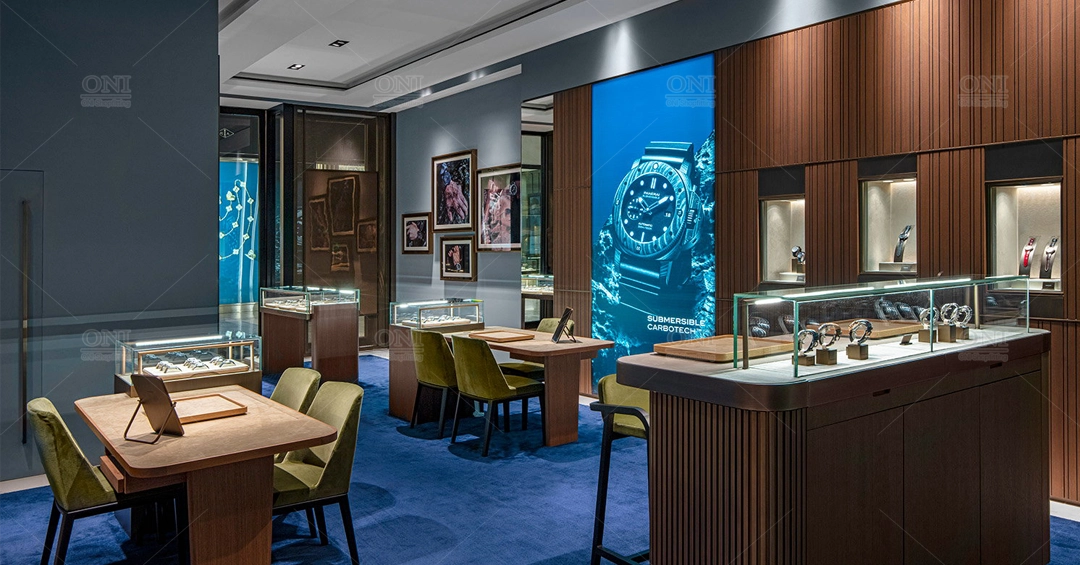
- Luxury Watch Boutiques: Usually require ultra-clear glass, premium finishes, discreet locking systems and carefully controlled LED lighting to present high-value watches.
- Jewelry & Watch Stores: Often need flexible display trays and counters that can accommodate watches, jewelry and accessories within the same retail environment.
- Shopping Mall Stores & Kiosks: Compact dimensions, visibility from multiple directions, secure storage and durable materials are especially important in high-traffic locations.
- Department Store Concessions: Counters should work within fixed site dimensions while maintaining clear brand identity and convenient staff access.
- Multi-Brand Watch Stores: Modular counters can help separate different brands, collections and price categories while maintaining a consistent store layout.
- Flagship Stores: Often combine island counters, consultation counters, wall displays and other custom retail fixtures to create a complete customer journey.
- Multi-Store Rollouts: Require standardized dimensions, materials, lighting, finishes and technical drawings so the same custom retail displays can be reproduced consistently across different locations.
What Should Retailers Check Before Ordering a Watch Display Counter?
| Item | What Retailers Should Confirm | Why It Matters |
|---|---|---|
| Dimensions | Width, depth, height and usable display area | Determines site fit and product capacity |
| Glass | Tempered, low-iron or specified security glass | Affects visibility, safety and security |
| Cabinet Structure | MDF, plywood, metal or combined structure | Affects stability, weight and durability |
| Finish | Lacquer, veneer, stainless steel, leather or stone | Determines appearance and maintenance |
| Lighting | CCT, CRI, LED position and beam direction | Affects dial visibility and presentation |
| Security | Locks, hinges, glass fixing and cabinet structure | Protects high-value merchandise |
| Electrical | Voltage, drivers, wiring and maintenance access | Prevents installation issues |
| Branding | Logo position, metal letters or illuminated logo | Maintains brand consistency |
| Sample | Material sample or prototype | Helps identify problems before production |
| Packaging | Glass protection and export packaging | Reduces transportation risk |
| Lead Time | Drawing, sampling and production schedule | Supports store opening deadlines |
What Are Practical Dimensions for a Watch Display Counter?
| Counter Element | Common Planning Range | Retailer Should Check |
|---|---|---|
| Overall Counter Height | 900–1,050 mm | Customer viewing comfort |
| Counter Depth | 500–650 mm | Product visibility and staff reach |
| Module Length | 900–1,500 mm | Store layout and transportation |
| Glass Display Chamber | Approx. 200–350 mm | Watch stands and lighting position |
| Internal Compartments | Customized | Watch trays and operational requirements |
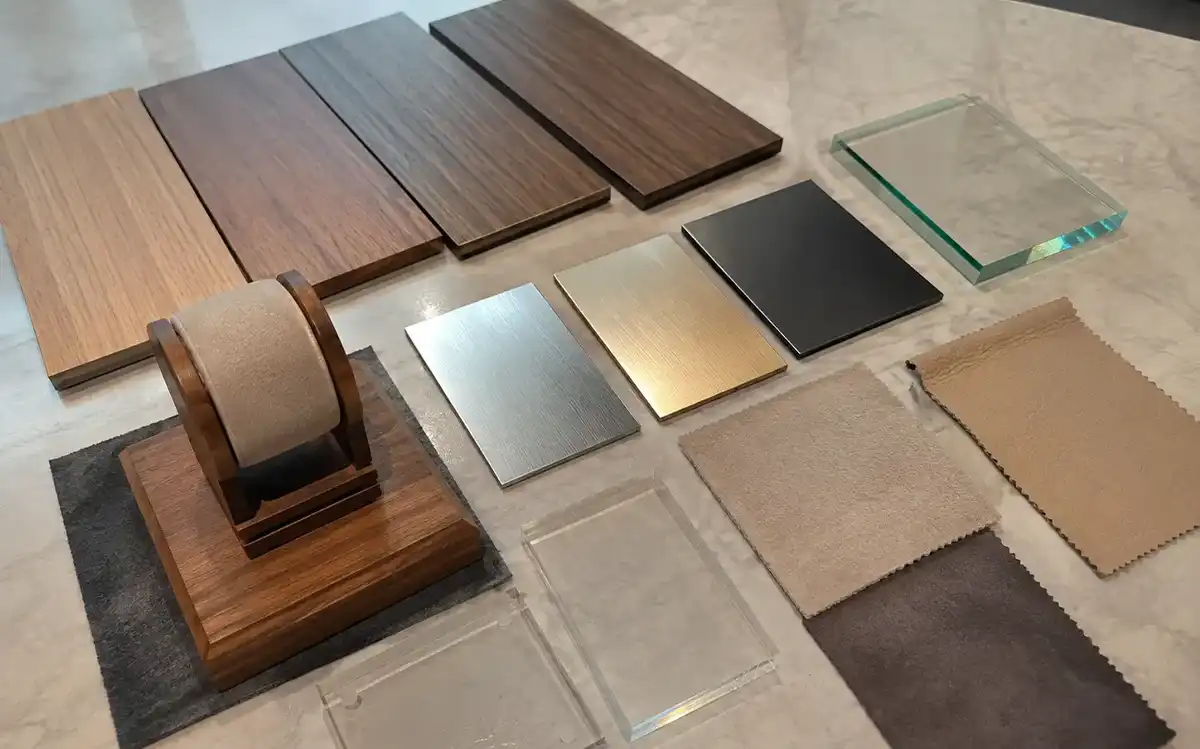
Which Materials Are Best for Custom Watch Display Counters?
| Material | Typical Application | Retailer Consideration |
|---|---|---|
| Low-Iron Glass | Main viewing area | High transparency |
| Tempered Glass | Display panels and doors | Commercial safety |
| Laminated Glass | Higher-security applications | Additional protection |
| Stainless Steel | Frames, trims and details | Durable premium finish |
| MDF | Main cabinet body | Suitable for lacquer and custom shapes |
| Plywood | Structural components | Added structural strength |
| Wood Veneer | Exterior surfaces | Natural premium appearance |
| Lacquer | Cabinet exterior | Flexible color and gloss options |
| Leather / Microfiber | Watch trays and display surfaces | Protects merchandise |
| Stone / Sintered Stone | Decorative panels and bases | Premium look with higher weight |
How Should Watch Display Counter Lighting Be Specified?
| Lighting Item | Recommended Approach |
|---|---|
| Color Temperature | Usually evaluated around 3000K–4000K |
| CRI | High-CRI lighting, commonly CRI 90+ |
| LED Position | Concealed where possible |
| Beam Direction | Avoid direct glare on glass and watches |
| Brightness | Enough to reveal dial details |
| Dimming | Useful for premium environments |
| Driver Position | Accessible for maintenance |
| Heat Management | Allow ventilation around LEDs and drivers |
| Electrical Standard | Match destination voltage and requirements |
What Security Features Should a Watch Display Counter Have?
Security is a critical consideration for watch display counters because the merchandise is usually high in value and displayed in an open retail environment. The security system should be planned together with the glass, cabinet structure, access method and store operations from the beginning, rather than added after the design has been finalized.
For most retail projects, retailers should evaluate security from four main areas: glass protection, locking systems, cabinet structure and access control.
Glass protection: Tempered or low-iron glass is commonly used for premium watch displays where visibility is important. For higher-value merchandise or stores with stricter security requirements, laminated or security glass can provide additional protection while maintaining a clear view of the products.
Locking systems: Concealed locks are often preferred because they keep the customer-facing side clean while allowing controlled access from the staff side. Depending on store operations and merchandise value, retailers can choose between mechanical locks, electronic locks or integrated access-control systems. The lock itself is only effective when the surrounding fixing points and cabinet structure are sufficiently reinforced.
Cabinet structure and hardware: Heavy-duty hinges, drawer runners and reinforced fixing points are important for counters that are opened frequently throughout the day. Staff-side doors and drawers should be positioned so they are easy for employees to access but difficult for customers to reach. For larger or higher-value counters, the cabinet may also need to be anchored to the floor or connected to the surrounding custom retail fixtures.
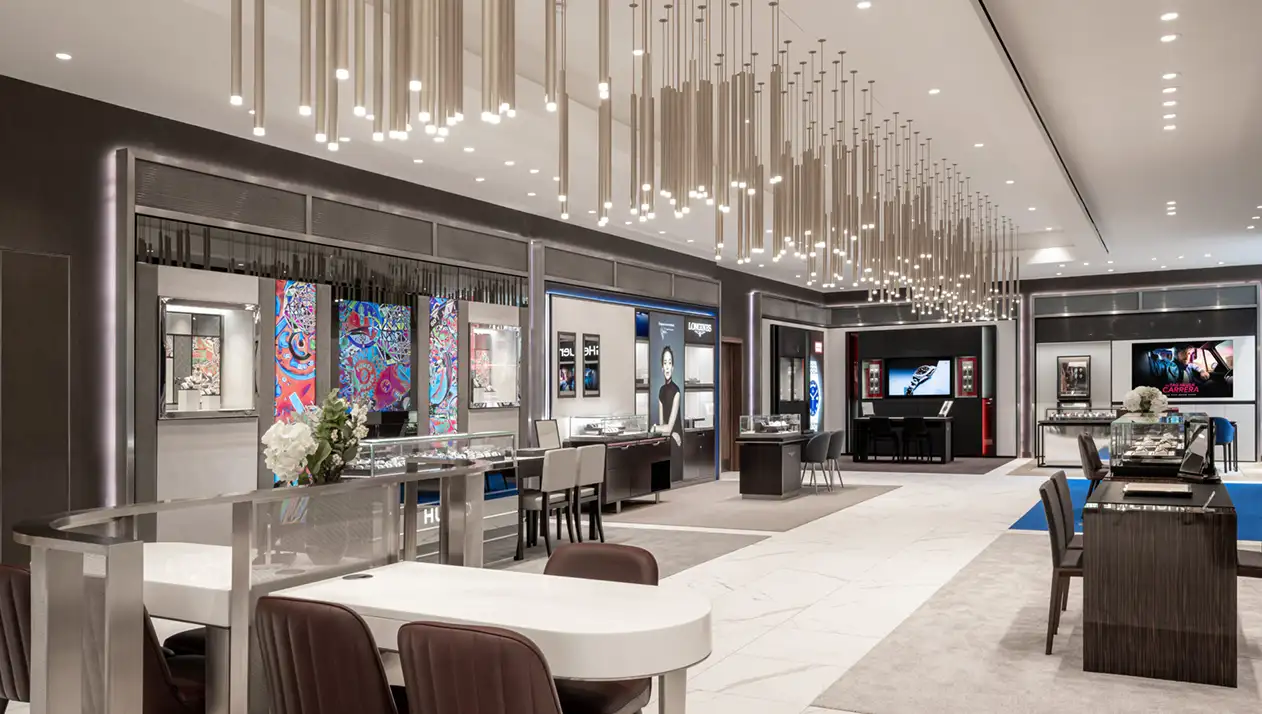
Electronic security: Higher-security projects may require the watch display counter to integrate with the store’s alarm, sensor or electronic locking system. For multi-store rollouts, retailers should also decide whether all counters use the same key system, different key groups or centralized electronic access management.
The final security specification should reflect the value of the watches, store location, customer traffic, staff workflow and the retailer’s internal loss-prevention standards. A reliable manufacturer should therefore discuss security requirements during the technical drawing stage so that glass, locks, hardware and cabinet construction can be coordinated as one complete system.
How Is a Custom Watch Display Counter Manufactured?
ONI Shopfitting Watch Boutique Project Example
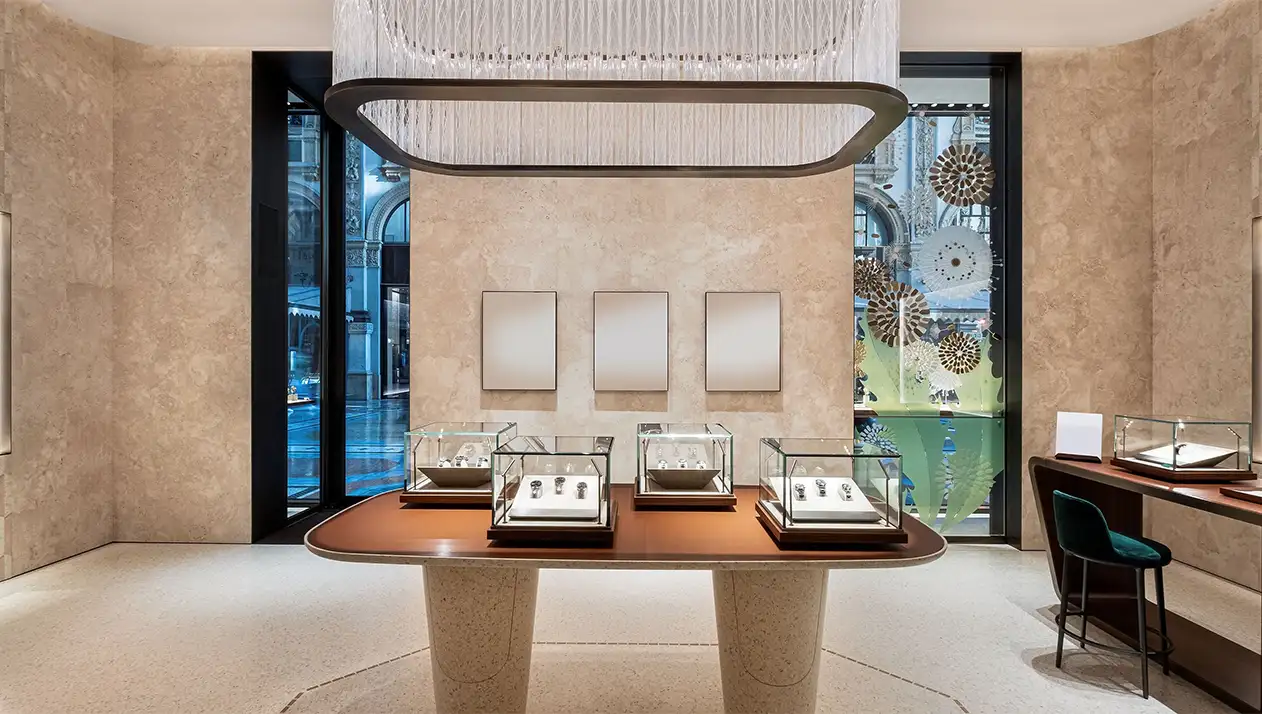
In a recent watch boutique project, ONI Shopfitting developed a complete fixture package that included wall display units, freestanding showcases and custom watch display counters. The project needed to maintain a premium and consistent visual identity while also meeting practical requirements for merchandise security, staff access and daily store operation.
During the development stage, several practical issues were identified and refined before production. Some fixtures had to fit narrow spaces, the original LED positions created reflections on the glass, and certain drawer and lock locations were not convenient for staff use. ONI adjusted the cabinet dimensions, optimized the lighting angles and revised the internal layout to improve both product presentation and operational efficiency.
As an experienced store display manufacturer, ONI Shopfitting coordinates design, engineering and production within one process, allowing glass, metalwork, veneer, lacquer, lighting, locks and other custom retail fixtures to follow consistent technical and visual standards. Once the final drawings, materials and finishes are approved, the same custom displays can be reproduced more efficiently for future stores or multi-location rollouts, helping retailers maintain consistency while simplifying expansion and repeat production.
In Conclusion
Frequently Asked Questions
Request a Quote for Custom Watch Display Fixtures
 Get in touch with us today to start your custom store fixtures project.
 WhatsApp/Call: +86 186 2096 3396
 Email: sales1@onishopfitting.com
 Factory Location: Guangzhou, China