


Poor lighting combined with poorly designed display fixtures can distort cosmetic product colors, making a warm nude lipstick appear orange or a foundation shade look too light, which leads to customer hesitation, product returns, and reduced brand trust
Cosmetic store lighting design directly impacts product color accuracy, display visibility, and retail performance. A well-designed system combines LED lighting, cosmetic display fixtures, and store layout planning to enhance customer experience and increase conversion rates in beauty retail environments.
Understanding lighting principles helps retailers build more effective cosmetic display environments.
Why Cosmetic Store Lighting is Important?
Cosmetic retail depends heavily on visual accuracy. Customers must see true product colors before purchase, especially when choosing foundation, lipstick, eyeshadow, blush, and skincare products. Poor lighting can distort makeup tones, make packaging look dull, and reduce customer confidence.
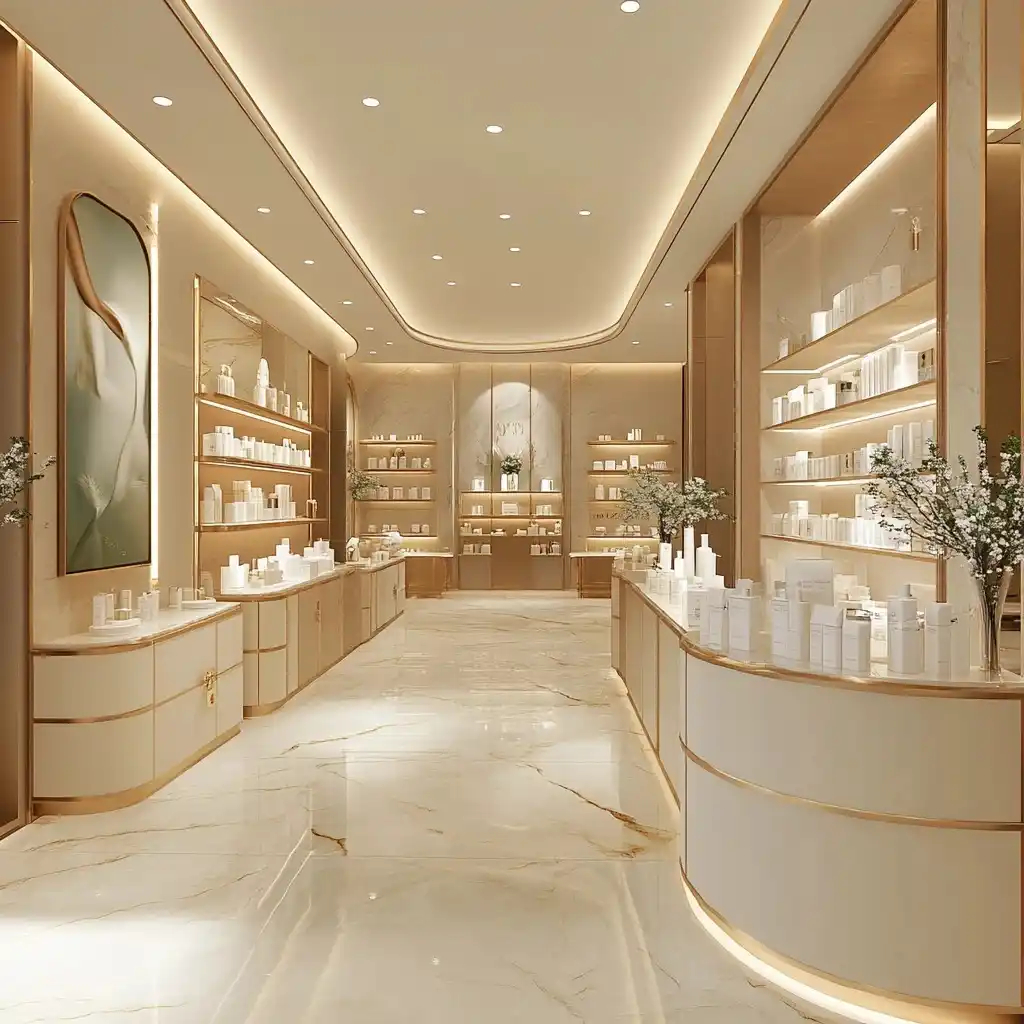
High-quality cosmetic store lighting helps products appear clearer, cleaner, and more attractive while supporting overall brand positioning. A luxury beauty store may require soft, elegant, premium lighting, while fast-moving cosmetic chains often prefer brighter, more uniform lighting to ensure high product visibility across all cosmetic display fixtures.
Lighting also directly influences customer behavior inside the store. When cosmetic display shelves and cosmetic display cabinets are poorly illuminated, customers are less likely to explore the full product range and often miss key items. In contrast, when lighting is properly integrated with cosmetic display fixtures, it highlights hero products, new arrivals, and promotional items more effectively, significantly increasing customer engagement and conversion rates. For professional retail environments, lighting should be designed as part of a complete system together with custom cosmetic display fixtures, rather than being treated as an afterthought once the store layout is finalized.
How Lighting Interacts with Cosmetic Display Fixtures?
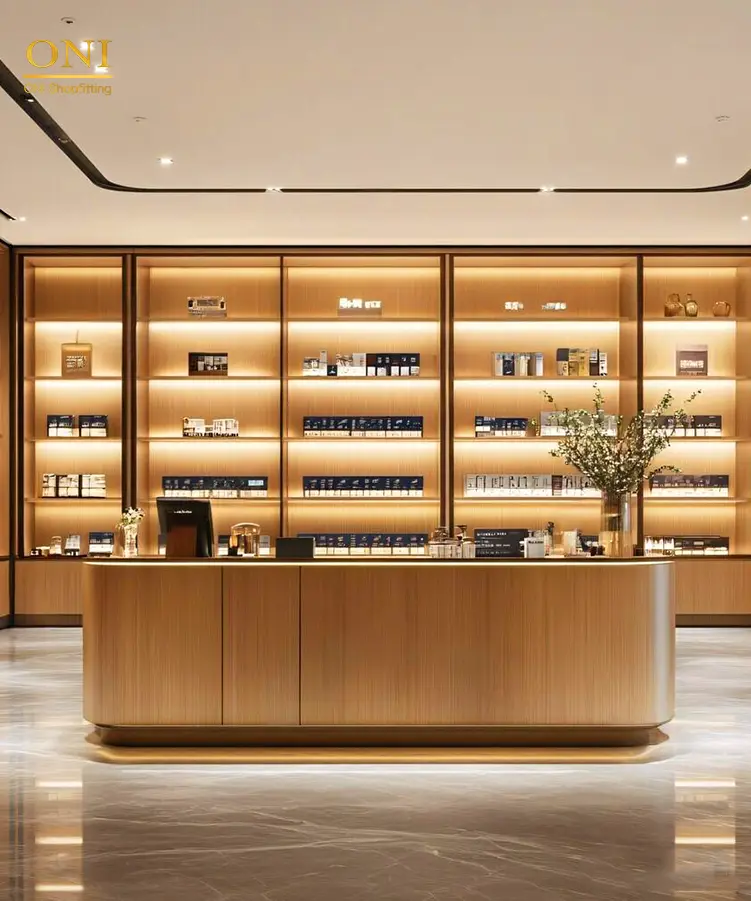
Lighting and cosmetic display fixtures must work together as a unified system. The same LED strip can produce completely different visual effects depending on whether it is installed in a glass cabinet, acrylic display stand, metal shelving system, or wood-based cosmetic counter. Fixture structure, surface material, and display height all directly influence how light is distributed and perceived in a retail environment.
Glass cosmetic display cabinets may create unwanted reflections or glare if lighting angles are not properly controlled, while open shelving systems often require vertical or front-facing lighting to reduce shadows and improve product clarity. Drawer-style makeup displays and compact cosmetic display stands typically benefit from under-shelf or edge lighting to ensure products remain visible even at close viewing distances.
Integrated LED lighting inside cosmetic display cabinets significantly improves product visibility, reduces dark zones, and enhances merchandising impact. It also helps guide customer attention toward key products such as best sellers, new launches, and premium collections. A professional retail display manufacturing partner should carefully consider fixture materials, LED positioning, wiring channels, heat dissipation, maintenance access, and electrical safety during the design and production process to ensure long-term performance.
Best Lighting Design for Cosmetic Display Cabinets
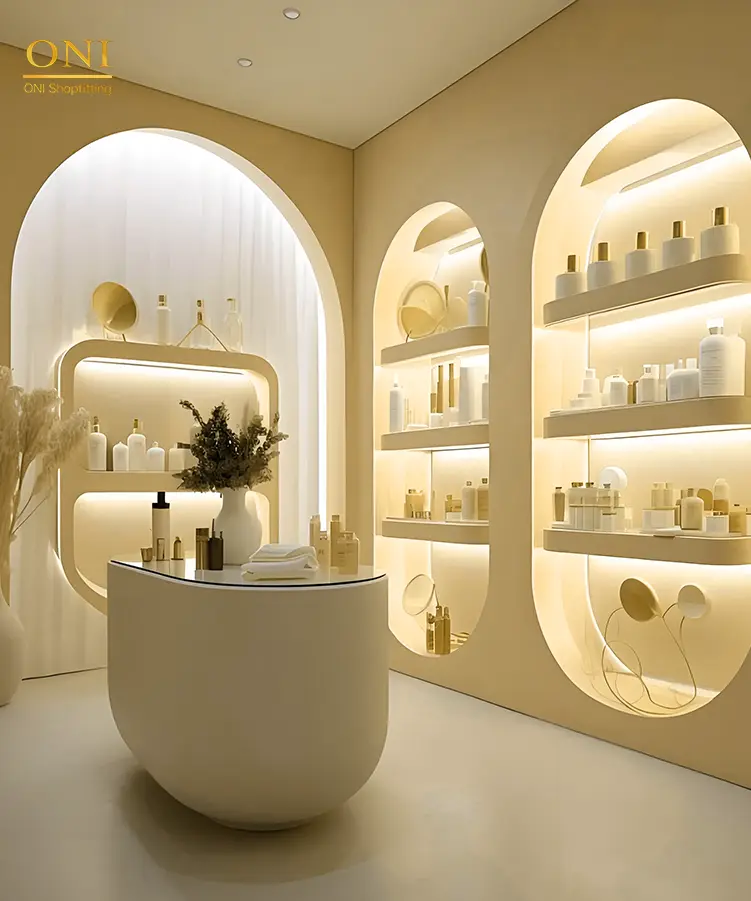
The ideal cosmetic store lighting relies on a balanced LED system that combines appropriate color temperature, high color rendering, and consistent light distribution across all cosmetic display fixtures. In beauty retail environments, neutral white lighting is often preferred because it provides the most accurate visual representation of makeup products, allowing customers to evaluate shades, textures, and finishes more confidently before purchase.
Color temperature is usually measured in Kelvin. ENERGY STAR explains that lower Kelvin values appear warmer, while higher values appear cooler or bluer. Retailers can refer to ENERGY STAR’s LED lighting guide when comparing general LED performance.
For cosmetic display cabinets and cosmetic retail fixtures, common lighting strategies include:
- 3000K for warm, premium, boutique-style cosmetic environments that emphasize luxury branding
- 3500K–4000K for balanced cosmetic product presentation suitable for most retail stores
- 4000K–5000K for high-brightness zones such as skincare, pharmacy beauty, or clinical cosmetic displays where clarity and cleanliness are essential
In addition to color temperature, color rendering quality is critical for cosmetic retail success. The U.S. Department of Energy highlights that color accuracy can be measured using CRI (Color Rendering Index) or more advanced systems such as TM-30. High color rendering lighting ensures that makeup products appear consistent under different environments, reducing the risk of customer dissatisfaction after purchase.
For makeup displays, cosmetic display cabinets, and cosmetic display shelves, high CRI lighting significantly improves product trust. A lipstick, foundation, or eyeshadow should appear as close as possible to its real-world usage under natural lighting conditions. Poor color rendering can lead to mismatched expectations, while well-designed lighting integrated into cosmetic display fixtures enhances confidence, reduces returns, and strengthens overall brand perception.
Anti-Glare and Shadow Control
Good cosmetic store lighting is not only about brightness but about visual comfort and product clarity. Excessive brightness can cause glare, reflections, and visual fatigue, especially on glass cosmetic display cabinets, glossy packaging, mirror surfaces, and skincare bottles. These issues can reduce the perceived quality of products and negatively affect the shopping experience.
Anti-glare lighting design is achieved through multiple engineering details, including diffusers, hidden LED channels, angled light positioning, frosted acrylic covers, and controlled beam spread. When properly integrated into cosmetic display fixtures, these solutions eliminate harsh reflections and ensure that customers focus on the product itself rather than the light source or fixture structure.
Shadow control is equally critical in cosmetic retail environments. Ceiling-only lighting often creates shadows when customers stand in front of cosmetic display shelves or cosmetic display cabinets, blocking product visibility. To solve this, integrated lighting inside wall displays, island fixtures, and cosmetic counters ensures consistent illumination from multiple angles, maintaining clear product presentation at all viewing positions.
Store-Wide Cosmetic Retail Lighting Strategy
A complete cosmetic retail lighting system should be designed as a layered framework that integrates ceiling lighting, accent lighting, display counter lighting, wall shelving lighting, and island fixture lighting. Each lighting layer serves a specific function within the overall store environment and works together with cosmetic display fixtures to enhance product visibility and brand presentation.
- General ambient lighting establishes the overall brightness of the store, ensuring a clean and comfortable shopping environment while providing a consistent visual foundation across all cosmetic display cabinets and retail areas.
- Accent lighting highlights key products, hero collections, and promotional zones, drawing customer attention to high-priority merchandising areas and new product launches.
- Integrated fixture lighting within cosmetic display shelves, display counters, and island fixtures improves shelf visibility and ensures products remain clearly visible from multiple viewing angles.
- Mirror lighting supports testing and consultation areas, helping customers evaluate cosmetic products accurately while increasing confidence during the purchase process.
Lighting design should also strategically guide customer movement throughout the store. Brighter zones are typically used to attract attention to new arrivals, hero products, or consultation areas, while softer lighting can be applied in premium skincare or fragrance sections to create a more relaxed, high-end shopping atmosphere.
For global beauty brands and retail chains, this lighting strategy must be scalable and consistent. A store in one market should deliver a similar brand experience in another, regardless of differences in layout size, fixture configuration, or local installation conditions. ONI Shopfitting’s turnkey shopfitting solutions help brands coordinate cosmetic display fixtures, lighting integration, production, packaging, and installation planning within a unified project execution system.
In Conclusion
A well-designed cosmetic store lighting system integrated with professional cosmetic display fixtures enhances product visibility, ensures accurate color presentation, strengthens brand identity, improves customer experience, and significantly increases overall retail sales performance.
Frequently Asked Questions
1. Should lighting be integrated into cosmetic display fixtures or installed separately?
Lighting should be integrated directly into cosmetic display fixtures whenever possible. Built-in LED systems inside display cabinets, shelves, and counters provide more even illumination, reduce shadows and glare, and create a more professional and visually consistent retail environment.
2. How does lighting influence customer behavior in cosmetic stores?
Lighting affects how long customers stay in-store and which products they notice first. Well-lit cosmetic display fixtures highlight hero products, new launches, and promotions, encouraging customers to explore more and increasing overall engagement and conversion rates.
3. Can the same lighting design be used for all cosmetic retail stores?
Not always. Lighting should be adapted based on store type, brand positioning, and product range. Luxury cosmetic stores may use softer, warmer lighting, while mass-market or pharmacy-style beauty stores often require brighter and more uniform lighting for maximum product clarity.
👉 Get in touch with us today to start your project.
📞 WhatsApp/Call: +86 186 2096 3396
📧 Email: sales1@onishopfitting.com
🌐 Website: www.onishopfitting.com
📍 Factory Location: Guangzhou, China
🔗Check out our social media case studies:Guangzhou ONI Shopfitting Limited