Many cosmetic stores face common layout problems. Customers may enter the store without knowing where to start, best-selling products may not stand out, tester areas can become crowded, and shelves may look visually cluttered. Poor traffic flow, weak lighting, unclear category zoning, and unsuitable cosmetic display fixtures can reduce product appeal and lower sales conversion. A high-converting cosmetic store layout turns browsing into discovery, testing, consultation, and purchase.
A successful cosmetics store layout requires not only an aesthetically pleasing visual design but also effective spatial planning. By integrating functional areas—such as entrance displays, product category zones, testing stations, wall shelving, island displays, mirror areas, consultation zones, and checkout counters—the store can effectively guide customers through the processes of browsing, testing, and purchasing. Furthermore, well-planned lighting, branded display fixtures, and a smooth customer flow enhance product visibility and customer engagement, ultimately helping the beauty retail space achieve higher sales conversion rates.
Here are practical layout ideas for building a more effective cosmetic retail space.
Define Your Brand Identity
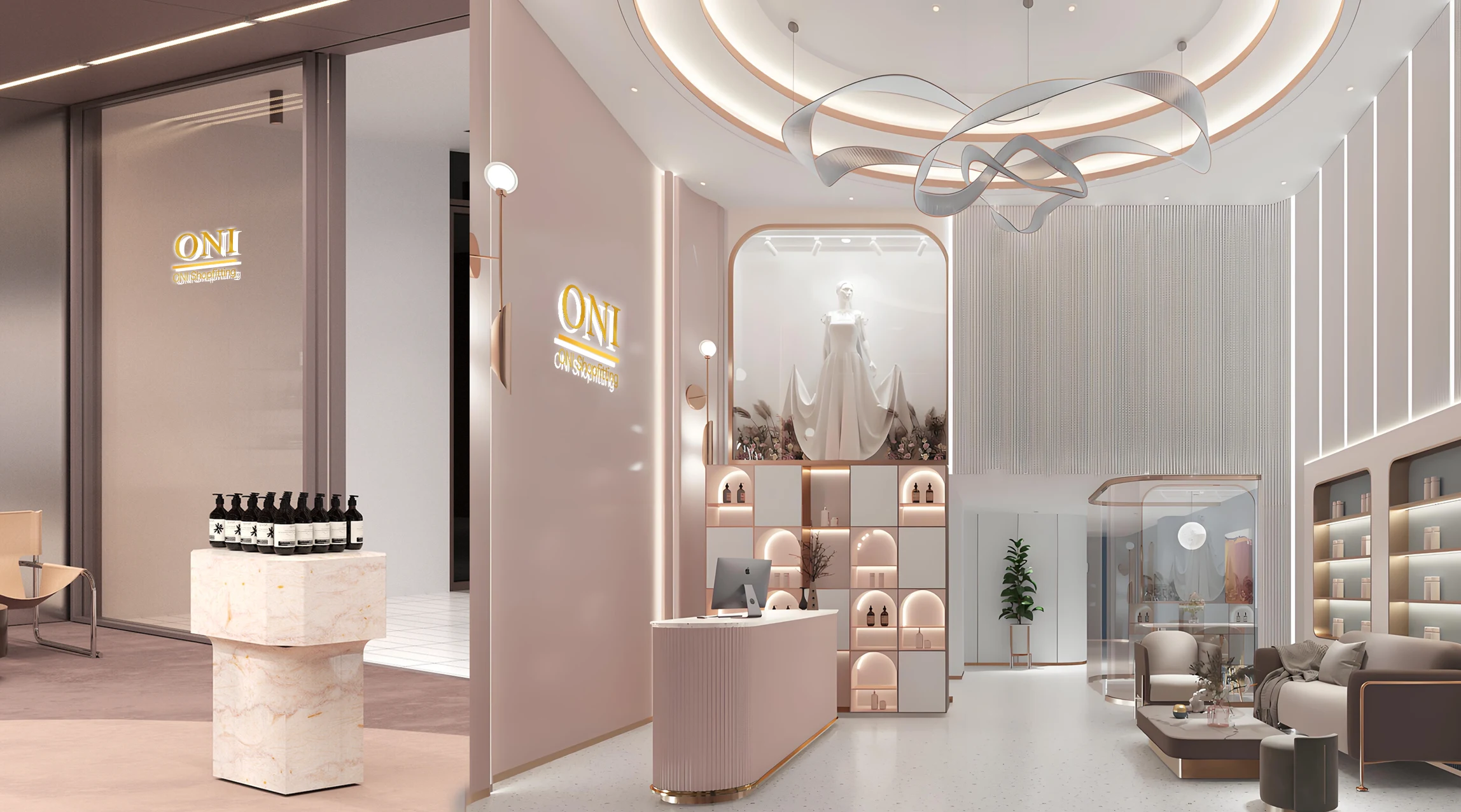
Before planning fixtures, product zones, or customer traffic flow, a cosmetic store should first define its brand identity. The store design needs to reflect the personality of the beauty brand, whether it focuses on luxury skincare, colorful makeup, clean beauty, fragrance, professional salon products, or mass-market cosmetics.
Brand identity influences almost every design decision, including color palette, material selection, lighting style, fixture shape, product density, signage, and service areas. For example, a luxury skincare boutique may use soft lighting, glass shelving, metal accents, and calm consultation spaces to create a refined atmosphere. A trendy makeup store, on the other hand, may require brighter displays, bold graphics, open tester stations, and flexible promotional zones to encourage interaction and impulse purchases.
Key brand identity decisions usually include:
- Brand color palette and fixture finishes
- Store atmosphere, such as luxury, professional, playful, or minimalist
- Product focus, such as skincare, makeup, fragrance, or beauty tools
- Target customers and their shopping behavior
- Level of staff consultation required
- Visual merchandising style and product display density
When these elements are clearly defined, every display fixture and layout decision can support a consistent retail experience. For beauty retailers planning customized fixtures, ONI Shopfitting’s custom retail display solutions can help connect brand identity with materials, store layout, fixture design, and product presentation, creating a cosmetic store environment that feels clear, attractive, and commercially effective.
Optimize the Cosmetic Store Layout
Optimize the Cosmetic Store Layout
A strong cosmetic store layout plan should guide customers naturally from the entrance to product discovery, testing, consultation, and checkout. The layout must look attractive, but it also needs to support daily store operation, staff service, product restocking, and customer movement.
The main traffic path should be clear and easy to follow. Customers should quickly understand where skincare, makeup, fragrance, beauty tools, promotional products, and checkout areas are located. Best-selling and high-margin products can be placed in visible zones, while new arrivals and seasonal promotions can be arranged near the entrance or along the main customer route to attract attention.
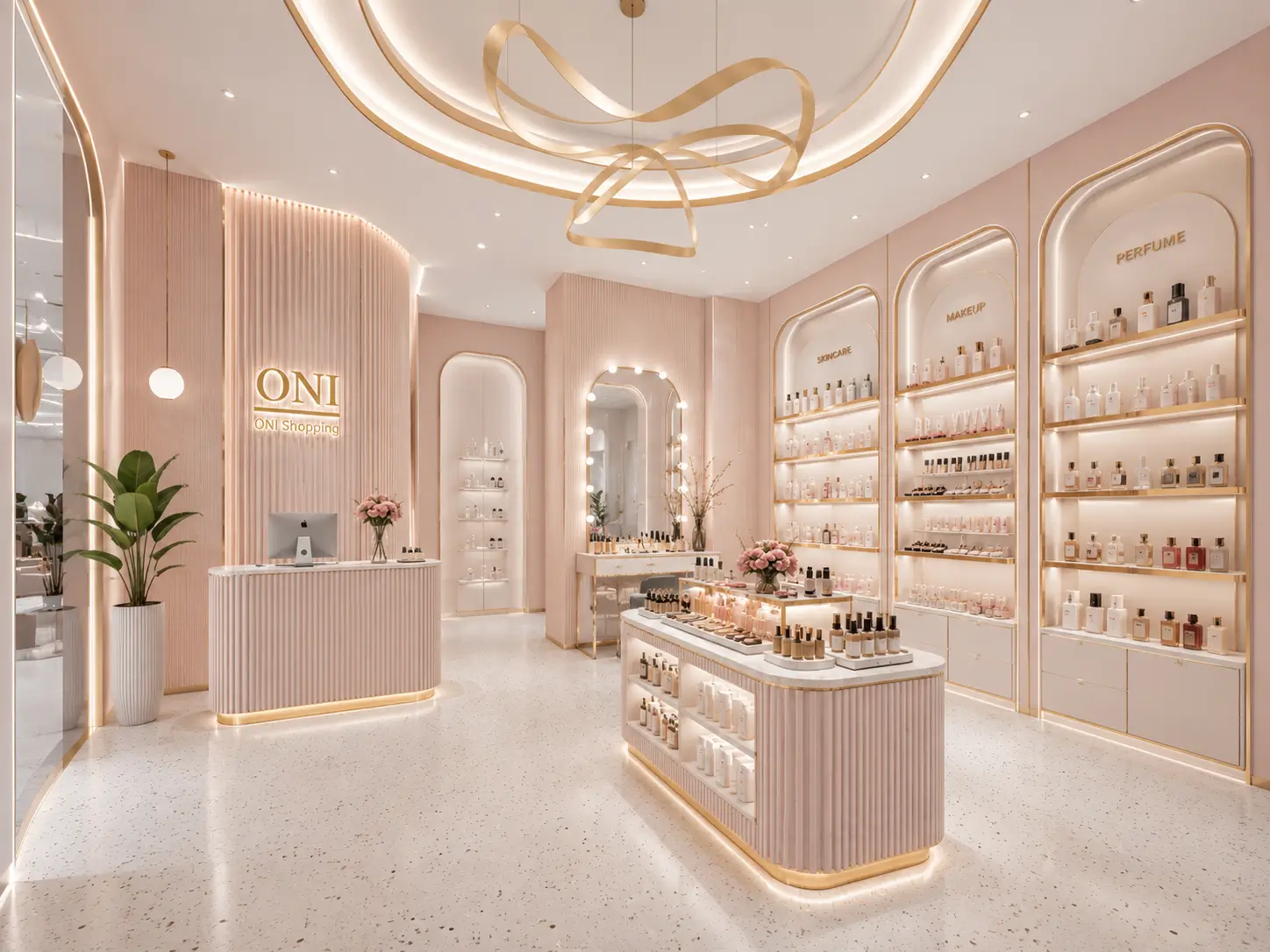
Different product categories should be planned according to customer behavior. Skincare areas may need calmer lighting, clean shelving, and consultation space, while makeup areas often require open tester stations, mirrors, stronger lighting, and enough counter space for product trials. Fragrance zones may need more spacing, premium display cabinets, and controlled product presentation to create a refined shopping experience.
A high-converting cosmetic store layout should consider:
Customer walking direction
Fixture height and sightlines
Product category placement
Tester station access
Staff service points
Stock storage and refill convenience
Checkout location and add-on sales opportunities
Promotional display zones
Mirror and lighting placement
Comfortable space for browsing and testing
The best layout does not simply display more products. It helps customers move comfortably, find products faster, compare options easily, and make purchase decisions with more confidence. For beauty retailers, a well-planned cosmetic store layout can improve customer experience, increase product interaction, and support stronger sales conversion.
Incorporate Effective Lighting
Lighting is one of the most important parts of cosmetics store design. Beauty products depend on color, texture, shine, and detail. Cosmetic stores usually need several lighting layers. General lighting keeps the store bright and welcoming. Shelf lighting highlights product packaging and makes products easier to browse. Mirror lighting helps customers test makeup more accurately. Accent lighting draws attention to new arrivals, hero products, brand displays, and promotional areas.
Different product zones may require different lighting solutions. For makeup areas, lighting should be bright, even, and color-accurate so customers can clearly see foundation shades, lipstick colors, and eye makeup effects. For skincare zones, softer and cleaner lighting can create a calm, premium, and trustworthy atmosphere. For fragrance or luxury beauty areas, warm accent lighting can make the space feel more elegant and refined.
Lighting should also work together with cosmetic display fixtures. LED strips, illuminated shelves, backlit panels, and cabinet lighting can improve product visibility without making the store feel too harsh. When lighting is planned properly, it not only makes the store more attractive but also helps customers compare products, test items confidently, and make faster purchase decisions.
Start With a Strong Entrance Zone
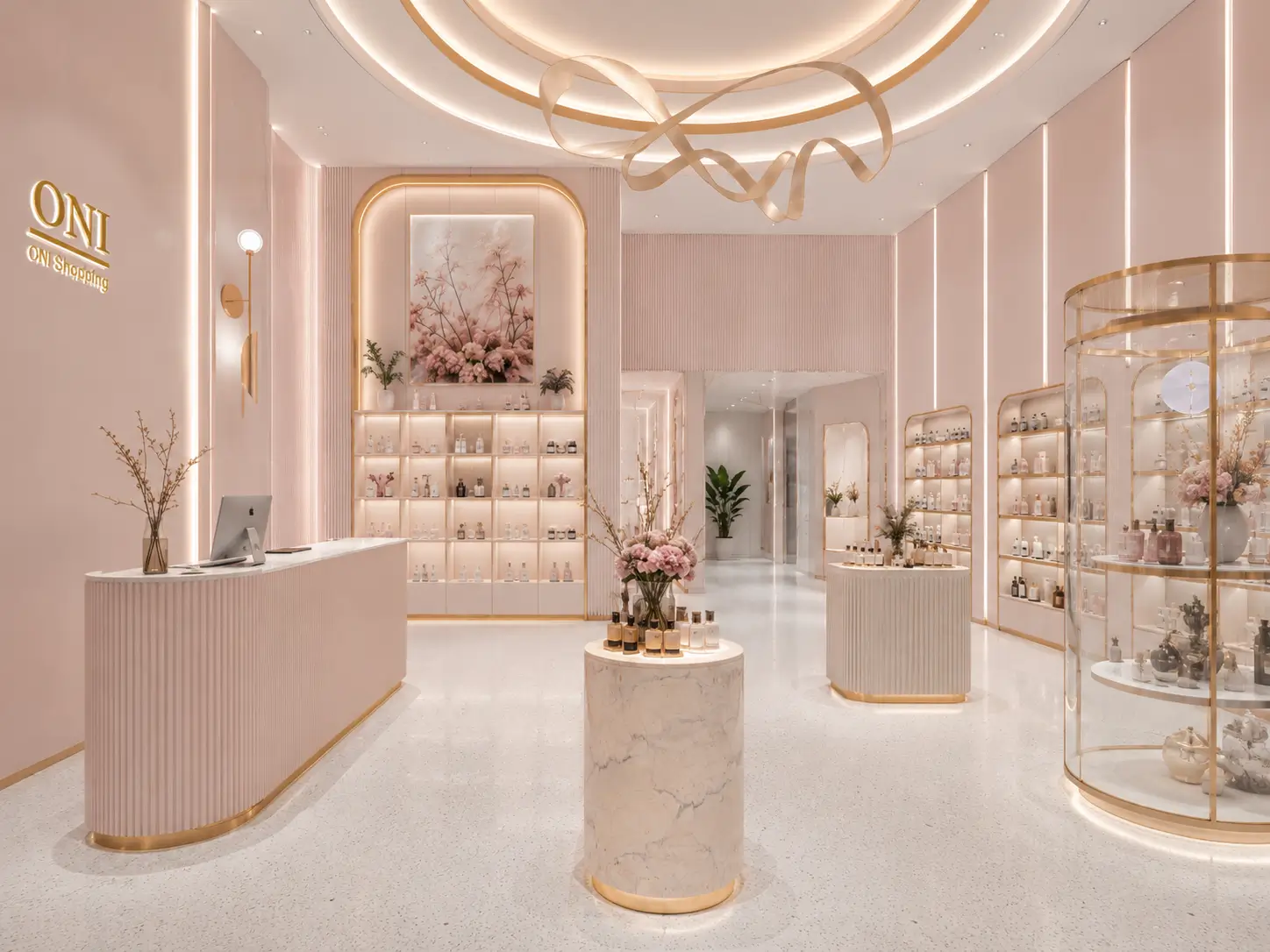
The entrance zone is where customers decide whether to continue browsing. For cosmetic stores, this area should immediately communicate freshness, beauty, and product value. A well-designed entrance can capture attention quickly and guide customers naturally into the store.
The front area is ideal for new arrivals, seasonal campaigns, hero products, best sellers, or limited-edition collections. Displays should be focused and easy to understand. Too many products at the entrance can create visual clutter, while a clean feature display can make the store feel more professional and encourage customers to explore deeper.
The goal is to create a strong first impression and introduce the store’s key product story. When the entrance zone is clear, attractive, and brand-focused, it can increase customer interest, improve product visibility, and create more opportunities for product interaction.
Use Clear Product Category Zoning
Cosmetic stores often carry many small products, so clear category zoning is essential. Customers should not need to search too hard for foundation, lipstick, skincare, fragrance, brushes, or beauty tools. A clear zoning plan helps customers find what they need faster and makes the whole store easier to browse.
Common zones include skincare, makeup, fragrance, beauty accessories, new arrivals, promotional products, and checkout add-ons. Each zone should have suitable display height, clear signage, and enough space for browsing. Wall displays can be used for organized product categories, while island displays and counter displays can highlight promotions, best sellers, or new collections.
For better results, zoning should follow customer behavior rather than only product quantity. High-demand products should be easy to find, trial products should be close to mirrors or tester stations, and promotional items should be placed along the main traffic path. With clear product zoning, cosmetic stores can reduce customer confusion, improve browsing efficiency, and create a smoother path from product discovery to purchase.
Create High-Impact Wall Displays
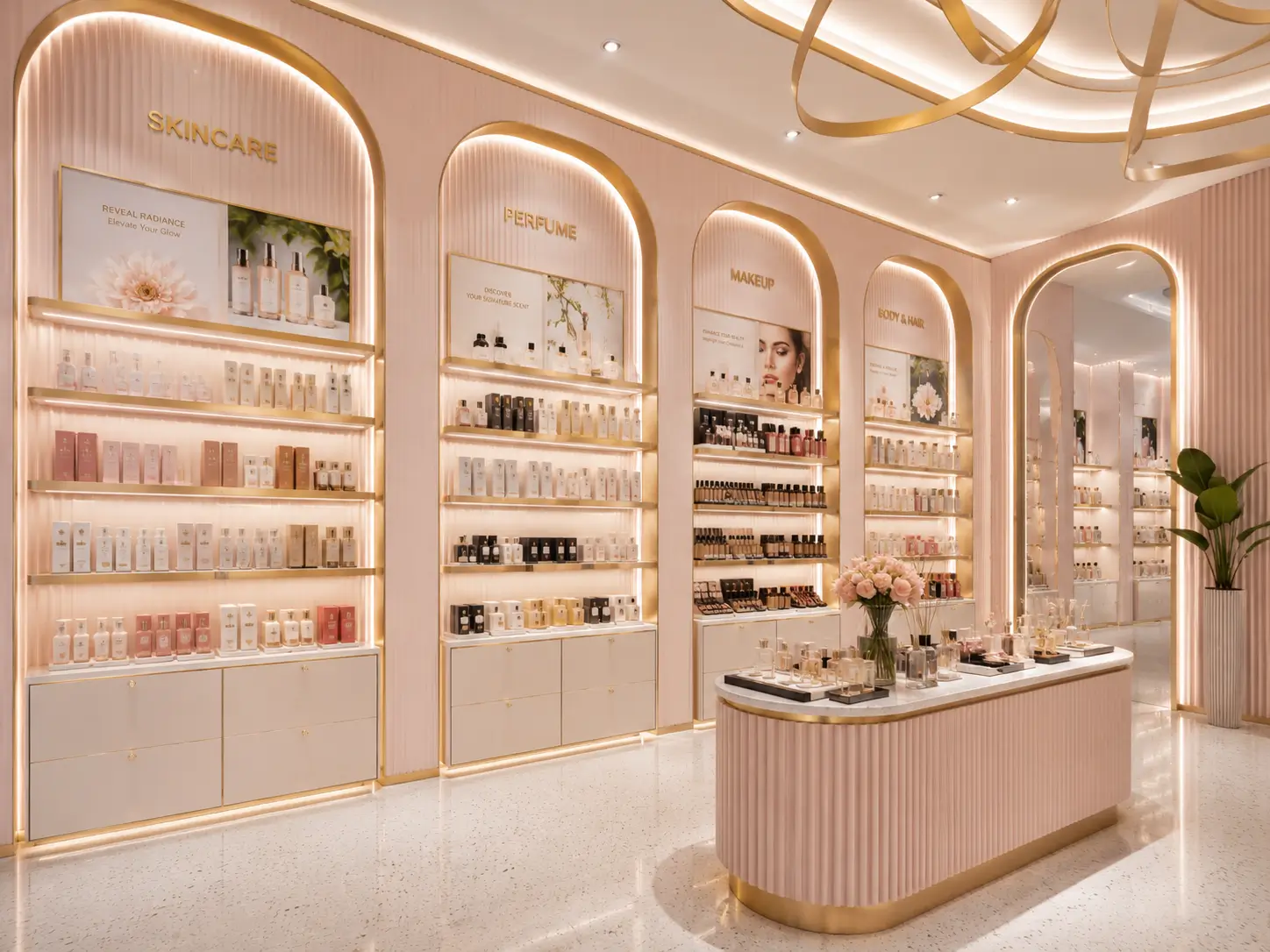
Add Central Gondola Displays
Central gondola displays create flexible browsing opportunities in the middle of the store. They are useful for promotions, best sellers, travel-size products, seasonal kits, new arrivals, and multi-brand cosmetic displays. Because customers can access them from different sides, gondolas work well in high-traffic areas and can help guide customer movement.
However, gondola height and layout should be carefully controlled. If the display is too tall, it may block visibility and make the store feel crowded. Low-to-medium-height gondolas are often more suitable for cosmetic stores because they keep the space open while still providing enough product display capacity.
A good cosmetic gondola should be flexible and easy to update. Adjustable shelves, acrylic trays, LED strips, storage drawers, metal frames, and replaceable graphics allow retailers to refresh displays for new campaigns, seasonal promotions, and product launches. When planned properly, gondola displays can improve product exposure and encourage impulse purchases.
Design Tester Stations for Interaction
Design Tester Stations for Interaction
Tester stations are essential in cosmetic store design because customers often want to try colors, textures, finishes, and scents before buying. A well-designed tester station encourages interaction, increases product confidence, and helps customers make faster purchase decisions.
Tester stations should be clean, organized, and easy to use. They usually need mirrors, accurate lighting, tissue holders, disposable applicators, cleaning supplies, waste bins, and clearly arranged product testers. The area should feel convenient and inviting, but it should not look messy or overcrowded.
For premium beauty stores, tester stations can be integrated into wall displays, island fixtures, gondola displays, or consultation counters. This allows customers to test products naturally while staying close to the related product category. Staff should also be able to maintain hygiene, refill products, organize testers, and guide customers without blocking the main traffic path.
A practical tester station should consider:
- Mirror placement and color-accurate lighting
- Easy access to testers and related products
- Clean storage for disposable applicators
- Space for customers to compare shades
- Staff convenience for cleaning and restocking
- Clear separation between testers and sellable products
When tester stations are well planned, they do more than support product trials. They create a stronger customer experience, improve product engagement, and increase the chance of turning browsing into purchase.
Choose Materials That Match the Beauty Brand
Materials affect both the visual image and daily operation of a cosmetic store. Cosmetic fixtures should look attractive, but they also need to support frequent cleaning, product testing, restocking, and long-term commercial use. The right material choice can make the store feel more professional while reducing maintenance problems.
Common materials include tempered glass, stainless steel, MDF, plywood, acrylic, lacquer, wood veneer, mirrors, LED components, and decorative panels. Luxury beauty brands may prefer glass, metal, stone-effect finishes, and soft lighting to create a premium atmosphere. Colorful makeup brands may use lacquer, acrylic, illuminated graphics, and bold display shapes to create a more energetic shopping experience.
Materials should match the brand style, product positioning, and store layout. Durable surfaces, easy-clean finishes, stable structures, and integrated lighting can improve both display quality and daily operation. For beauty brands planning multi-store expansion or franchise rollouts, consistent materials and finishes also help create a unified brand image across different locations.
Work With a Professional Store Fixture Partner
Summary
Frequently Asked Questions
1. What should a cosmetic store layout plan include?
2. How does cosmetics store design affect sales?
3. Can ONI Shopfitting customize cosmetic store fixtures?