Every retail store has different dimensions, branding requirements and product display needs. Custom modular retail display systems address these differences through tailored designs, configurable structures and project-specific manufacturing. A modular retail display can accommodate different product categories while maintaining a consistent appearance throughout the store.
From custom shelving and display cabinets to retail counters and wall-mounted units, each retail fixtures can be developed around the store layout and brand identity. In this guide, we explore the main types of modular retail display systems, their benefits, materials, design considerations and applications, as well as how custom manufacturing can meet different retail project requirements.
What Are Custom Modular Retail Display Systems?
Custom modular retail display systems are store fixtures developed from configurable components that can be assembled, adjusted or combined to meet specific merchandising requirements. Unlike standard display products with fixed dimensions and structures, custom systems are manufactured according to store measurements, product specifications, brand guidelines and functional needs.
A typical system may include shelving units, display cabinets, wall panels, metal frames, countertops, glass showcases and integrated lighting. Each component can be customized in size, material, finish, color and construction. Individual custom fixtures can also be modified or combined when product ranges change or store layouts are updated. These configurations form part of broader modular store fixtures designed around individual retail projects.
Types of Custom Modular Retail Display Systems
Retail projects require different fixture configurations depending on the products being displayed and the available store space. Custom modular systems can incorporate several display structures within one coordinated interior design.
Display System | Customization Options | Typical Applications |
Modular Retail Shelving | Adjustable shelf heights, custom widths, metal or wood structures and different finishes | Supermarkets, convenience stores and general retail |
Modular Wall Display Systems | Custom wall panels, floating shelves, hooks, brackets and integrated lighting | Fashion, cosmetics and electronics stores |
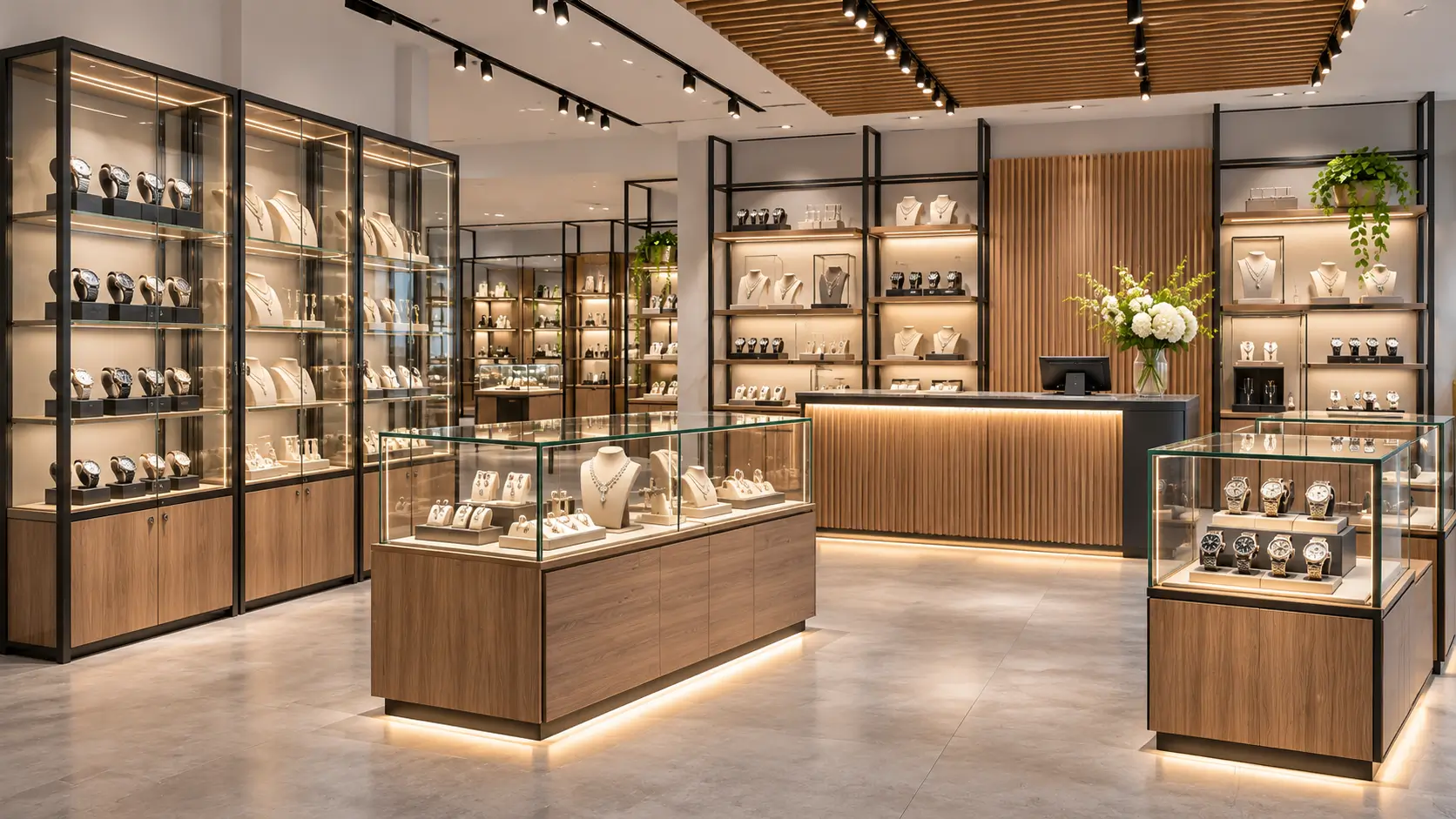
Modular Display Cabinets | Custom dimensions, glass panels, lockable compartments, LED lighting and storage | Jewelry, watches, optical and luxury retail |
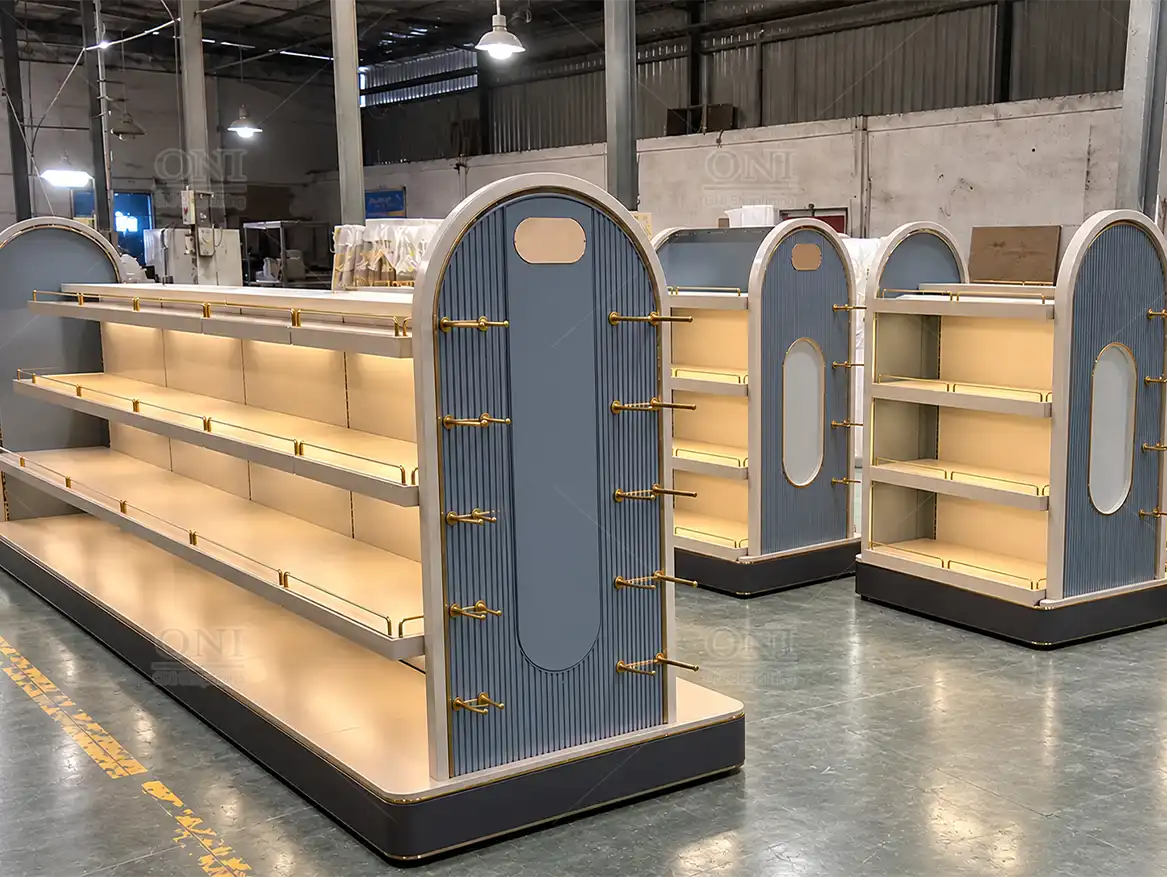
Modular Gondola Shelving | Customized shelf configurations, end displays, support frames and branded panels | Supermarkets and large retail stores |
Freestanding Display Units | Custom shapes, product holders, shelving arrangements and branded structures | Shopping malls, specialty retail and promotional areas |
Modular Display Counters | Customized countertops, drawers, storage compartments, materials and finishes | Cosmetics, jewelry and checkout areas |
Modular Display Stands | Custom product holders, tiered shelves, acrylic components and metal frames | Perfume, cosmetics and accessories |
Modular Storage Systems | Custom cabinet sizes, drawers, internal partitions and concealed storage | Back-of-house areas and retail service spaces |
These fixture types can be manufactured separately or incorporated into a complete store fixture package. A cosmetics store, for instance, may require illuminated wall displays for product presentation, countertop units for smaller items and concealed storage for additional inventory. The dimensions and finishes of each component can be coordinated with the overall store design.
Benefits of Custom Modular Retail Display Systems
Custom modular retail display systems address several practical requirements involved in store planning, merchandising and fixture production.
- Flexible Store Configurations: Adjustable shelves, interchangeable panels and configurable structures make it easier to accommodate different store layouts. Retailers can rearrange product displays, introduce new collections or modify merchandising areas without replacing every fixture. The level of flexibility depends on the connection methods and structural design.
- Customized Brand Presentation: Every retail brand has its own visual identity and design specifications. Custom retail fixtures can incorporate brand-specific colors, materials, finishes, lighting, signage and structural details. Coordinating these elements across different display areas helps maintain a consistent store appearance.
- Better Space Utilization: Custom dimensions allow display systems to fit specific floor plans, wall spaces and architectural conditions. Vertical shelving, integrated storage and corner display units can make use of areas that standard-sized fixtures may not accommodate efficiently, while leaving sufficient space for customer movement.
- Consistent Multi-Store Design: Retail brands operating multiple locations often need the same fixture specifications across different stores. Approved drawings, material samples and production standards can be used to maintain consistency. Individual dimensions and configurations can still be adjusted to suit the measurements of each location.
- Easier Maintenance and Replacement: Modular construction can simplify repairs and fixture updates. Individual shelves, panels, brackets and other components may be replaced or adjusted without rebuilding the entire display structure, depending on how the system is designed.
- More Efficient Production Planning: Reusable structural designs and standardized component specifications help retail fixtures manufacturers organize repeat orders and production batches. Once the main design is approved, modifications can be made to selected components instead of developing every fixture from the beginning.
- Integration of Different Materials and Functions: Wood, metal, glass and acrylic can be combined within one display system. Additional features such as LED lighting, lockable storage, product holders and cable management can be incorporated according to the merchandise and daily operating requirements.
For retailers planning new stores or updating existing locations, these features provide greater control over fixture dimensions, appearance and configuration. They also give project teams a clearer framework for coordinating design approvals and repeat manufacturing.
Custom Modular Display Solutions for Different Retail Industries
Product dimensions, merchandising methods and store operations vary between retail sectors. A modular fixture designed for clothing, for example, has different structural and functional requirements from a glass showcase used for jewelry. Custom manufacturing accounts for these differences during the design and production stages.
Retail Industry | Custom Modular Display Solutions | Key Customization Requirements |
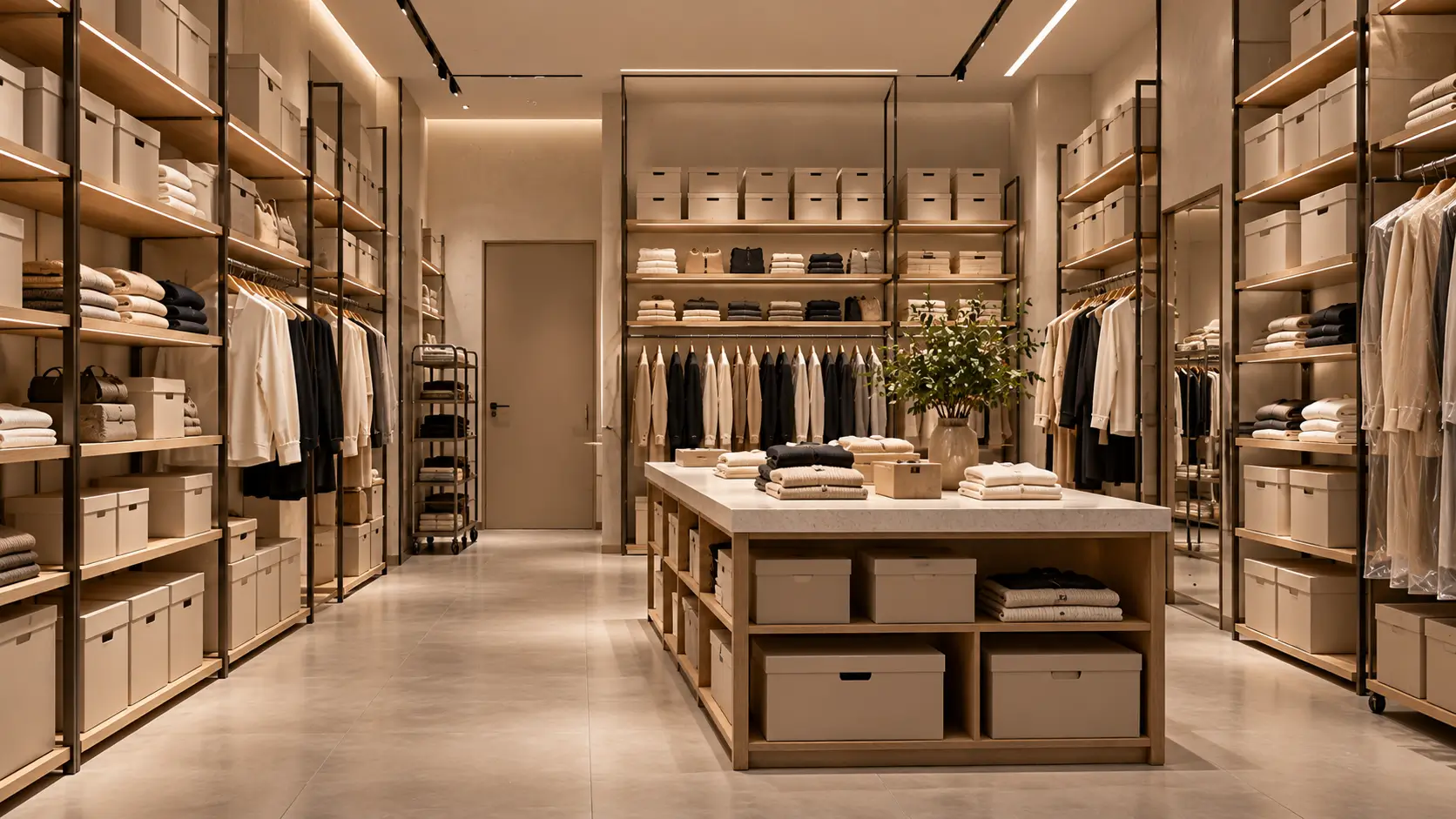
Fashion and Clothing Stores | Modular clothing racks, wall shelving, display tables and accessory cabinets | Custom heights, garment rails, adjustable shelves, branded finishes and storage |
Cosmetics and Perfume Stores | Illuminated display cabinets, modular product shelves, acrylic holders and branded counters | LED lighting, product compartments, custom colors, glass panels and premium finishes |
Glass showcases, lockable display cabinets, jewelry counters and display trays | Security locks, integrated lighting, removable trays, glass specifications and surface finishes | |
Modular eyewear displays, wall-mounted frame holders, illuminated shelving and storage cabinets | Customized frame holders, adjustable display positions, lighting and compact configurations | |
Supermarkets and Convenience Stores | Gondola shelving, adjustable product racks, promotional end displays and checkout counters | Shelf dimensions, load-bearing capacity, product categories and store layout |
Electronics Stores | Product demonstration counters, secure display cabinets, wall-mounted displays and storage units | Cable management, integrated power systems, product security and demonstration areas |
Pharmacies | Modular medicine shelving, lockable cabinets, service counters and categorized display units | Adjustable compartments, secure storage, product organization and accessible shelving |
Each retail sector requires a different combination of display structures and functional details. Jewelry fixtures, for example, need appropriate glass specifications, lighting and security features, while supermarket shelving must account for product weight, shelf capacity and replenishment access. Manufacturers can adjust materials, dimensions and component layouts to meet these project-specific requirements.
Key Considerations When Designing Custom Modular Displays
Developing custom modular displays involves more than selecting interchangeable components. Store measurements, product specifications, construction details and installation conditions all affect the final design. Addressing these factors before production helps reduce design changes and manufacturing issues later in the project.
- Store Dimensions and Layout: Start with architectural drawings, floor plans, ceiling heights, wall conditions and installation areas. Accurate measurements help determine fixture dimensions, aisle clearances and positioning. For projects involving multiple locations, each store’s measurements should be checked rather than relying entirely on one standard layout.
- Product Specifications: Consider product dimensions, weight, quantity and display methods when designing shelves, cabinets and supporting structures. Heavier merchandise may require reinforced panels, stronger metal frames or additional support points. Product access and replenishment should also be considered when deciding shelf depths and compartment arrangements.
- Modular Connections and Structure: Determine appropriate connection methods, brackets, support frames and fixing details to ensure components can be assembled and adjusted correctly. The design should account for fixture stability, repeated assembly and the expected frequency of reconfiguration. Connection details also need to be clearly documented in technical drawings.
- Materials and Surface Finishes: Select suitable MDF, plywood, metal, glass, acrylic and decorative finishes according to brand requirements, durability, maintenance needs and project budgets. Different materials can be combined within one fixture, but their thickness, weight, joining methods and surface treatments should be considered during manufacturing planning.

- Branding and Visual Identity: Coordinate colors, signage, logos, decorative panels and surface textures with the retailer’s brand guidelines. Custom details should be included in the design drawings and confirmed through material or finish samples before production to reduce differences between the approved concept and finished fixtures.
- Lighting and Electrical Integration: Plan LED strips, spotlights, wiring routes, power supplies and driver positions for illuminated display fixtures. Lighting should be positioned according to product visibility requirements, while electrical components need sufficient space for installation, maintenance and access. Applicable electrical requirements should also be reviewed for the destination market.
- Storage and Functionality: Incorporate drawers, concealed compartments, cable management, lockable sections and accessible storage where required. These details should be planned around staff workflows, inventory access and the products being displayed rather than added after the main fixture structure has been finalized.
- Transportation and Installation: Consider packaging dimensions, component assembly methods, shipping conditions and on-site installation requirements, particularly for international retail projects. Large fixtures may need to be divided into transportable sections, with suitable protective packaging and clear assembly instructions prepared before shipment.
For complex projects, 3D visualization and detailed technical drawings help design companies, contractors and manufacturers review dimensions, materials, structural details and fixture configurations before production begins. When evaluating retail display manufacturers, buyers should also review their ability to interpret technical drawings, recommend suitable materials, produce customized components and maintain consistent quality across different production batches.
In Conclusion
Custom modular retail display systems bring together configurable structures and project-specific manufacturing. Fixture dimensions, materials, construction methods and finishes can be developed around the products being displayed and the requirements of each retail space.
For businesses managing store renovations, new retail developments or multi-location rollouts, detailed design coordination and reliable manufacturing are important to achieving consistent results. Working with an experienced custom retail fixtures manufacturer helps translate approved concepts into fixtures that meet the project’s technical and operational requirements.
Frequently Asked Questions
What Is the Difference Between Custom Modular and Standard Retail Display Systems?
Standard retail display systems are generally manufactured in predetermined sizes and configurations. Custom modular systems, on the other hand, are developed around specific store dimensions, product requirements and brand guidelines. Buyers can specify materials, finishes, structures and component combinations to match their retail project rather than adapting the store layout to fixed-size products.
Can Custom Modular Retail Display Systems Be Used for Multiple Store Locations?
Yes. Custom modular display systems can be developed using approved design specifications and repeatable components for multiple store locations. Individual dimensions and configurations can be adjusted to accommodate different floor plans, while shared materials, finishes and construction standards help maintain consistency across the stores.
What Can Be Customized in a Modular Retail Display System?
Most fixture elements can be customized, including dimensions, structural designs, shelf configurations, materials, surface finishes, colors, lighting, glass panels, storage compartments and branded details. Manufacturers can also develop custom components based on 3D designs, technical drawings or specific project requirements.
ONI Shopfitting: Custom Modular Retail Display Manufacturing
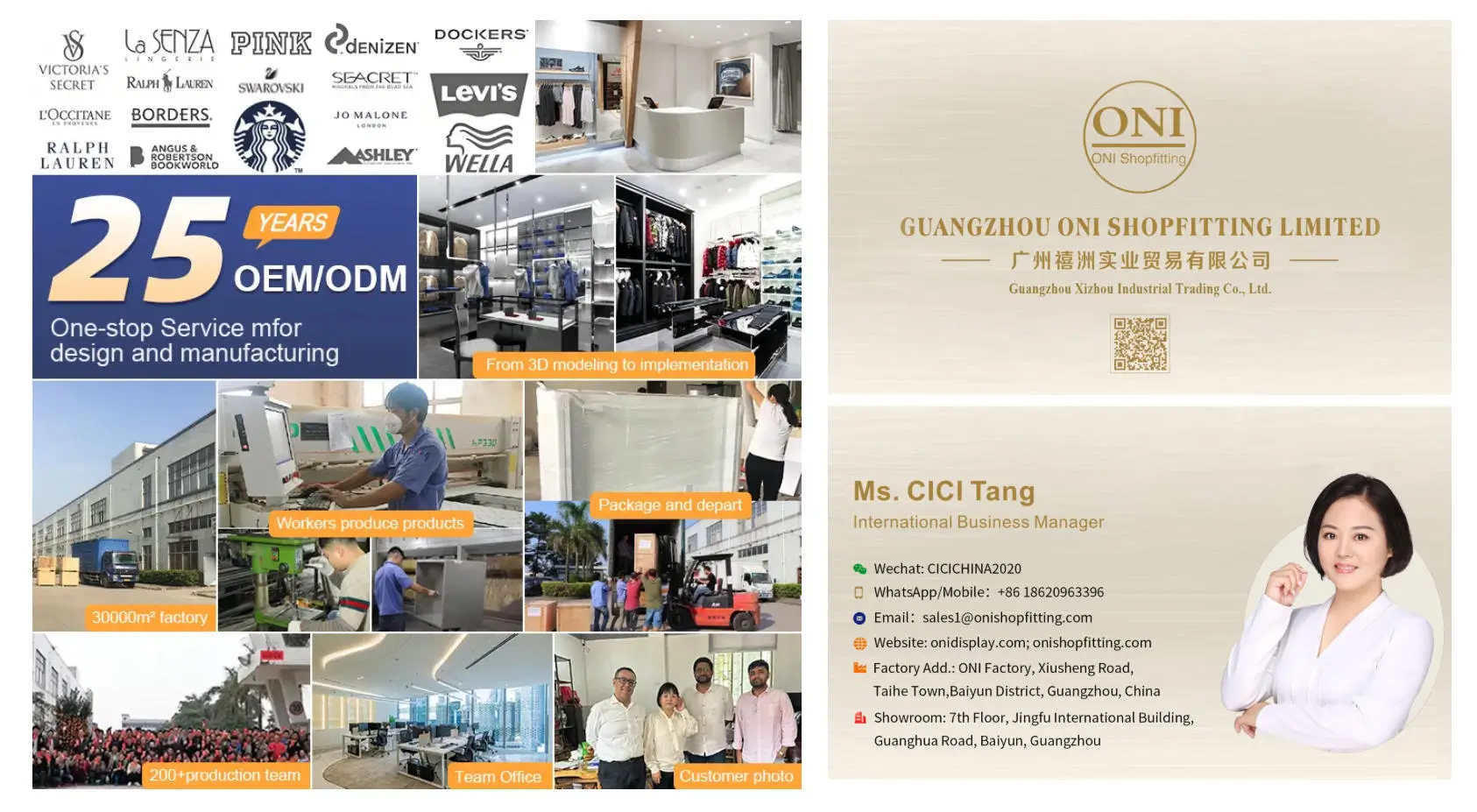
ONI Shopfitting provides custom retail display systems and complete shopfitting solutions for retail brands, design companies, general contractors and shopfitting businesses worldwide. With over 25 years of manufacturing experience and a 30,000㎡ production facility in Guangzhou, China, we integrate woodworking, metal fabrication, glass processing and acrylic manufacturing to produce customized shelving, display cabinets, retail counters and store fixtures.
 Get in touch with us today to start your project.
 WhatsApp/Call: +86 186 2096 3396
 Email: sales1@onishopfitting.com
 Factory Location: Guangzhou, China