Luxury retail is more than selling expensive products. It focuses on premium quality, brand identity, personalized service, and exceptional shopping experiences. From fashion boutiques and jewelry stores to high-end cosmetics and watch retailers, every detail contributes to how customers perceive a luxury brand.
Unlike conventional retail stores, luxury retail environments emphasize exclusivity, carefully designed interiors, premium materials, and sophisticated product presentation. Store layouts, lighting, and custom retail fixtures work together to communicate brand values and create memorable customer experiences.
In this guide, we explore what luxury retail is, how it differs from traditional retail, and how luxury retail store design, display fixtures, and customer experience contribute to a successful retail environment.
What Is Luxury Retail?
Luxury retail refers to the sale of premium products and services that emphasize exceptional quality, craftsmanship, exclusivity, and brand reputation. These businesses typically offer high-end merchandise, including designer clothing, jewelry, watches, perfumes, cosmetics, leather goods, and luxury accessories. Unlike conventional retailers, luxury brands focus on delivering distinctive products and personalized shopping experiences rather than competing primarily on price. For broader context, see the overview of luxury goods.
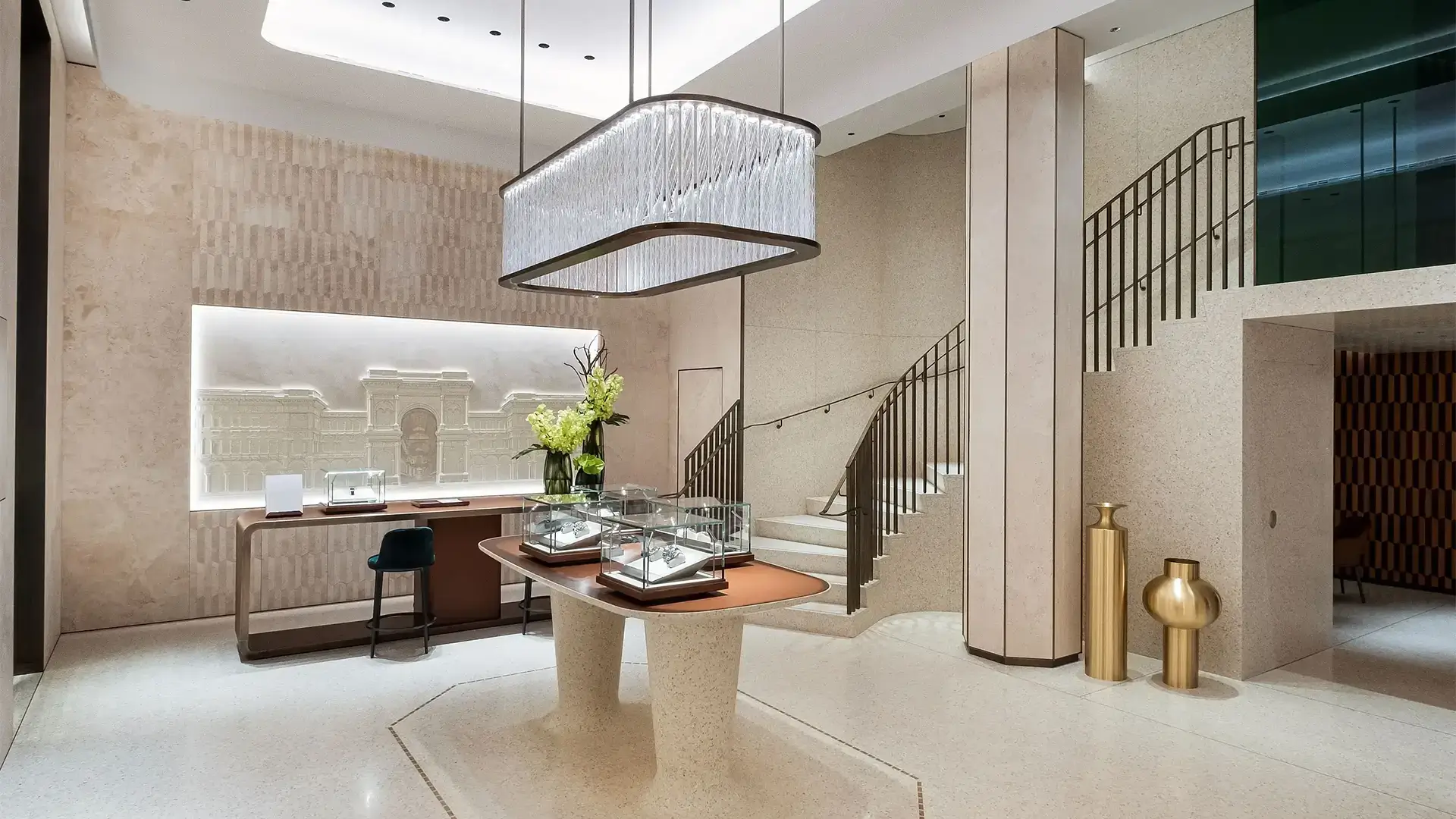
Beyond the products themselves, luxury retail places considerable importance on store environments, customer interactions, and brand presentation. Elegant interiors, carefully selected materials, sophisticated lighting, and custom display cabinets help create a premium shopping atmosphere. Every element of the retail space should reflect the brand’s identity while providing customers with a comfortable, memorable, and engaging shopping experience.
Luxury Retail vs Traditional Retail: Key Differences
Although luxury retail and traditional retail share the goal of selling products, they differ in brand positioning, store design, merchandise presentation, and customer experience. Luxury retailers emphasize exclusivity, personalized service, premium materials, and carefully designed shopping environments. Traditional retailers generally focus more on convenience, accessibility, product variety, and operational efficiency. These differences also influence store layouts, lighting, and the selection of retail store display fixtures.
| Factors | Luxury Retail | Traditional Retail |
|---|---|---|
| Brand Positioning | Exclusivity, craftsmanship, and prestige | Value, convenience, and accessibility |
| Product Range | Curated premium collections | Broader product selections |
| Store Design | Refined interiors and premium finishes | Functional and cost-conscious layouts |
| Display Fixtures | Custom display cabinets and premium materials | Standard shelving and modular display systems |
| Product Presentation | Selective displays with generous spacing | Higher product density |
| Customer Service | Personalized consultations and relationship building | Efficient customer assistance |
| Lighting | Layered architectural and accent lighting | Primarily general and functional lighting |
| Shopping Experience | Immersive and brand-focused | Convenient and transaction-focused |
While these differences are not absolute, luxury retail generally places greater emphasis on creating a consistent relationship between products, brand identity, store environments, and customer experiences. Custom retail fixtures, sophisticated lighting, and carefully planned layouts help luxury brands communicate their values and create memorable shopping experiences.
Luxury Retail Store Design: Essential Elements
Luxury retail store design involves more than selecting attractive furniture and decorative materials. It requires careful coordination between store layout, architectural finishes, lighting, display fixtures, and customer movement to create an environment that reflects the brand’s identity.
A successful luxury store should balance visual appeal with practical retail requirements. Every design element should support product presentation, customer comfort, staff operations, and long-term maintenance while maintaining a consistent premium appearance.
1. Store Layout and Space Planning
The store layout determines how customers enter, navigate, and interact with different merchandise areas. Luxury retailers often prioritize clear circulation routes, open sightlines, and well-organized display zones to create a comfortable shopping environment. Unlike crowded retail layouts, luxury boutiques typically provide additional space between fixtures to emphasize individual products and encourage customers to explore the store at their own pace.
Effective space planning should consider entrance displays, featured product areas, consultation spaces, fitting rooms, checkout counters, and storage facilities. The arrangement of these areas should support natural customer movement while ensuring that staff can provide assistance efficiently. For luxury retail chains and multi-store projects, consistent layout standards can also help maintain recognizable brand presentation across different locations.
2. Premium Materials and Finishes
Material selection plays an important role in shaping the appearance, durability, and perceived quality of luxury retail interiors. Premium materials such as natural wood, stainless steel, glass, stone, and decorative metal finishes are frequently used to create sophisticated store environments. Different materials can be combined to introduce visual contrast, enhance architectural details, and complement specific merchandise categories.
For custom luxury retail fixtures, material selection should consider both aesthetics and practical performance. Display cabinets, counters, and shelving systems must withstand daily use while maintaining their appearance over time. Surface durability, maintenance requirements, structural stability, and manufacturing feasibility are important factors when selecting suitable materials.
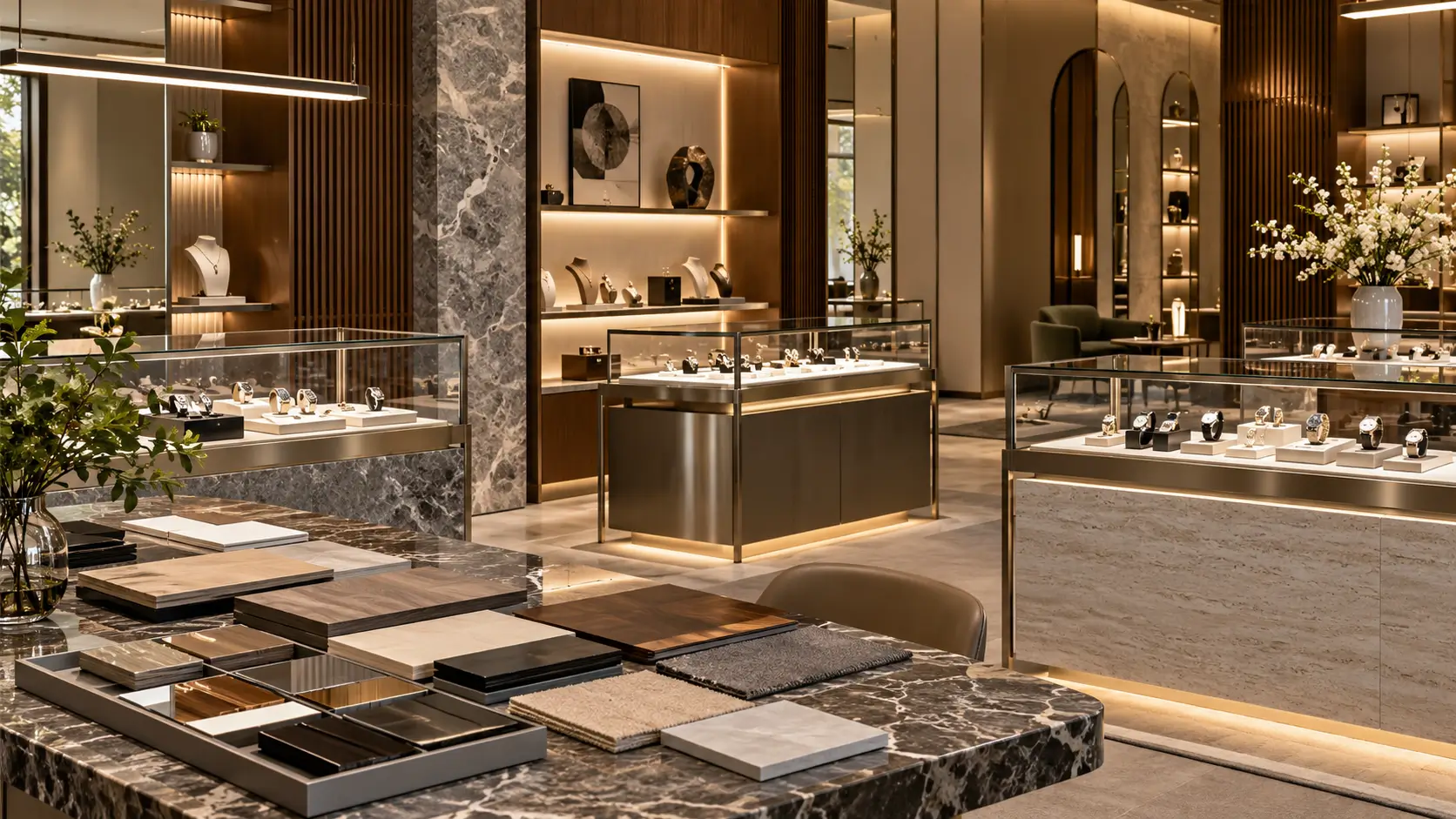
Common materials used in luxury retail interiors and custom display fixtures include:
- Stainless Steel: Offers durability, corrosion resistance, and refined metallic finishes for display frames, counters, shelving, and decorative details.
- Wood and Wood Veneer: Introduces natural texture and warmth, making them suitable for wall displays, furniture, cabinets, and decorative panels.
- Tempered Glass: Provides transparent product presentation and is commonly used in jewelry showcases, watch displays, and premium glass cabinets.
- Natural Stone and Engineered Stone: Creates elegant surfaces for checkout counters, display platforms, decorative panels, and product presentation areas.
- Acrylic: Offers flexibility for custom product holders, transparent display supports, decorative components, and specialized display stands.
- Leather and Upholstered Materials: Adds comfort and refined textures to consultation furniture, seating areas, and selected decorative display surfaces.
3. Lighting Design
Lighting is a fundamental element of luxury retail store design because it influences product visibility, material appearance, and the overall shopping atmosphere. Carefully designed lighting can highlight product details, create visual depth, and guide customer attention toward featured merchandise. Different retail categories require different lighting strategies depending on their products, store layouts, and brand positioning.
A successful lighting plan typically combines several lighting layers rather than relying on a single source. General illumination provides comfortable visibility, while focused accent lighting highlights individual products and display areas. Integrated LED lighting within custom display cabinets can further enhance merchandise presentation and create a refined appearance.
- Ambient Lighting: Provides general illumination throughout the store and creates a comfortable atmosphere for customers and staff.
- Accent Lighting: Highlights featured merchandise, display walls, and selected product collections through focused illumination.
- Integrated Display Lighting: Incorporates LED systems into glass showcases, shelving, counters, and other custom retail fixtures to improve product visibility.
- Decorative Lighting: Uses chandeliers, pendant lights, and architectural lighting features to reinforce the store’s identity and interior style.
Lighting color temperature, brightness, color rendering, and fixture positioning should be carefully selected to match the merchandise and surrounding materials. A well-balanced system helps prevent excessive glare and shadows while maintaining a consistent atmosphere throughout the luxury retail space.
4. Color and Brand Identity
Color selection contributes significantly to the visual identity and emotional atmosphere of a luxury retail store. Neutral shades, natural wood tones, dark finishes, and carefully selected metallic accents are commonly used to create elegant interiors. However, the most appropriate color palette depends on the brand’s positioning, merchandise categories, and desired customer experience.
A coordinated color scheme should extend beyond walls and decorative elements to include display cabinets, shelving, counters, signage, and architectural details. Custom luxury retail fixtures can incorporate brand-specific colors and surface finishes to reinforce visual consistency. For businesses operating multiple boutiques, standardized color and material specifications help create a recognizable brand environment across different locations.
5. Visual Merchandising and Product Presentation
Visual merchandising determines how products are arranged, highlighted, and presented within a luxury store. Unlike conventional retail environments that often prioritize displaying large product quantities, luxury boutiques generally use carefully curated arrangements, balanced spacing, and selected feature displays to emphasize individual products and collections. Learn more about visual merchandising and its role in retail presentation.
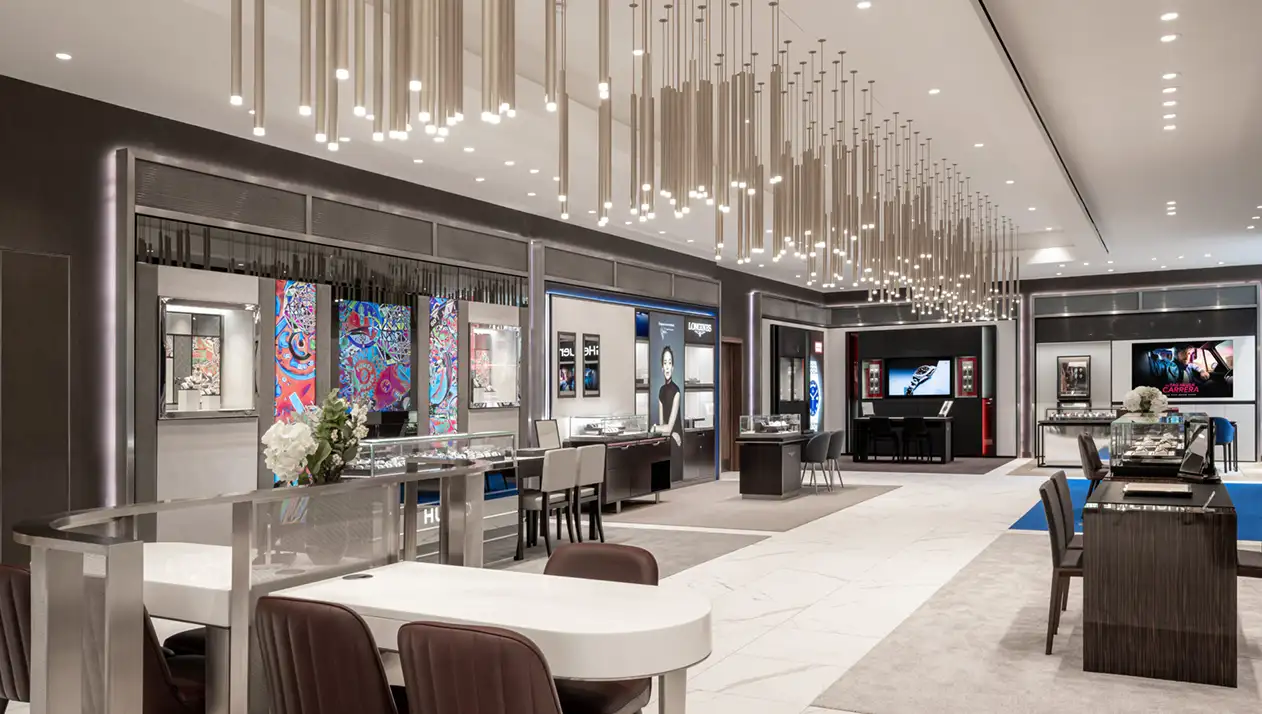
Effective visual merchandising combines attractive presentation with practical product accessibility. Custom glass showcases, wall-mounted displays, freestanding stands, and island display cabinets can be arranged to create visual focal points while maintaining comfortable customer movement. Display heights, lighting positions, product groupings, and fixture proportions should work together to improve merchandise visibility and communicate the brand’s premium positioning.
Essential Display Fixtures for Luxury Retail Stores
Display fixtures are essential components of luxury retail store design, influencing product presentation, store organization, and customer experience. Unlike standard retail furniture, luxury retail store fixtures are often customized to match brand identity, architectural styles, and merchandise requirements. High end retail display fixtures and luxury store fixtures combine premium materials, refined finishes, integrated lighting, and practical features to create attractive and functional shopping environments.
| Display Fixture | Description | Applications |
|---|---|---|
| Glass Display Showcases | Secure glass cabinets with integrated lighting, locks, and premium finishes | Jewelry, watches, luxury accessories |
| Wall Display Cabinets | Custom wall displays with shelving, lighting, storage, and decorative finishes | Perfumes, cosmetics, fashion accessories |
| Freestanding Display Stands | Independent display units for highlighting featured products and collections | Handbags, footwear, promotional displays |
| Island Display Cabinets | Central display units offering visibility and access from multiple sides | Jewelry, watches, cosmetics |
| Luxury Clothing Racks | Premium metal or mixed-material racks for organized apparel presentation | Fashion boutiques, designer clothing stores |
| Display Counters | Custom counters combining product presentation, consultation, storage, and security | Jewelry stores, watch boutiques, luxury retailers |
| Checkout Counters | Custom service counters with storage, transaction areas, and coordinated finishes | Fashion boutiques, cosmetics stores, luxury retail shops |
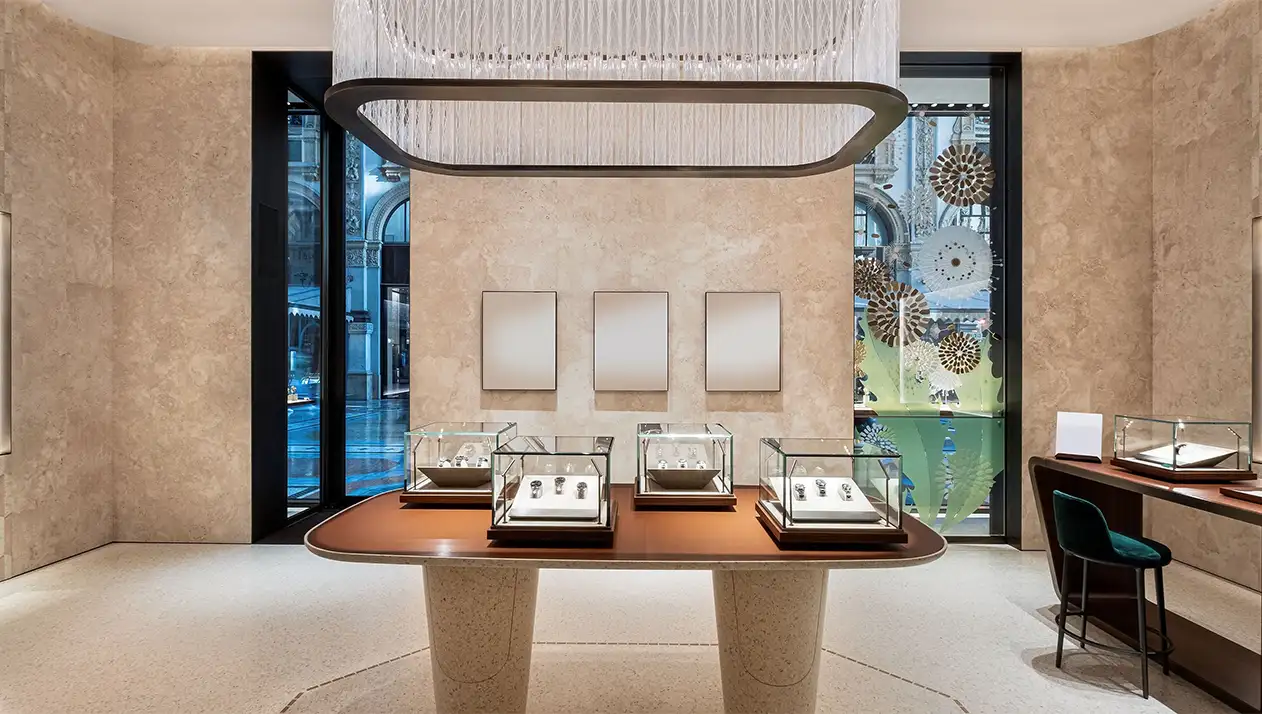
Choosing suitable luxury retail fixtures requires consideration of product dimensions, display capacity, material durability, lighting, security, and maintenance. For luxury boutiques, complete store fit-outs, and multi-store rollout projects, custom retail fixtures provide greater design flexibility while helping maintain consistent materials, finishes, and brand presentation across different locations. See an example of island display cabinets for a premium retail application.
How Luxury Retail Creates a Premium Customer Experience
Customer experience is a defining part of luxury retail. Beyond purchasing high-end products, customers often expect personalized attention, comfortable shopping environments, and meaningful interactions with the brand. Store design, luxury retail displays, lighting, and service areas should work together to create a consistent and memorable shopping experience.
The following elements contribute to a premium luxury retail experience:
- Personalized Shopping Services: Luxury retailers often provide individual consultations, product recommendations, and tailored customer assistance. Dedicated consultation counters, private shopping areas, and comfortable seating spaces help create opportunities for personalized interactions while maintaining customer privacy.
- Comfortable and Spacious Layouts: Clear walkways, generous spacing between displays, and thoughtfully arranged merchandise create a relaxed shopping environment. Well-planned layouts allow customers to browse products comfortably while providing sufficient space for staff assistance and customer movement.
- Interactive Product Experiences: Customers may want to examine products, explore materials, try accessories, or test fragrances before purchasing. Jewelry consultation counters, perfume testing stations, fitting rooms, and accessible display stands support these interactions while maintaining an organized product presentation.
- Sensory Store Environment: Lighting, background music, material textures, and subtle fragrances contribute to the atmosphere of a luxury store. These sensory elements should be coordinated with the brand’s identity to create a comfortable and engaging environment without distracting customers from the merchandise.
- Premium Product Presentation: Carefully arranged displays, suitable lighting, and high-quality custom retail fixtures enhance the appearance of luxury merchandise. Glass display showcases, decorative platforms, and coordinated shelving systems help emphasize product details and create a refined shopping experience.
- Consistent Brand Experience: Luxury customers should encounter recognizable design standards and service quality across different store locations. Consistent fixture materials, colors, lighting arrangements, and visual merchandising guidelines help luxury brands maintain their identity across flagship boutiques, shopping malls, and international retail locations.
In Conclusion
Luxury retail combines premium products, distinctive brand identity, sophisticated store design, and personalized customer experiences. From store layouts and architectural lighting to material selection and custom display fixtures, every element contributes to the way customers perceive and interact with a luxury brand. By investing in thoughtful retail design, high-quality display solutions, and coordinated project execution, luxury retailers can create attractive shopping environments that strengthen brand presentation and support long-term business development.
Frequently Asked Questions
What is the difference between luxury retail and premium retail?
Luxury retail emphasizes exclusivity, craftsmanship, brand prestige, and personalized experiences, while premium retail focuses on high-quality products and services with broader accessibility.
What types of display fixtures are commonly used in luxury retail stores?
Common fixtures include glass display showcases, wall display cabinets, freestanding stands, island displays, clothing racks, and custom counters, depending on merchandise and store requirements.
Why are custom display fixtures important for luxury retail brands?
Custom display fixtures help brands maintain consistent store design, improve product presentation, and integrate specific materials, finishes, and lighting across retail locations.
Custom Luxury Retail Fixtures for Your Next Project
At ONI Shopfitting, we provide custom retail fixtures and shopfitting solutions for luxury boutiques, jewelry stores, watch retailers, perfume and cosmetics stores, and premium fashion brands. From store layout planning and 3D visualization to material selection, technical drawings, manufacturing, quality inspection, and global delivery, we support various stages of luxury retail store development.
Whether you are planning a single luxury boutique, a complete retail store fit-out, or a multi-store rollout project, our team can help develop custom display cabinets, luxury retail store fixtures, and coordinated display solutions based on your brand requirements, merchandise categories, and project specifications.
 Get in touch with us today to start your project.
 WhatsApp/Call: +86 186 2096 3396
 Email: sales1@onishopfitting.com
 Factory Location: Guangzhou, China