
Starting a perfume business involves much more than finding attractive fragrances and putting them on shelves. You need to understand your target market, develop a distinctive perfume concept, meet legal requirements, create a realistic business plan, choose the right location, and build a sales and marketing strategy that supports long-term growth.
For retailers planning to open a physical perfume store, the retail environment is another important part of the business. Customers often want to see the bottles, smell different fragrances, use testers, compare products, and receive recommendations before making a purchase. A well-planned store layout, combined with the right perfume display cabinets, perfume display stands, fragrance display fixtures, lighting, and visual merchandising, can make this process easier and more engaging.
So, how do you start a perfume business? This guide walks you through the key steps, from market research and brand positioning to perfume store design, perfume display showcases, marketing, and preparing your retail space for opening.
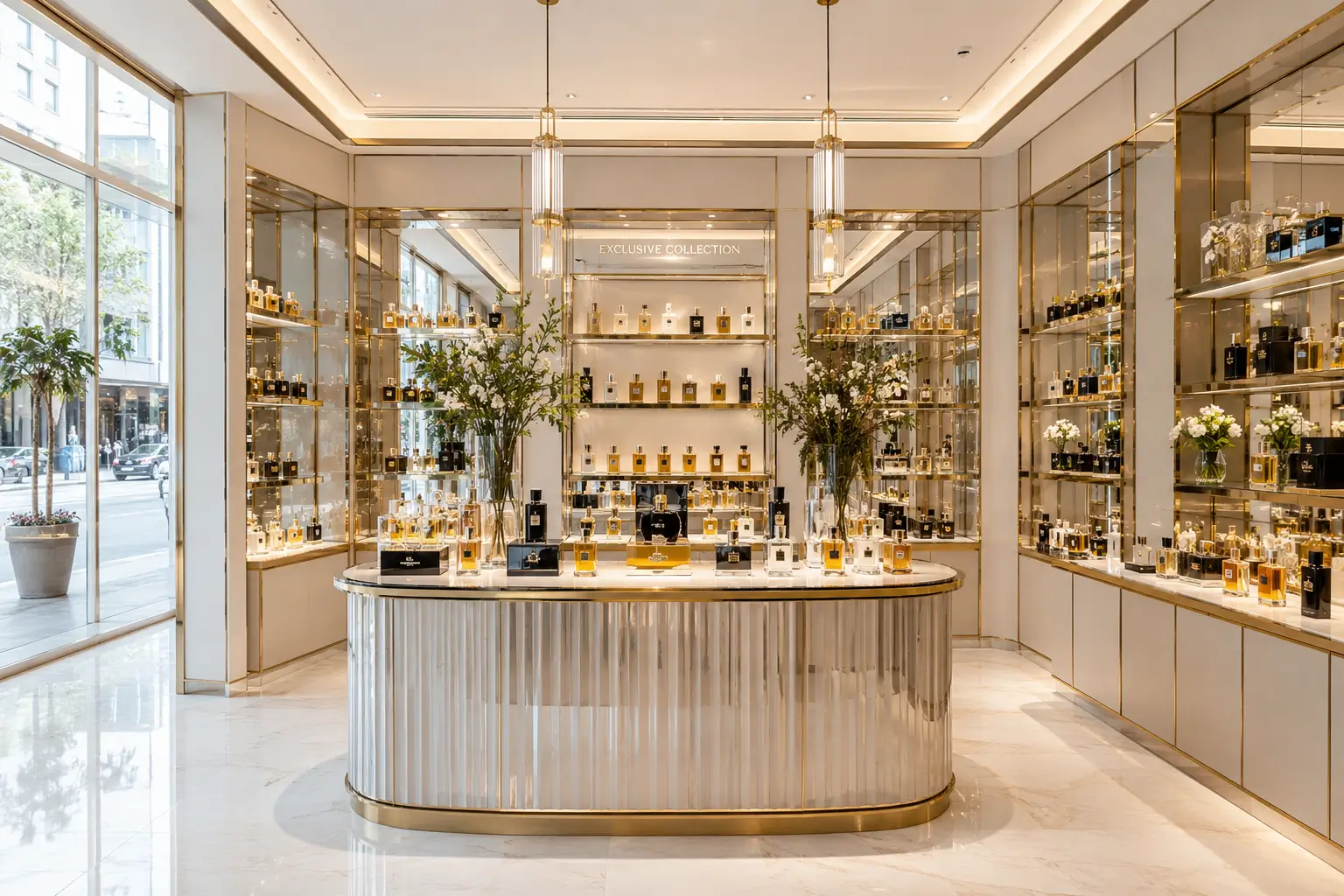
1. Market Research & Niche Selection
Before starting a perfume business, research the market you want to enter. Look at existing perfume retailers, popular fragrance categories, typical price ranges, customer preferences, and shopping habits. If you plan to open a physical store, visit competing perfume shops and observe their locations, product ranges, customer traffic, store layouts, and product presentation.
Rather than trying to appeal to every fragrance buyer, identify a niche that gives your perfume business a clearer position. Possible niches include:
- Luxury and designer perfumes
- Niche and independent fragrances
- Arabic and Middle Eastern perfumes
- Affordable everyday fragrances
- Natural and botanical fragrances
- Private-label perfume collections
- Personalized or custom fragrances
- Perfume gift sets and seasonal collections
Once you have identified your niche, define your ideal customer more precisely. Consider their age range, purchasing power, fragrance preferences, shopping habits, and typical purchase occasions. These insights will influence your product assortment, pricing, branding, store location, visual merchandising, and the type of perfume retail display fixtures your physical store may eventually require.
2. Create Your Unique Perfume Concept
A strong perfume concept helps your business stand out in a competitive fragrance market. Before choosing your products or designing your store, define what you want customers to associate with your business. Your concept might focus on luxury fragrances, niche scents, natural ingredients, Middle Eastern perfumes, personalized fragrances, or a carefully curated multi-brand collection.
Your concept should connect your target customers, product selection, pricing, brand identity, and customer experience. Think about your brand name, logo, packaging, colors, typography, visual style, and product presentation. A luxury fragrance concept may emphasize exclusivity and sophisticated presentation, while a younger perfume brand may focus on personalization, fragrance discovery, and a more interactive shopping experience.
For retailers opening a physical perfume store, this concept should extend naturally into the retail space. Materials, lighting, signage, perfume display cabinets, glass perfume display cases, perfume display shelves, retail counters, and product arrangement should reinforce the same visual identity. Defining these elements early gives your store designer and shopfitting supplier a clearer direction when translating your perfume concept into a practical retail environment.

3. Register Your Business & Ensure Legal Compliance
Before you start selling perfume, make sure your business is properly registered and meets the legal requirements of the country or region where you operate. Requirements vary depending on whether you are a retailer, importer, distributor, manufacturer, or private-label perfume business, so check the regulations that apply specifically to your activities.
Depending on your location and business model, you may need to consider business and tax registration, retail licenses, cosmetic and fragrance regulations, product labeling, trademark protection, import and customs requirements, insurance, and product safety documentation. Businesses developing or manufacturing their own fragrances may also face additional requirements covering ingredients, production, testing, packaging, labeling, and product claims.
For a physical perfume store, compliance extends to the retail space itself. Local authorities, landlords, and shopping malls may have requirements covering fire safety, electrical systems, accessibility, signage, construction materials, retail store fixtures, fixture dimensions, and installation procedures. Obtain these requirements before approving your shop drawings and manufacturing your perfume display cabinets, as late changes can increase costs and delay your store opening.
4. Create a Perfume Business Plan
A perfume business plan turns your idea into a practical roadmap. It should explain how your business will attract customers, generate revenue, control costs, and grow over time. A clear plan can also help you identify potential problems before making major investments in inventory, rent, marketing, or store construction.
Your business plan should cover your target market, product assortment, pricing strategy, suppliers, sales channels, marketing approach, staffing requirements, startup investment, operating expenses, and expected revenue. For a physical perfume store, also consider your store size, location, storage requirements, retail shopfitting, perfume store fixtures, custom retail displays, and target opening schedule. A simple framework can help organize the most important decisions:
| Planning Area | Key Questions to Consider |
|---|---|
| Target Customer | Who will buy your perfumes and what are they looking for? |
| Product Range | Which brands, fragrance categories, and price levels will you offer? |
| Sales Channels | Physical store, e-commerce, marketplace, or omnichannel? |
| Pricing | What margins are required to support your operating costs? |
| Location | Where does your target customer normally shop? |
| Store Fit-Out | What perfume displays, retail counters, lighting, signage, and storage are required? |
| Marketing | How will customers discover and return to your perfume business? |
| Budget | How much startup investment and working capital will you need? |
| Growth | Can your store concept and display fixtures be replicated in future locations? |
5. Choose the Right Location for Your Perfume Store
The right location can significantly influence the visibility and performance of a physical perfume business. Depending on your positioning and target customers, potential locations might include shopping malls, department stores, airports, high streets, tourist areas, hotels, and luxury shopping districts. Rather than focusing only on total foot traffic, consider whether the people visiting the location actually match your target customer profile.
Study the surrounding retail environment before making a decision. Nearby cosmetics, beauty, fashion, jewelry, and lifestyle brands can indicate whether the area attracts relevant customers. At the same time, compare rental costs, competitors, storefront visibility, accessibility, operating hours, storage capacity, and the amount of usable selling space. Your location needs to make sense both commercially and operationally.
The physical characteristics of the store are equally important. Obtain an accurate floor plan and check the storefront width, entrances, ceiling height, columns, usable wall space, electrical points, HVAC conditions, storage areas, and structural limitations. These details determine where your wall-mounted perfume display cabinets, freestanding perfume display stands, glass display cases, display islands, and retail counters can be positioned. For shopping mall projects, obtain the landlord’s fit-out guidelines before beginning detailed store design.
6. Plan Your Perfume Store Layout
A well-planned perfume store layout should support the way customers naturally discover fragrances. Shoppers often browse several collections, test different scents, compare products, speak with sales staff, and return to products they tried earlier. Your perfume store fixtures should therefore support each stage of this customer journey rather than simply filling all available floor and wall space.
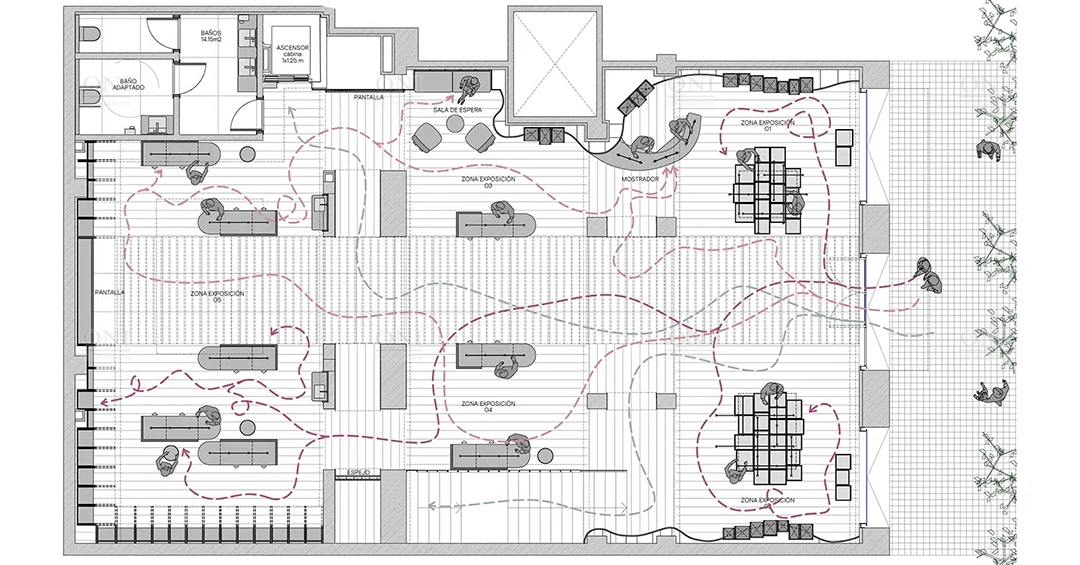
Consider dividing your perfume store into the following functional areas:
- Entrance & Feature Zone: Use the first visible area to introduce new launches, signature fragrances, best sellers, or seasonal campaigns. A perfume display stand, feature display table, or custom retail display can create a strong focal point without blocking the entrance.
- Wall Display Zone: Wall-mounted perfume display cabinets and perfume display shelves are ideal for organizing the main fragrance assortment while maximizing vertical space. Collections can be arranged by brand, fragrance family, product line, price level, or other merchandising categories.
- Central Display Zone: Freestanding perfume display stands and retail display islands can highlight new products, gift sets, limited editions, and promotional collections. These fixtures should be positioned with enough surrounding space for customers to browse from multiple directions.
- Testing Zone: Provide an accessible area for testers, blotter strips, and fragrance discovery. A dedicated perfume tester display or fragrance display counter can keep sampling materials organized while giving customers enough room to compare different scents.
- Consultation Area: Premium perfume boutiques may benefit from a dedicated area where staff can discuss customer preferences and provide personalized fragrance recommendations. Depending on the store size, this may include seating, a consultation table, or a customized service counter.
- Checkout Counter: Position the retail checkout counter where staff can serve customers efficiently while maintaining visibility across the store. Drawers and cabinets can provide concealed storage for packaging, shopping bags, POS equipment, and daily supplies.
- Storage Area: Plan sufficient storage for inventory, tester bottles, gift boxes, shopping bags, and operational supplies. Storage can also be integrated into custom perfume display cabinets, wall units, retail counters, and display islands to make better use of the available space.
7. Choose the Right Perfume Display Cabinets
Perfume display cabinets are an important part of a physical fragrance store. Perfume bottles are highly visual products, and their glass, colors, shapes, labels, and packaging all contribute to their perceived value. The right perfume display case or perfume display showcase should highlight these details while remaining consistent with your overall store concept.
Different areas of a fragrance store require different perfume store display fixtures. Wall cabinets can provide higher merchandising capacity, while a freestanding perfume display stand can draw attention to new collections. Premium products may benefit from illuminated glass perfume display cabinets, while tester counters create a dedicated space for fragrance discovery.
| Perfume Display Type | Best Used For | Key Design Considerations |
|---|---|---|
| Perfume Display Cabinet | Main fragrance collections | Shelf spacing, capacity, lighting, branding and storage |
| Wall-Mounted Perfume Display Cabinet | Large product ranges | Vertical space, LED lighting, brand graphics and concealed storage |
| Perfume Display Stand | New arrivals and promotional products | Visibility, accessibility and flexible merchandising |
| Perfume Display Showcase | Hero products and premium collections | Materials, lighting and visual presentation |
| Glass Perfume Display Case | Luxury and limited-edition fragrances | Glass quality, security, accessibility and premium finishes |
| Perfume Display Shelf | Organized fragrance collections | Bottle dimensions, shelf spacing, durability and lighting |
| Perfume Tester Display | Sampling and fragrance discovery | Accessibility, organization, surface durability and easy cleaning |
| Perfume Display Island | Central merchandising areas | Fixture height, multi-side access, circulation and integrated storage |
When designing custom perfume display cabinets, consider your bottle dimensions, approximate SKU quantity, merchandising strategy, brand colors, materials, lighting, storage, maintenance, and installation requirements. Custom displays can combine glass, metal, engineered wood, veneer, laminate, acrylic, stone-look finishes, illuminated shelves, logos, branded panels, drawers, cabinets, and concealed storage.
For B2B perfume retailers, manufacturing quality and practicality are just as important as appearance. When working with a perfume display cabinet manufacturer or perfume display cabinet supplier, provide your store floor plan, bottle dimensions, product quantities, brand guidelines, preferred materials, lighting requirements, and storage needs. This allows the custom perfume display fixtures to be developed around both your brand concept and practical merchandising requirements.
8. Create a Strong Brand Experience
A physical perfume store offers something an online product page cannot fully reproduce: a sensory experience. Customers can see the bottle, smell the fragrance, compare different scents, interact with sales staff, and experience the atmosphere surrounding the brand. This makes your retail environment an important part of how customers perceive your perfume business.
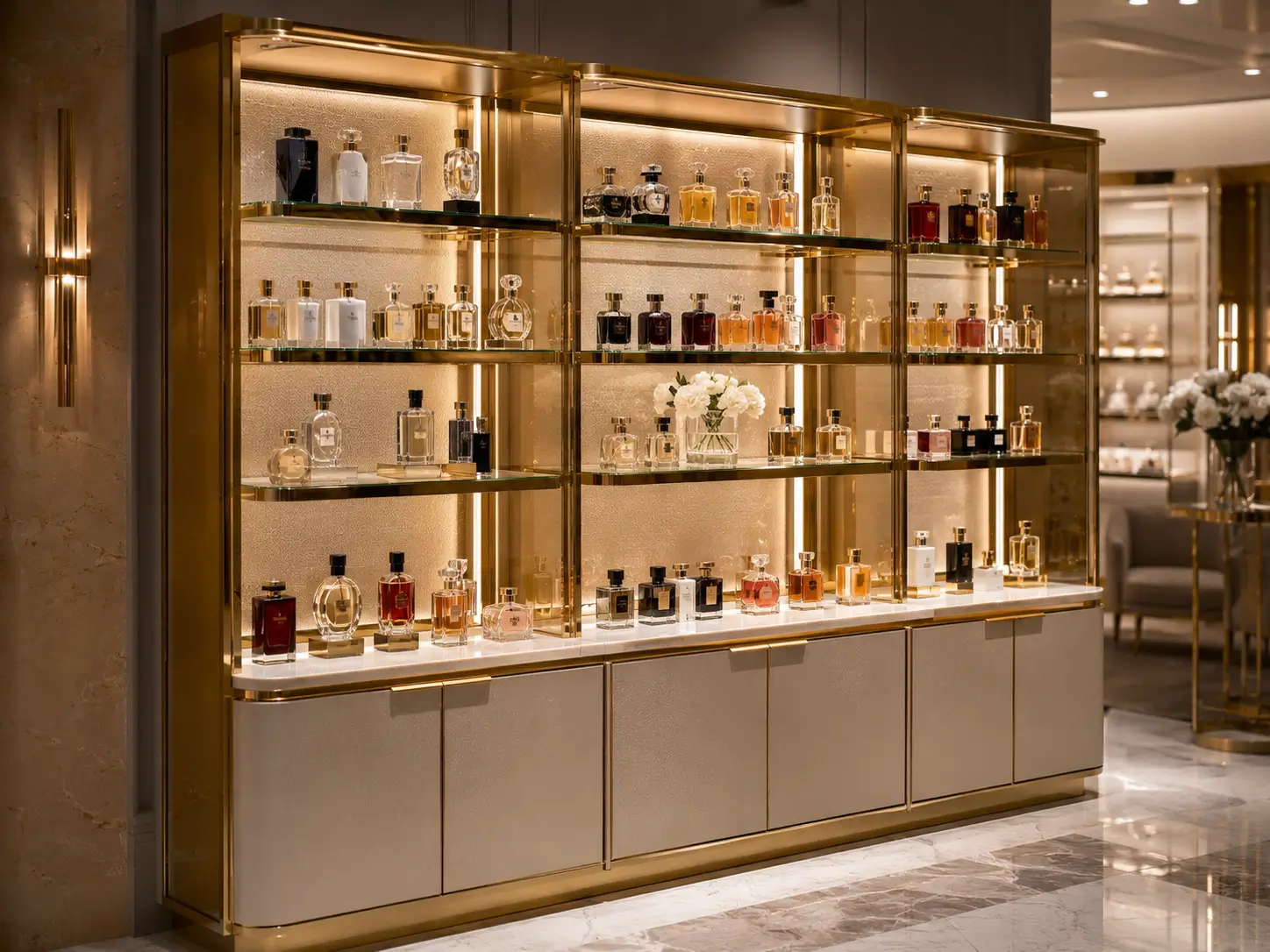
Create consistency throughout the customer journey. Your storefront, signage, colors, materials, lighting, packaging, perfume display cabinets, fragrance display stands, perfume display shelves, glass showcases, and tester counters should communicate the same brand positioning. For example, a luxury perfume boutique may combine glass display cases, metallic finishes, stone-look surfaces, subtle lighting, and spacious product presentation to create a more refined retail environment.
Visual merchandising should also establish a clear product hierarchy. Give signature fragrances, new launches, best sellers, and seasonal campaigns prominent positions using an illuminated perfume display showcase, feature display stand, or freestanding retail fixture. Supporting collections can then be organized across wall-mounted perfume displays according to brand, fragrance family, collection, or price range, helping customers navigate the store more easily.
9. Develop Your Sales & Marketing Strategy
Your sales and marketing strategy should begin before your perfume store officially opens. Introduce your concept, fragrance collections, store location, and opening date in advance to build awareness among potential customers. Social media previews, product introductions, behind-the-scenes store fit-out content, influencer collaborations, sampling campaigns, and opening promotions can help generate early interest.
After opening, combine online and offline marketing channels according to where your customers spend their time. Your strategy may include content marketing, social media, paid advertising, email campaigns, influencer partnerships, fragrance sampling, loyalty programs, seasonal promotions, product launches, and in-store events. Updating your perfume display stands and visual merchandising for new collections or seasonal campaigns can also give existing customers new reasons to revisit your store.
Your physical and digital channels should support each other. Customers may discover a fragrance through social media, visit your store to test it, and later reorder through your website. At the same time, distinctive perfume display cabinets, custom retail displays, seasonal window displays, and store interiors can generate visual content for digital campaigns. Connecting these touchpoints helps create a more consistent brand experience across different sales channels.
In Conclusion
Learning how to start a perfume business involves researching the market, developing a clear brand concept, meeting legal requirements, planning your budget, choosing the right location, and creating an effective retail and marketing strategy. Careful planning of the store layout, perfume display cabinets, lighting, and customer experience can also help create a more professional retail environment and support long-term business growth.
FAQ About Starting a Perfume Business
1. How Much Does It Cost to Start a Perfume Business?
The cost of starting a perfume business depends on your business model, location, store size, product range, and brand positioning. An online fragrance business, shopping mall kiosk, independent boutique, and luxury perfume store require very different levels of investment. For a physical store, your budget should account for inventory, rent and deposits, store fit-out, perfume display cabinets and other retail display fixtures, lighting, signage, POS systems, packaging, staffing, marketing, and working capital.
2. What Type of Display Cabinet Is Best for a Perfume Store?
The best perfume display cabinet depends on your store size, product assortment, brand positioning, and merchandising strategy. Wall-mounted perfume display cabinets work well for larger collections, while freestanding perfume display stands can highlight new products and promotional collections. Luxury fragrances may be better presented in illuminated glass perfume display cases or perfume display showcases.
3. What Information Should I Prepare Before Designing a Perfume Store?
Prepare an accurate floor plan, store dimensions, product categories, approximate SKU quantity, bottle dimensions, brand guidelines, reference images, preferred materials, budget range, and expected opening date. For shopping mall projects, also provide the landlord’s fit-out requirements.
Sharing this information with your shopfitting supplier or perfume display cabinet manufacturer helps determine appropriate fixture dimensions, materials, lighting, storage capacity, electrical requirements, and installation methods before production begins.
Ready to Start Your Perfume Store?
If you are planning a perfume boutique, fragrance store, branded counter, shopping mall store, or multi-location retail project, ONI Shopfitting provides custom perfume display cabinets, perfume display cases, perfume display showcases, perfume display stands, fragrance display fixtures, glass display cabinets, retail counters, and custom shopfitting solutions for B2B retail projects. Send us your store floor plan, product dimensions, brand references, preferred materials, and target opening date to discuss your perfume store project and develop a customized display solution.
 Get in touch with us today to start your project.
 WhatsApp/Call: +86 186 2096 3396
 Email: sales1@onishopfitting.com
 Factory Location: Guangzhou, China
 Check out our social media case studies:Guangzhou ONI Shopfitting Limited