In an era where online shopping competes for every shopper’s attention, your physical store has one superpower: immersive retail store visual merchandising. It is far more than tidying shelves or arranging mannequins. It is the art and science of shaping how customers move through your space, notice your best products, imagine owning them, and naturally add more items to their basket.
Great visual merchandising ties three core pieces together: well-selected display fixtures, a thoughtful store layout that guides traffic, and intentional display design that tells your brand story. Whether you run a boutique, jewellery shop, fashion store, beauty outlet or multi-brand retail space, these actionable tips will help you turn your floor plan into a high-converting shopping journey.
What Is Store Visual Merchandising?
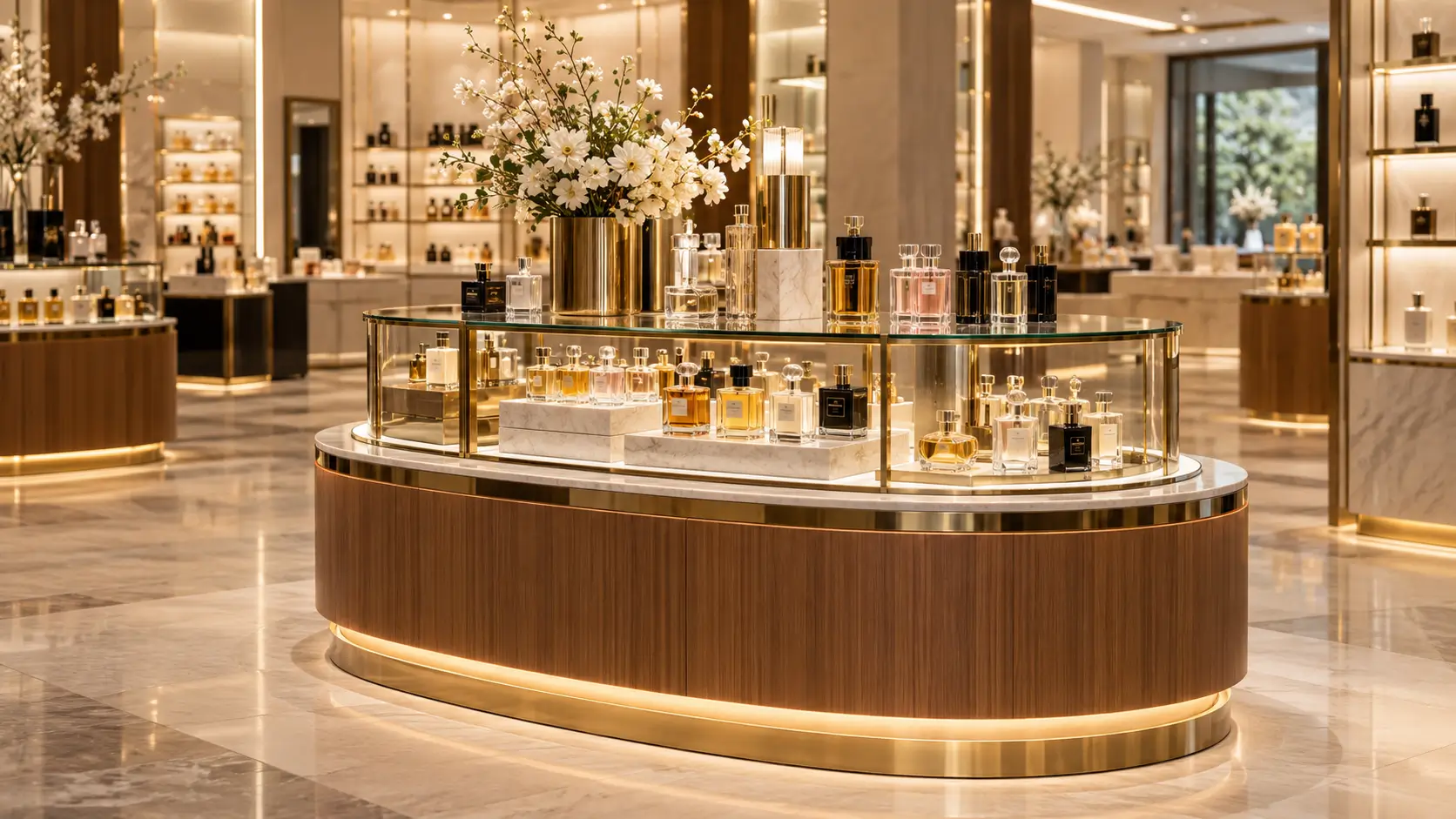
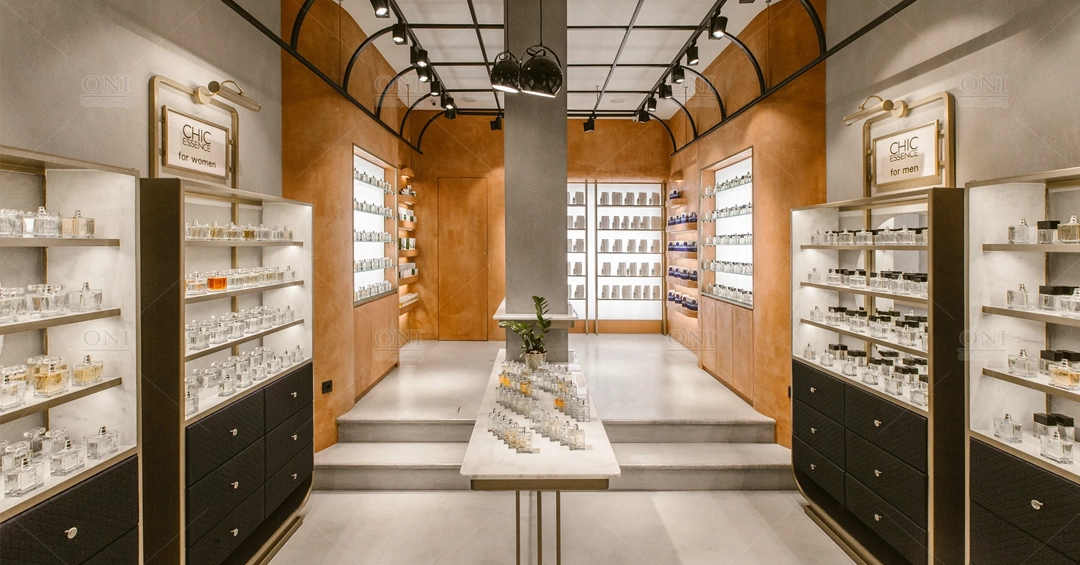
Retail store visual merchandising is the practice of presenting retail products via display arrangements, layouts, lighting, colours and signage. Unlike store decoration, it centres on product visibility and discovery. It aligns store design with merchandising needs, coordinating fixtures, product placement and customer flow to attract attention and enrich shopping experiences. For instance, clothing stores use wall racks, mannequins and island tables to feature collections, while perfume shops use lit glass showcases and tidy shelving for fragrances. Both build clear, appealing retail spaces.
Common Types of Custom Retail Display Fixtures for Visual Merchandising
Different retail products require different display solutions to achieve effective visual merchandising. Choosing suitable retail store fixtures helps retailers improve product visibility, organize merchandise and make better use of available store space. From wall-mounted cabinets to freestanding display stands, each fixture serves a specific purpose in retail store design.
The table below highlights common types of custom retail display fixtures, their main functions and suitable retail applications.
| Display Fixture | Description | Suitable Retail Stores |
|---|---|---|
| Wall Display Cabinets | Custom wall-mounted cabinets with shelving, lighting and storage for organized product displays. | Perfume, cosmetics, jewelry |
| Freestanding Display Racks | Flexible display racks with adjustable shelves, hanging rails or hooks for various products. | Fashion, accessories, general retail |
| Glass Display Showcases | Secure glass cabinets with integrated lighting for displaying valuable or premium merchandise. | Jewelry, watches, luxury retail |
| Gondola Shelving | Modular single-sided or double-sided shelving systems for organized product categories. | Convenience stores, supermarkets, pharmacies |
| Display Tables | Custom tables in different sizes and finishes for presenting featured products and collections. | Clothing, lifestyle, bookstores |
| Island Display Stands | Freestanding central displays designed to highlight selected merchandise and attract attention. | Beauty, fashion, specialty retail |
| Checkout Counters | Functional counters combining checkout operations, product displays and storage solutions. | Most retail environments |
| Promotional Display Stands | Custom promotional fixtures for seasonal campaigns, new arrivals and featured products. | Fashion, beauty, consumer goods |
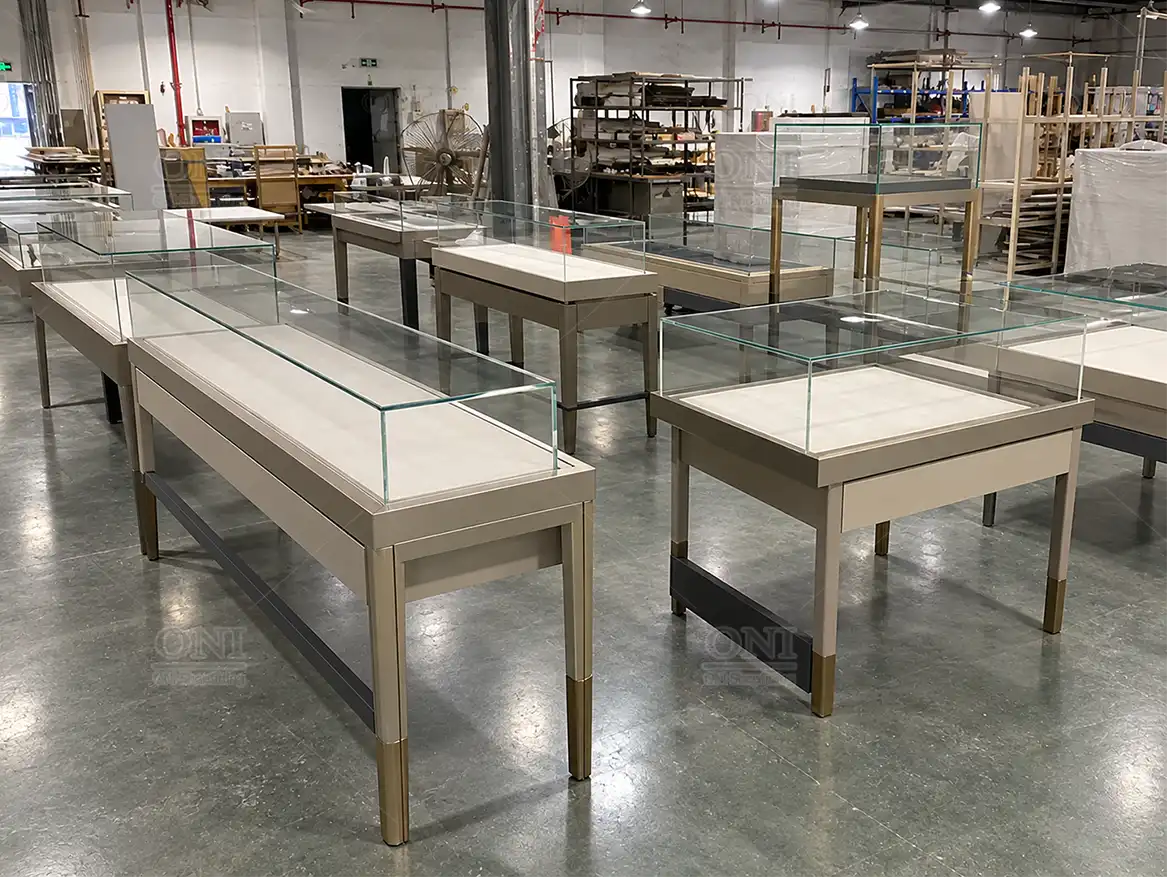
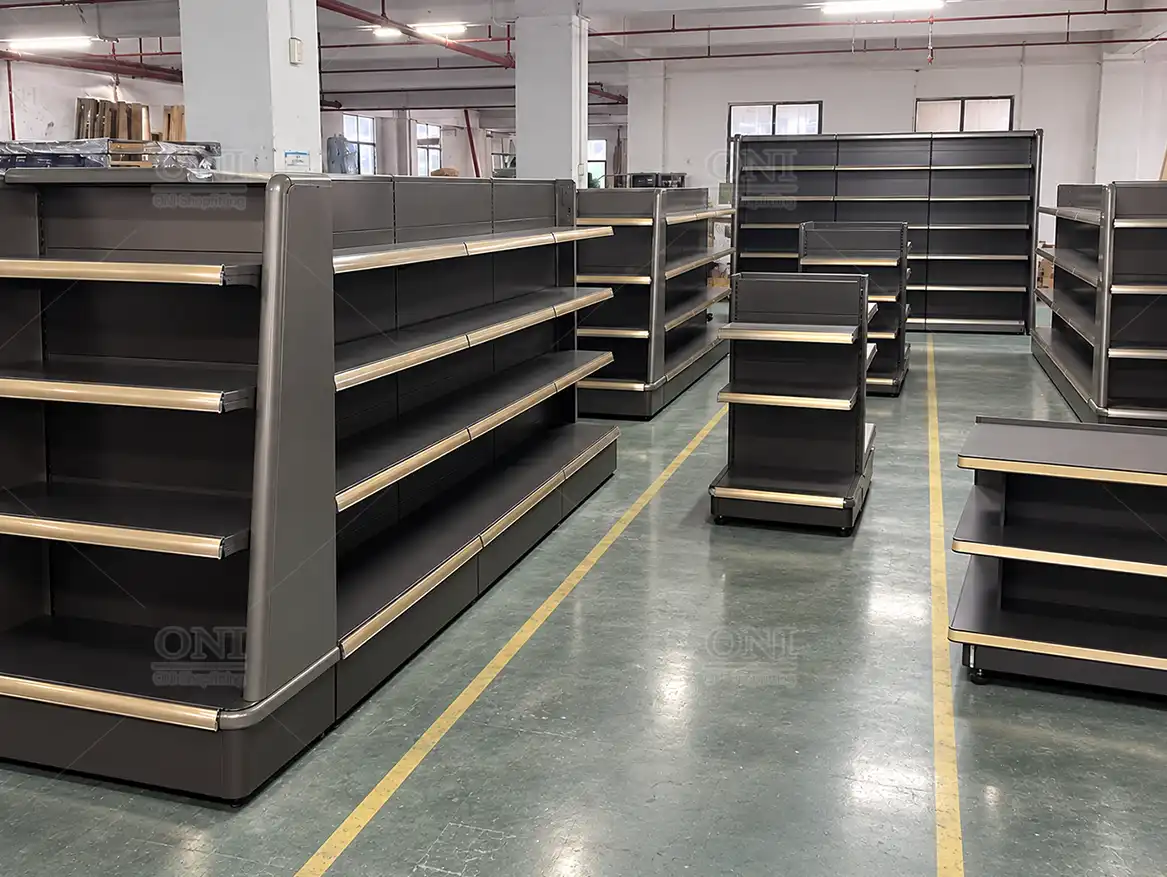
These custom store fixtures can be tailored in size, materials, finishes and configurations to match different store layouts and brand requirements. Combining wall cabinets, freestanding racks and feature displays helps retailers create a consistent visual merchandising environment while maintaining convenient product access and customer circulation.
How Store Layout Design Supports Visual Merchandising
A well-planned retail store layout is essential for effective visual merchandising. It influences customer flow, product visibility and how display fixtures are arranged throughout the store. Different store layout types offer unique merchandising advantages depending on store dimensions, product categories and customer shopping behavior. The table below compares five common retail store layouts and their applications. Coordinating store layout and visual merchandising from the start helps create a more connected shopping experience.
| Store Layout Type | Main Characteristics | Visual Merchandising Benefits | Best Applications |
|---|---|---|---|
| Grid Layout | Parallel gondola shelving and clearly defined aisles for systematic product organization. | Maximizes display capacity, simplifies product categorization and supports easy replenishment. | Supermarkets, pharmacies, convenience stores |
| Free-Flow Layout | Flexible fixture arrangements with open spaces and less structured customer pathways. | Creates attractive product displays, encourages browsing and highlights featured collections. | Fashion boutiques, lifestyle stores, beauty shops |
| Loop Layout | A guided circulation route connecting different merchandise zones throughout the store. | Increases exposure to product categories and creates opportunities for promotional displays. | Department stores, large specialty stores |
| Straight Layout | Simple circulation paths with wall-mounted displays and strategically positioned freestanding fixtures. | Improves product visibility, maintains clear pathways and uses wall space efficiently. | Small boutiques, narrow retail stores |
| Mixed Layout | Combines grid, free-flow or loop arrangements with different custom display fixtures. | Balances merchandising capacity, flexible product presentation and customer circulation. | Multi-category retail stores, large fashion stores |
Choosing the right store layout design requires balancing product display capacity, customer accessibility and available floor space. For new store openings, renovations and multi-store projects, planning the layout before manufacturing custom retail display fixtures helps ensure accurate fixture dimensions, consistent merchandising arrangements and efficient installation.
Practical Store Visual Merchandising Design Tips
Effective store visual merchandising combines thoughtful store layout, strategic product placement and suitable display fixtures to create an attractive and functional retail environment. From organizing merchandise to selecting custom display solutions, the following five practical tips can help retailers improve product visibility, enhance customer experience and make better use of available store space.
- Plan a Clear Store Layout and Entrance Zone: Keep the entrance open, welcoming and free from overcrowded displays to create a positive first impression. Choose a grid, loop or free-flow layout based on store dimensions, product categories and customer shopping behavior. A well-planned retail store layout helps guide customer movement, connect different merchandising zones and ensure that display fixtures do not obstruct important pathways.
- Organize Products into Clear Merchandising Zones: Group merchandise by product category, brand, collection or shopping occasion to make browsing more convenient. Create dedicated areas for new arrivals, bestsellers, seasonal promotions and complementary products. Use feature walls, island display stands and promotional fixtures to establish attractive focal points, highlight important merchandise and maintain a consistent visual presentation throughout the store.
- Optimize Display Heights and Product Density: Combine low display tables, mid-height shelving and taller wall-mounted cabinets to create visual variety and maximize merchandising space. Position featured products at comfortable viewing heights while placing heavier merchandise on lower shelves. Maintain appropriate spacing between products and display fixtures to avoid overcrowding, improve accessibility and create a balanced shopping environment.
- Choose Flexible Custom Retail Display Fixtures: Select adjustable shelving, modular display racks, glass showcases and movable display stands that match product dimensions and merchandising requirements. Well-designed custom retail display fixtures can incorporate integrated storage, lighting, signage and interchangeable accessories to support different collections. For retail chains and multi-store projects, standardized fixture designs also help maintain brand consistency and simplify future store expansions.
- Coordinate Lighting and Refresh Displays Regularly: Combine ambient lighting, accent lighting and integrated LED lighting to highlight merchandise and create a comfortable shopping atmosphere. Different retail products may require specific lighting arrangements to enhance their appearance and visibility. Regularly update product arrangements, promotional graphics and feature displays according to seasonal campaigns, new arrivals and changing customer preferences, using flexible fixtures to simplify merchandising adjustments.
In Conclusion
Effective store visual merchandising combines product placement, suitable retail display fixtures, thoughtful lighting and practical store layout design. By choosing the right fixture types and organizing merchandise around customer needs, retailers can create attractive, functional and consistent shopping environments.
Frequently Asked Questions
1. What is the difference between visual merchandising and store layout design?
Visual merchandising focuses on how products are presented through fixtures, lighting, signage and product arrangements. Store layout design focuses on how retail space is organized, including circulation routes, product zones and fixture placement. Both work together to create an effective shopping environment.
2. What display fixtures are commonly used in retail visual merchandising?
Common fixtures include wall display cabinets, freestanding racks, gondola shelving, glass showcases, display tables, island stands and checkout counters. The best choice depends on the merchandise, available space and desired store presentation.
3. Can retail display fixtures be customized for different store layouts?
Yes. Custom fixtures can be manufactured in different sizes, materials, finishes and configurations to suit specific layouts. Modular designs can also help retailers maintain consistent merchandising standards across multiple locations.
Custom Retail Display Fixtures for Your Next Store Project
At ONI Shopfitting, we provide custom retail display fixtures and store fit-out solutions for fashion stores, perfume shops, jewelry boutiques, convenience stores and other commercial retail environments. Our services cover store planning, 3D design, material selection, custom manufacturing and coordinated project delivery. We work with brands seeking reliable custom store fixtures manufacturers for tailored retail projects.
Whether you are opening a new retail store, upgrading existing displays or planning a chain store rollout, our team can help develop practical fixture solutions that match your merchandise, store layout and brand requirements.
 Get in touch with us today to start your project.
 WhatsApp/Call: +86 186 2096 3396
 Email: sales1@onishopfitting.com
 Factory Location: Guangzhou, China