Choosing the right watch display stands is about more than selecting an attractive design. For luxury watch stores, a successful display should highlight the product, support the brand image, protect high-value merchandise, and provide a comfortable viewing experience for customers. Materials, dimensions, lighting, security, storage, merchandising flexibility, and manufacturing quality should all be considered before production begins.
Whether a project requires a single watch stand, countertop displays, glass showcases, wall cabinets, or a complete watch display stand for shop, the design should fit both the watches and the overall retail environment. For custom projects, confirming drawings, materials, finishes, lighting, and hardware in advance can also help reduce production and installation problems. Next, explore the materials, sizes, and merchandising strategies behind effective custom watch display stands for luxury retail stores.
Where Are Watch Display Stands Commonly Used?
Watch display stands are commonly used in luxury watch boutiques, jewelry stores, department stores, duty-free shops, airport retail stores, shopping mall stores, brand showrooms, and multi-brand watch retailers. Their main purpose is to organize watches clearly while creating a presentation that matches the positioning of the brand.
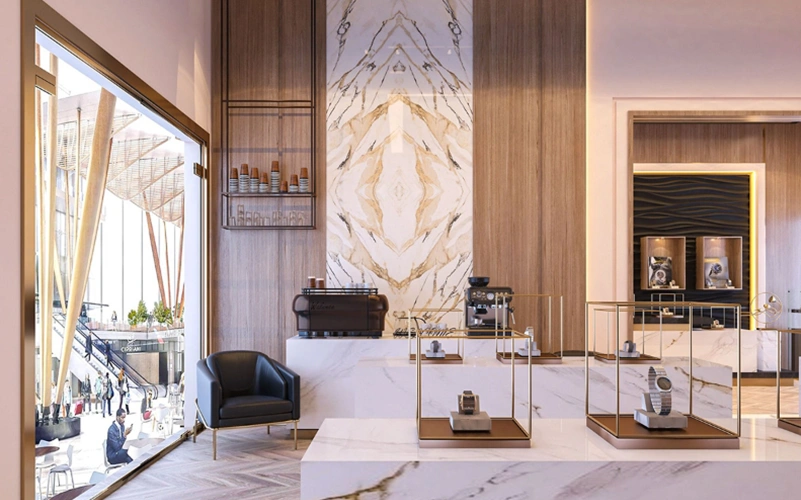
Different retail environments may require different types of display stands. A jewelry store may use compact individual stands inside a glass showcase, while a dedicated watch boutique may combine countertop displays, illuminated wall cabinets, central display tables, lockable showcases, and storage units. The display solution should therefore be selected according to the store layout, product quantity, and customer experience.
For larger retail projects, watch stands are usually designed as part of the complete shopfitting system rather than as individual accessories. Coordinating the materials, colors, dimensions, lighting, and finishes of each display with the surrounding fixtures helps create a more consistent and professional store environment.
What Should You Consider When Choosing Custom Watch Display Stands?
Before ordering custom watch displays, buyers should evaluate the specifications that affect appearance, daily operation, product safety, and long-term durability.
Ensures comfortable viewing and suitable presentation
Lighting
LED position, brightness, color temperature, glare
Highlights watch dials and product details
Security
Locks, tempered glass, secure storage
Protects high-value products
Merchandising
Display angle, spacing, removable trays
Helps organize different collections
Storage
Drawers, cabinets, stock compartments
Supports daily store operation
Brand Consistency
Colors, materials, finishes, logo details
Maintains a consistent retail identity
Quality Control
Dimensions, finishes, lighting, hardware
Helps reduce defects before shipment
Packaging
Foam, corner protection, cartons, wooden crates
Protects fixtures during transportation
For custom projects, these details should ideally be confirmed through shop drawings, material samples, finish samples, and production approvals before manufacturing begins.
1. What Materials Are Best for Luxury Watch Display Stands?
Luxury watch displays often combine several materials to create a refined appearance while meeting durability and functional requirements. Common options include:
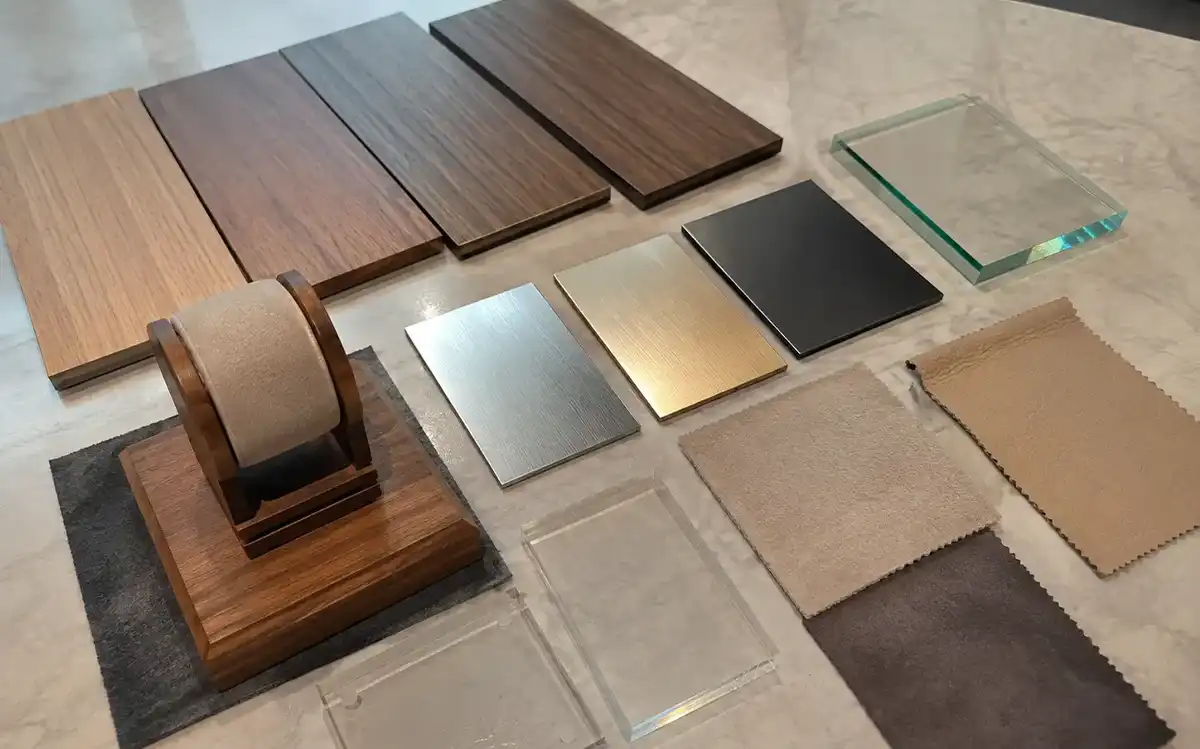
Wood and wood veneer – Walnut, oak, ash, natural veneer, painted MDF, and laminate are commonly used for cabinet bodies, bases, back panels, and decorative surfaces.
Watch stand wooden designs – A watch stand wooden style can use solid wood, veneer, or wood-finish MDF to create a warm and premium appearance, particularly for classic or heritage watch collections.
Metal – Stainless steel, brushed brass, champagne gold, bronze, black powder-coated steel, and other finishes can be used for frames, trims, handles, legs, and decorative details.
Tempered glass – Clear, extra-clear, tinted, or laminated glass is commonly used for enclosed showcases and display cabinets.
Leather and suede – These soft materials are often used for watch cushions, presentation trays, display pads, drawer inserts, and other surfaces that come into contact with watches.
Acrylic – Acrylic is suitable for lightweight holders, product risers, logo panels, and removable display accessories.
Stone and stone-look materials – Marble, engineered stone, sintered stone, and stone-effect panels can give display counters and central tables a more architectural and premium appearance.
Fabric – Neutral fabrics can be used for display backgrounds, tray liners, and decorative panels where a softer visual effect is required.
A premium luxury watch stand often combines wood or metal with leather, suede, glass, and carefully selected finishes rather than relying on a single material.
2. What Size Should a Watch Display Stand Be?
There is no single standard dimension suitable for every watch display. The correct size depends on the watch dimensions, product quantity, type of fixture, viewing height, available store space, and merchandising concept.
Single watch stand – A single watch stand should provide enough room for one watch and its cushion while leaving sufficient visual space around the product.
Small countertop display – Suitable for several watches displayed inside a showcase or on a sales counter without making the presentation feel crowded.
Multi-watch tray – Designed to hold several watches in a consistent row or grid while maintaining clear spacing between products.
Glass showcase counter – The depth should allow customers to view watches comfortably while keeping products within easy reach of sales staff.
Wall-mounted watch display – Shelf spacing should consider the height of the watch stands, lighting position, branding panels, and overall visual balance.
Central display table – The dimensions should provide sufficient display space without reducing customer circulation around the fixture.
Drawer storage – Internal drawer dimensions should match watch trays, packaging, accessories, and additional stock.
Customer viewing height – Products should be positioned at a comfortable eye level so customers do not need to bend excessively or reach too far.
When designing a complete watch display stand for shop, the dimensions should be coordinated with the floor plan and surrounding fixtures rather than determined by the watch size alone.
3. How Should Luxury Watches Be Merchandised?
Luxury watch merchandising should make each product easy to view while maintaining a clean, controlled, and premium presentation.
Avoid overcrowding – Leave enough space between watches so each product can be viewed individually.
Highlight flagship models – New arrivals, limited editions, and high-value watches can be given more space or a stronger focal position.
Group watches by collection – Products can be organized by brand, collection, movement, price range, material, lifestyle, or other categories.
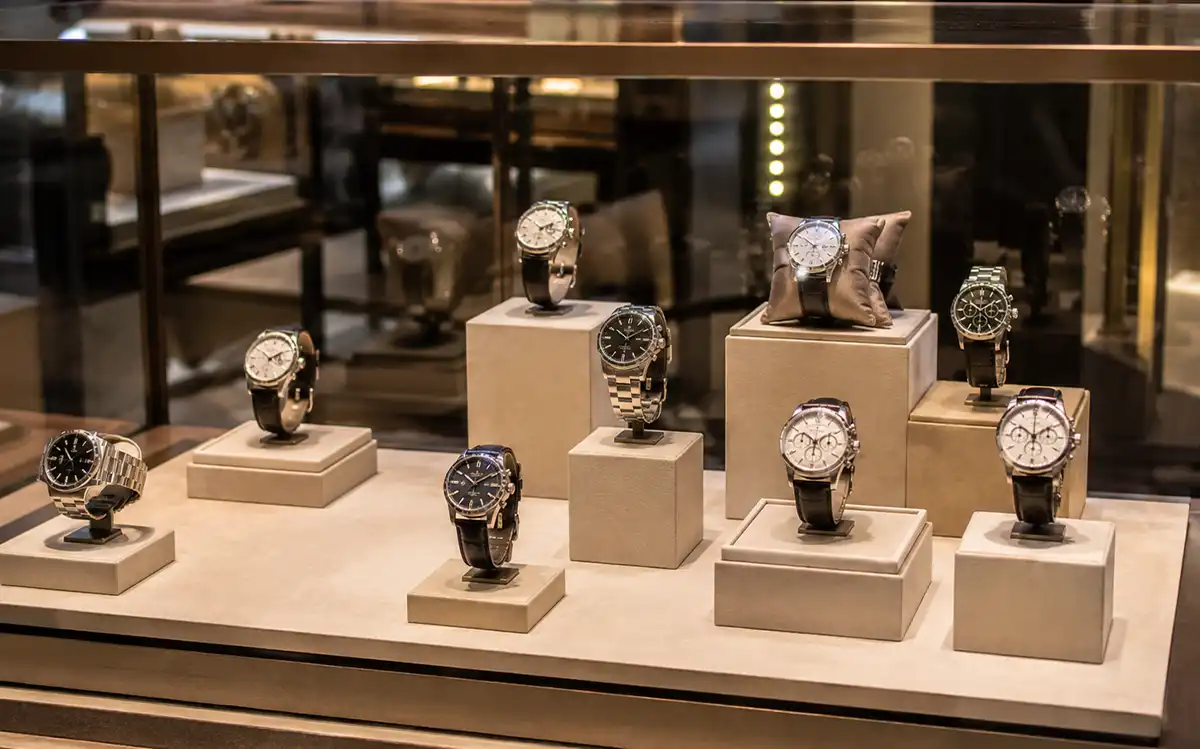
Use different display heights – Small variations in height can create visual depth and make the presentation more dynamic.
Maintain consistent spacing – Equal spacing between products helps create a more organized and premium appearance.
Keep backgrounds simple – Black, gray, beige, cream, dark wood, and other neutral finishes allow the watches to remain the visual focus.
Coordinate displays with the store design – A luxury watch stand should match the materials, colors, and finishes of the surrounding counters and showcases.
Create individual focal points – A single watch stand can be used to highlight a flagship product, new release, or limited-edition model.
Control promotional graphics – Signs and product information should support the merchandise without distracting attention from the watches.
Use flexible display components – Removable trays, adjustable holders, and modular accessories make it easier to update collections and change merchandising layouts.
Combining different types of display stands can help retailers create a clear hierarchy between flagship products, regular collections, and promotional merchandise.
4. How Important Is Lighting for Watch Displays?
Lighting is very important for watch displays because watches often have shiny metal, detailed dials, and reflective surfaces. Good lighting can make these details stand out and help customers see the products clearly. LED lights are commonly installed in the top panel, shelves, side panels, or recessed channels of watch display stands. Before production, buyers should confirm the light color, brightness, installation position, wiring, driver location, and switch type to avoid problems later.
For a complete watch display project, the lighting should also look consistent across different fixtures. Showcases, wall cabinets, and counters placed together should use a similar color temperature and brightness. This helps the whole shop look more professional, clean, and high-end.
5. What Security Features Should Watch Displays Include?
Luxury watches are high-value products, so security should be considered from the beginning of the fixture design. Tempered glass, reliable cabinet locks, lockable drawers, concealed hinges, reinforced cabinet structures, and secure storage compartments are commonly used to improve product protection.
Security should also remain practical for daily retail operations. Sales staff may open and close showcases frequently, so locks, drawers, and glass doors should operate smoothly while still providing suitable protection. A well-designed luxury watch stand or showcase should balance security with convenient product access. The required security level can be adjusted according to the value of the watches, store location, customer interaction method, and the retailer’s own operating procedures.
6. Quality Control for Custom Watch Display Stands
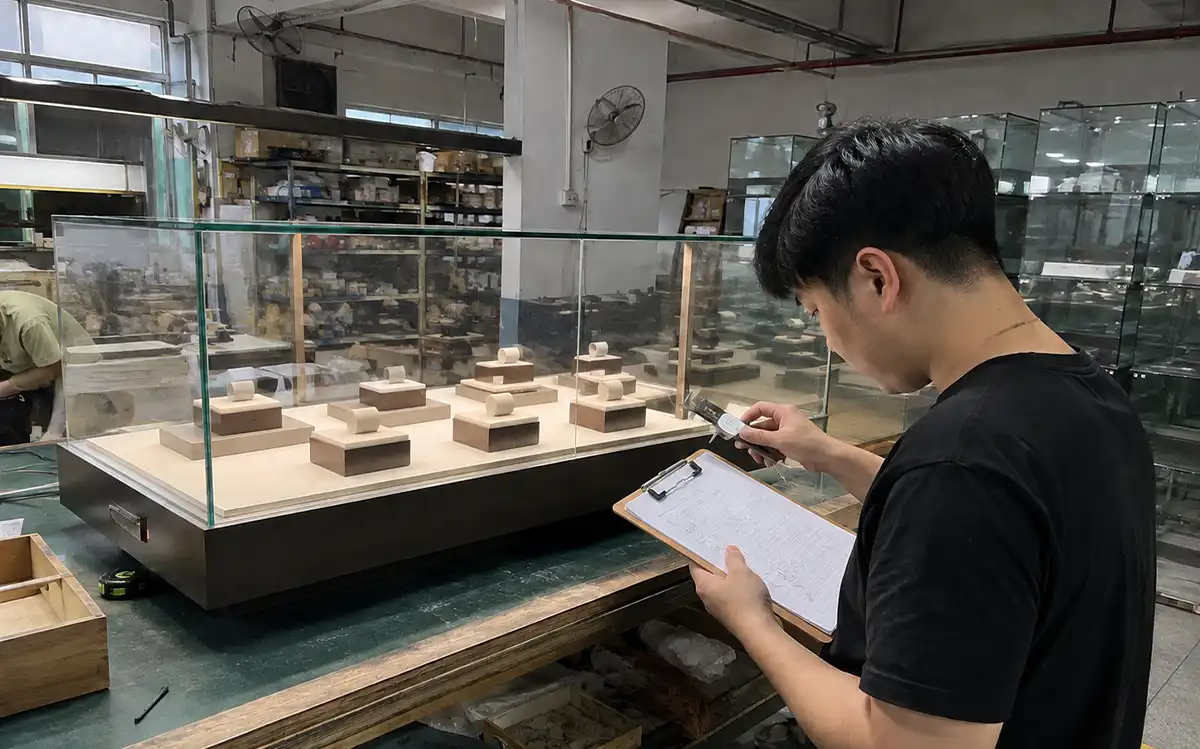
Quality control is particularly important for luxury retail fixtures because customers view the displays at close range. Before production begins, the manufacturer should confirm shop drawings, dimensions, materials, wood and metal finishes, glass specifications, lighting, hardware, locks, and branding details.
During manufacturing, strict quality control should cover dimensional accuracy, surface finishes, metal colors, glass quality, drawer and door alignment, hardware operation, lighting, and overall assembly. Small defects such as scratches, uneven gaps, inconsistent finishes, loose glass, or misaligned drawers can significantly affect the appearance of premium watch display stands.
Before shipment, finished fixtures should go through final inspection and, where necessary, trial assembly. Glass, painted panels, metal trims, corners, and other vulnerable components should also be protected with appropriate foam, wrapping, corner guards, cartons, or wooden crates for transportation.
In Conclusion
Choosing the right watch display stands is not only about appearance or price. Materials, dimensions, lighting, security, workmanship, and packaging all affect the final display quality and customer experience. Whether you need a single watch stand or a complete shop display project with showcases, wall cabinets, counters, and central tables, each fixture should match the products, store layout, and brand style.
As an experienced custom retail display manufacturer, ONI Shopfitting provides customized watch display solutions based on different store layouts, product requirements, and brand concepts, helping retailers create practical, consistent, and professional watch retail spaces.
FAQ About Watch Display Stands
1. What materials are commonly used for luxury watch displays?
Wood, metal, tempered glass, leather, suede, acrylic, and stone-look materials are commonly used. The best combination depends on the store design, brand positioning, durability requirements, and budget.
2. Can watch display stands be customized?
Yes. Size, materials, colors, finishes, lighting, logos, storage, and security features can all be customized according to the retail project.
3. How can I check the quality before shipment?
Ask the manufacturer for dimensional checks, finish inspection, lighting tests, trial assembly photos, final inspection records, and packaging photos before shipment.
Planning a Custom Watch Display Project?
ONI Shopfitting provides custom watch display stands, individual watch holders, glass showcases, display counters, wall cabinets, and complete retail shopfitting solutions for watch and jewelry stores.
Send us your store floor plan, fixture list, reference images, preferred materials and finishes, brand requirements, project location, and target opening or delivery date. Our team can review your requirements and develop a suitable custom display solution for your retail project.
Get in touch with us today to start your custom store fixtures project. WhatsApp/Call: +86 186 2096 3396 Email: sales1@onishopfitting.com Factory Location: Guangzhou, China
Scroll to Top
Contact Us Now
Fill out the form below, and we will be in touch shortly.
Thank you for your inquiry! We have received your message and will get back to you as soon as possible.

 Get in touch with us today to start your custom store fixtures project.
 WhatsApp/Call: +86 186 2096 3396
 Email: sales1@onishopfitting.com
 Factory Location: Guangzhou, China