
What Is Retail Fixture Installation?
Retail fixture installation is the process of assembling, positioning, securing, adjusting, and testing fixtures within a retail space. It can include display cabinets, checkout counters, wall-mounted display systems, shelving systems, gondola units, display tables, glass showcases, storage cabinets, kiosks, LED lighting, decorative panels, and branded display elements, etc.
Professional retail installation involves more than simply assembling fixtures. Installers need to understand technical drawings, dimensions, wall and floor conditions, electrical requirements, fixture connections, and the overall store layout to ensure every element is installed accurately and safely.
For custom retail projects, installation should be considered during the design and manufacturing stages, not only after the fixtures arrive on site. Proper planning helps reduce installation problems, improve on-site efficiency, and ensure the final store matches the intended design and functionality.
Why Professional Retail Display Installation is Important?
1. Accurate Fixture Positioning
2. Safe and Stable Assembly
3. Consistent Brand Presentation
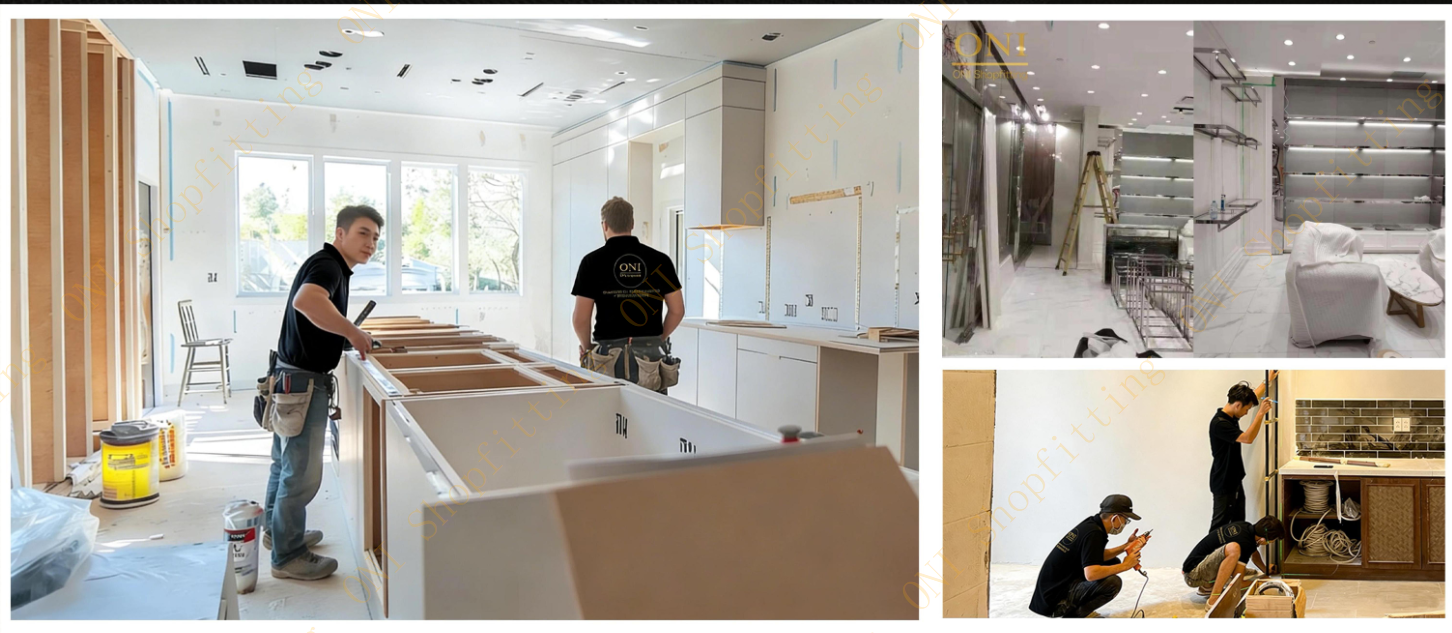
The Retail Display Installation Process
Step 1: Review the Store Drawings
Before installation begins, the project team should review the floor plan, fixture layout, elevations, dimensions, electrical drawings, and installation details. This helps identify potential conflicts before work starts on site. For custom projects, clear and accurate drawings also help ensure that the manufactured fixtures match the intended store layout and installation requirements.
Step 2: Check the Site Before Installation
The installation team should verify key site conditions such as floor levels, wall dimensions, ceiling heights, power locations, entrances, loading access, and finished surfaces.
Comparing actual site measurements with the production drawings can help prevent dimensional issues and reduce the need for on-site modifications.
Step 3: Receive and Inspect the Fixtures
When the fixtures arrive, the installation team should check package quantities, fixture identification, glass components, hardware, lighting parts, and any visible transportation damage.
For international projects, proper inspection is especially important because fragile materials such as glass, acrylic, decorative panels, and finished surfaces may be affected during transportation. ONI Shopfitting states that its fixtures undergo inspection before shipment and uses protective packaging for finished store fixtures and fragile components.
Step 4: Unpack and Organize Components
Fixtures and components should be unpacked and organized according to installation zones, fixture numbers, store areas, drawing references, or installation sequence.
A clear labeling and organization system makes it easier for installers to locate the correct parts and can significantly improve installation efficiency on larger projects.
Step 5: Assemble Retail Fixtures
The installation process may include connecting cabinet modules, installing shelves and glass panels, fitting doors and drawers, mounting wall units, adjusting hardware, and installing lighting components.
Some fixtures can be largely pre-assembled at the factory, while larger or more complex units may need to be assembled and connected on site.
Step 6: Position and Level the Fixtures
Once assembled, each fixture should be positioned according to the approved store layout and carefully checked for horizontal and vertical alignment.
Installers should also verify fixture spacing, counter heights, panel gaps, door and drawer clearance, and wall connections to achieve a clean and consistent final appearance.
Installation of Lighting and Functional Components
Modern retail fixtures often include more than basic shelving and display surfaces. Many designs integrate LED strips, spotlights, locks, drawers, sliding systems, power outlets, digital screens, security devices, and specialized product holders.
During installation, these functional components need to be properly fitted, connected, adjusted, and tested. Installers should check lighting performance, drawer and sliding movement, lock operation, electrical connections, and the stability of product display accessories to make sure everything works as intended.
For custom retail fixtures, testing both before shipment and after installation can help identify potential issues early. Final on-site checks ensure that lighting, hardware, electrical components, and moving parts are fully functional and ready for daily store operation.
Final Inspection After Installation
After all retail fixtures have been installed, a final inspection should be carried out to make sure the store is ready for use. The installation team should review both the appearance and functionality of each fixture.
Key inspection points include:
- Structure: Check that all fixtures are stable, level, securely fixed, and properly connected.
- Surface Quality: Inspect for scratches, chips, cracks, stains, or other visible damage.
- Doors and Drawers: Make sure doors, drawers, and sliding components open smoothly and align correctly.
- Lighting: Test LED strips, spotlights, and other electrical components to ensure they work properly.
- Glass: Confirm that glass shelves, doors, and panels are correctly installed, aligned, and secure.
- Layout: Verify that all fixtures are positioned according to the approved floor plan and installation drawings.
- Appearance: Check gaps, joints, colors, materials, and finishes to ensure a clean and consistent overall presentation.
A thorough final inspection helps identify any remaining issues before handover and ensures the completed retail display installation meets the required quality, safety, and design standards.
Different Installation Options for International Projects
Option 1: Professional On-Site Installation
Option 2: Local Contractor Installation
Option 3: Combined Installation Support
For larger international projects, ONI Shopfitting can also work together with local installation contractors. Local teams bring knowledge of site conditions, local construction practices, and regulations, while ONI provides detailed knowledge of the fixture design, structure, and assembly requirements.
This combined approach can be particularly effective for complex stores, flagship projects, and international retail rollouts.
ONI Shopfitting Installation Support
As a Guangzhou-based custom retail fixture manufacturer, ONI Shopfitting provides integrated solutions covering design development, manufacturing, quality control, overseas delivery, and installation support. For most international projects, we can provide comprehensive installation drawings, manuals, and video guidance to assist local teams with store setup.
For projects with special or complex installation requirements, on-site installation support can also be arranged upon request. We provide the appropriate level of installation support according to each project’s complexity, location, budget, and schedule.
Whether you are planning a single retail store, a flagship location, or a multi-store rollout, our team is ready to support your project from fixture production to final installation.
👉 Get in touch with us today to discuss your project and installation requirements.
📞 WhatsApp / Call: +86 186 2096 3396
📧 Email: sales1@onishopfitting.com
🌐 Website: www.onishopfitting.com
📍 Factory Location: Guangzhou, China