When designing custom store fixtures, glass is not only a structural material. It is also part of the visual presentation of the merchandise.
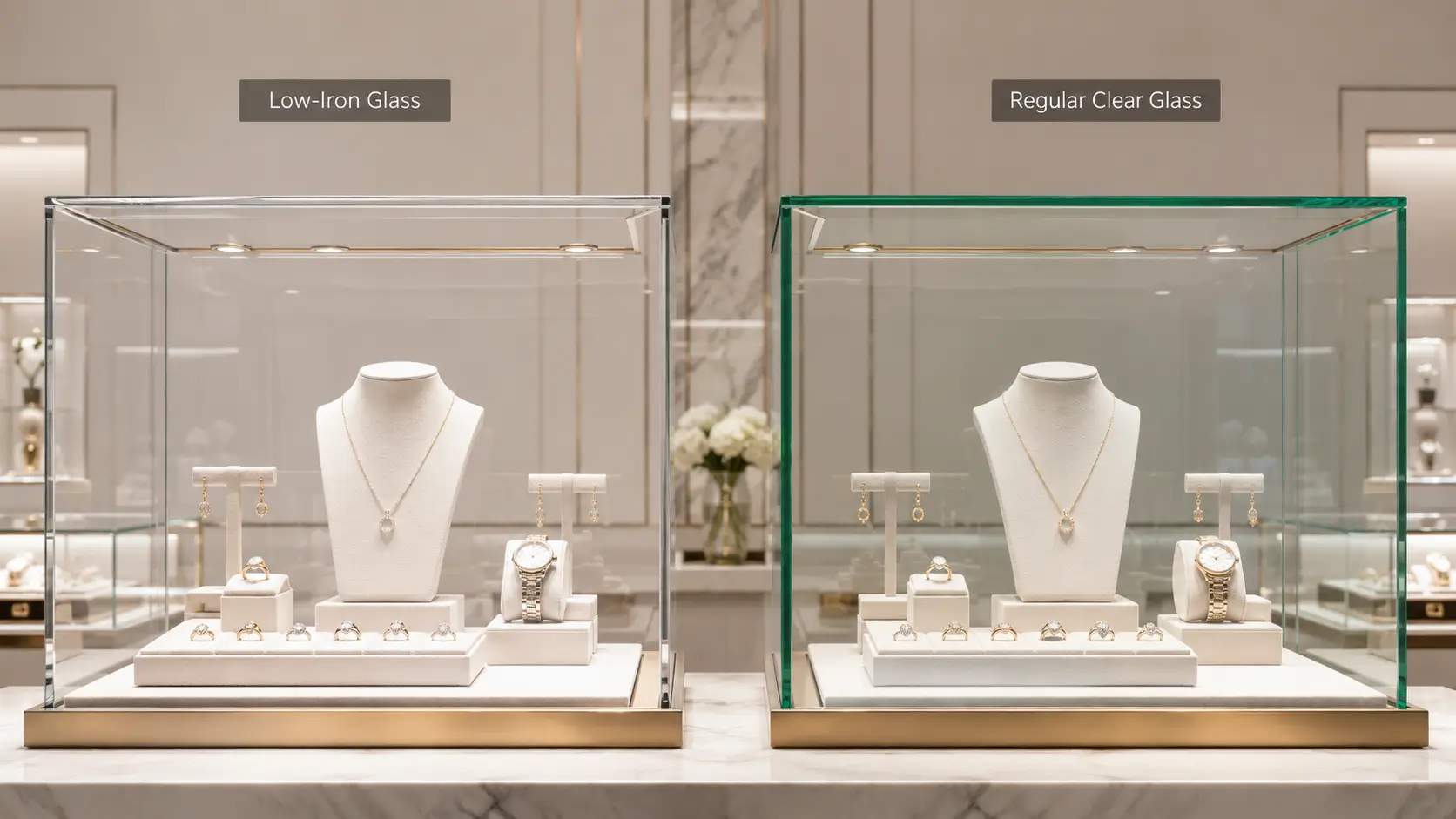
The main difference between low-iron glass and regular clear glass (also known as standard clear float glass) lies in the iron content. Low-iron glass is manufactured with significantly less iron oxide than conventional clear float glass. Reducing the iron content minimizes the green tint normally visible in standard glass and creates a more neutral, highly transparent appearance. Pilkington describes its low-iron Optiwhite glass as practically colorless and specifically recommends it where visible glass edges or neutral color presentation are important.
For retail fixture buyers, the practical choice is straightforward: Choose low-iron glass when merchandise color, transparency, premium appearance, thick glass, or exposed glass edges are important. Choose regular clear glass when standard transparency is acceptable and controlling project cost is more important than achieving maximum optical clarity.
What Is Low-Iron Glass?
Low-iron glass is a type of extra-clear float glass made with raw materials that contain significantly less iron than standard clear glass. Because iron oxide is responsible for the subtle green tint commonly seen in conventional glass, reducing the iron content produces a much clearer, more neutral appearance with improved transparency and more accurate color reproduction. For example, Vitro states that its low-iron glass contains approximately 0.01% iron oxide—about one-tenth the level found in standard float glass. As a result, the glass appears nearly colorless when viewed through the surface, while the typical dark green tint along the edges is greatly reduced.
These optical qualities make low-iron glass especially suitable for applications where clarity, product visibility, and color accuracy are important. It is commonly used in retail display cases, jewelry and cosmetic showcases, luxury store counters, museum-style vitrines, glass shelving, frameless showcases, furniture, and other interior fixtures. Low-iron glass is not produced using a fundamentally different glass-making process; it is still float glass, but its raw material composition is carefully controlled to minimize iron content and achieve a cleaner, more transparent appearance.
What Is Regular Glass?
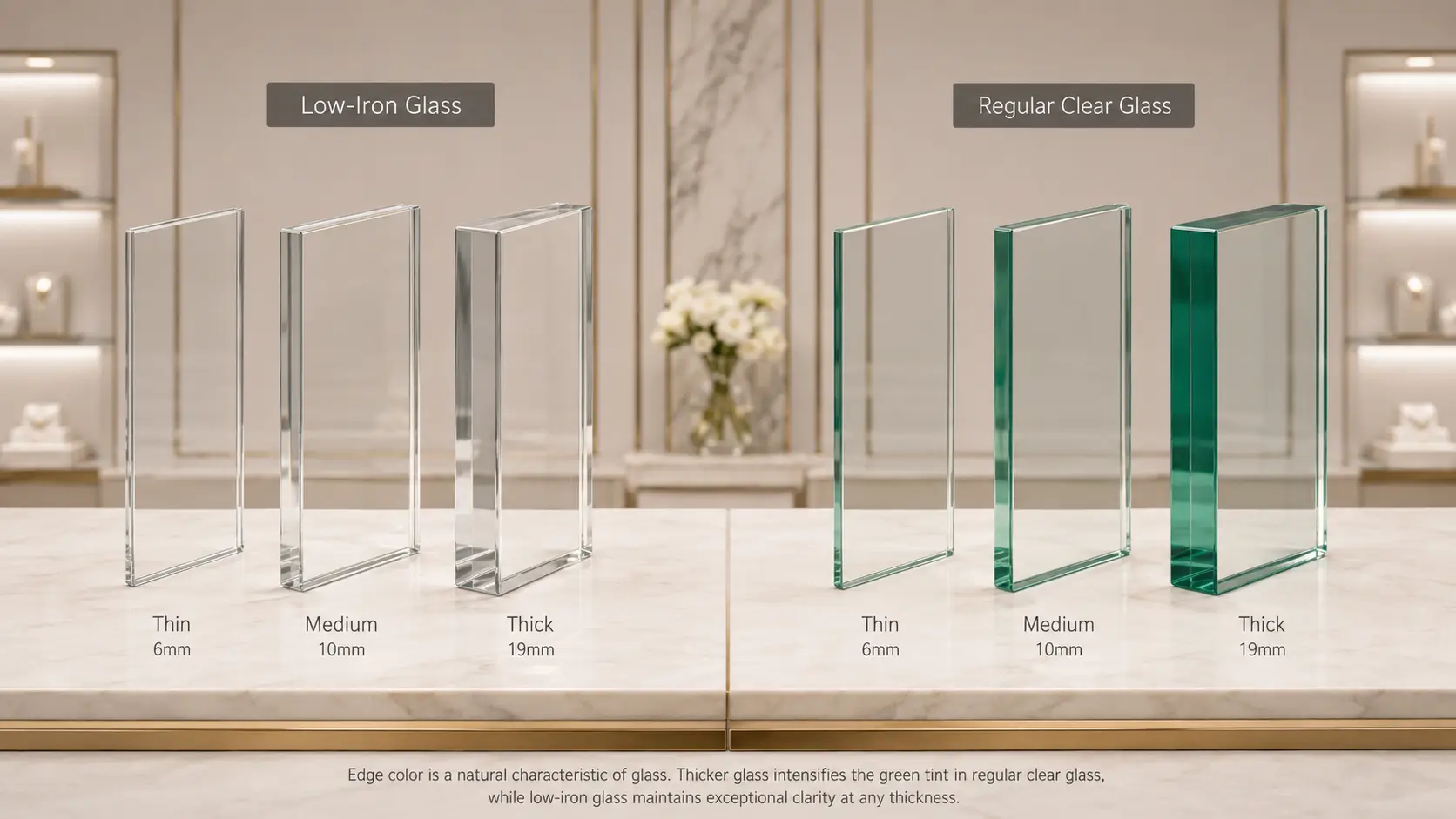
It can also be further processed through laminating, tempering, or other treatments depending on project requirements. Although it is called “clear glass,” standard float glass is not completely colorless. The iron naturally present in its raw materials gives the glass a slight green tint, which may be difficult to notice in thinner panels but becomes more visible as the glass thickness increases.
The green appearance is especially noticeable when viewing a polished glass edge or looking through thicker sections of glass. This is an important distinction when specifying glass for retail fixtures or high-end displays where visual clarity matters. Clear glass normally means standard clear float glass with its natural green tint, while low-iron glass is an extra-clear glass manufactured with reduced iron content for a more neutral, colorless appearance. These two materials therefore should not be treated as the same specification.
Low-Iron Glass vs Regular Glass: Key Differences
1. Low-Iron Glass vs Regular Glass Clarity
- Jewelry displays
- Watch showcases
- Cosmetic counters
- Perfume displays
- Luxury retail fixtures
2. Low-Iron Glass vs Regular Glass: Edge Color
The difference between low-iron glass and regular clear glass is often easiest to see along a polished edge. Regular clear glass typically has a noticeable green edge caused by its natural iron content, while low-iron glass greatly reduces this green appearance and creates a cleaner, more neutral-looking edge.
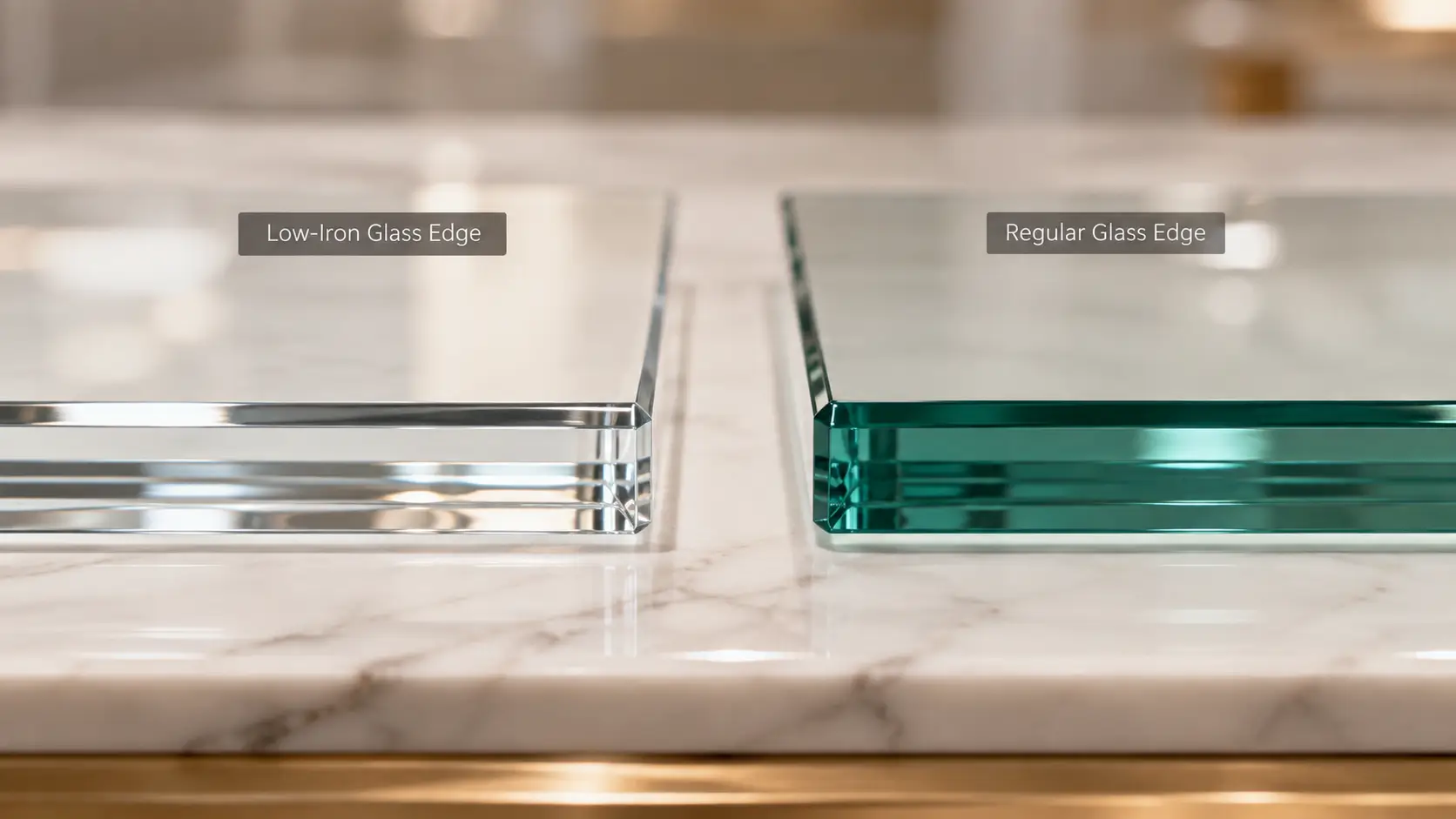
This difference is especially important in modern store fixtures where glass edges are intentionally exposed. Thick glass shelves, frameless display cases, glass countertops, and freestanding showcases can make edge color highly visible. In these applications, low-iron glass helps create a lighter, more refined appearance and can enhance the overall premium feel of the fixture. However, if the glass edges are fully concealed within metal, wood, or other framing materials, the visual advantage of low-iron glass may be less significant, making regular clear glass a more cost-effective option.
3. Low-Iron Glass vs Regular Glass: Product Color Accuracy
- Diamonds and colored gemstones
- Gold and silver jewelry
- Watch faces and straps
- Cosmetics
- Perfume bottles
- Luxury accessories
- Artwork and collectibles
4. Low-Iron Glass vs Regular Glass: Effect of Glass Thickness
- Thick glass shelves
- Large side panels
- Glass countertops
- Frameless showcases
- Fixtures with exposed polished edges
5. Low-Iron Glass vs Regular Glass: Light Transmission
Low-iron glass generally allows more visible light to pass through than regular clear glass because it contains less iron. In thin panels, the difference may be relatively small, but as glass thickness increases, low-iron glass maintains better light transmission and introduces less green coloration.
This is especially useful in illuminated custom store fixtures such as jewelry showcases, watch displays, cosmetic counters, and perfume cabinets, where integrated LED lighting is used to highlight products. Better transmission helps the display appear brighter and allows product colors to remain more natural.
However, glass is only one part of the overall lighting system. LED brightness, color temperature, beam angle, interior finishes, and product positioning also influence the final result. For premium retail displays, glass selection and lighting design should therefore be considered together to achieve the best visual effect.
6. Low-Iron Glass vs Regular Glass: Visual Appearance
- Frameless construction
- White or light-colored interiors
- Marble surfaces
- Stainless steel
- Brass or gold-tone finishes
- Integrated LED lighting
- Minimalist retail concepts
In these designs, the glass is intended to remain visually unobtrusive so that customers focus more on the merchandise than on the display enclosure itself. The reduced green tint also helps surrounding materials and finishes maintain their intended colors, which can make the entire fixture look more consistent and polished.
Regular clear glass can still provide a professional and attractive display, especially for standard retail applications. However, when a fixture is designed to communicate a premium, luxury, or minimalist image, low-iron glass is often the preferred choice because of its cleaner and more transparent visual effect.
7. Low-Iron Glass vs Regular Glass: Best Applications
Low-iron glass is best suited for presentation-focused fixtures where clarity, accurate product color, and a premium appearance are important. Typical applications include jewelry showcases, watch display cases, cosmetic counters, perfume cabinets, luxury retail displays, museum-style vitrines, frameless display cases, and thick glass shelving.
These applications often involve high-value merchandise, close customer viewing, detailed finishes, or carefully designed lighting. Because low-iron glass reduces the green tint found in regular clear glass, it helps products appear more natural and allows the display enclosure to remain less visually noticeable. Regular clear glass is still a practical choice for general retail fixtures, framed displays, storage shelving, and high-volume projects where cost efficiency is a greater priority. In most cases, the more visible and presentation-critical the glass is, the greater the benefit of choosing low-iron glass
8. Low-Iron Glass vs Regular Glass: Cost
Low-iron glass generally costs more than regular clear glass, so budget is an important consideration for B2B buyers. For premium jewelry showcases, luxury displays, or other high-value retail fixtures, the additional cost may be justified because improved clarity and color neutrality directly enhance product presentation.
The cost difference becomes more significant in large-scale retail rollouts involving hundreds of fixtures. Low-iron glass is usually easier to justify when merchandise is high-value, glass is relatively thick, polished edges are exposed, accurate product color is important, or the fixture has a luxury positioning. Regular clear glass may offer better value when panels are thin, heavily framed, less visible, or used in cost-sensitive projects.
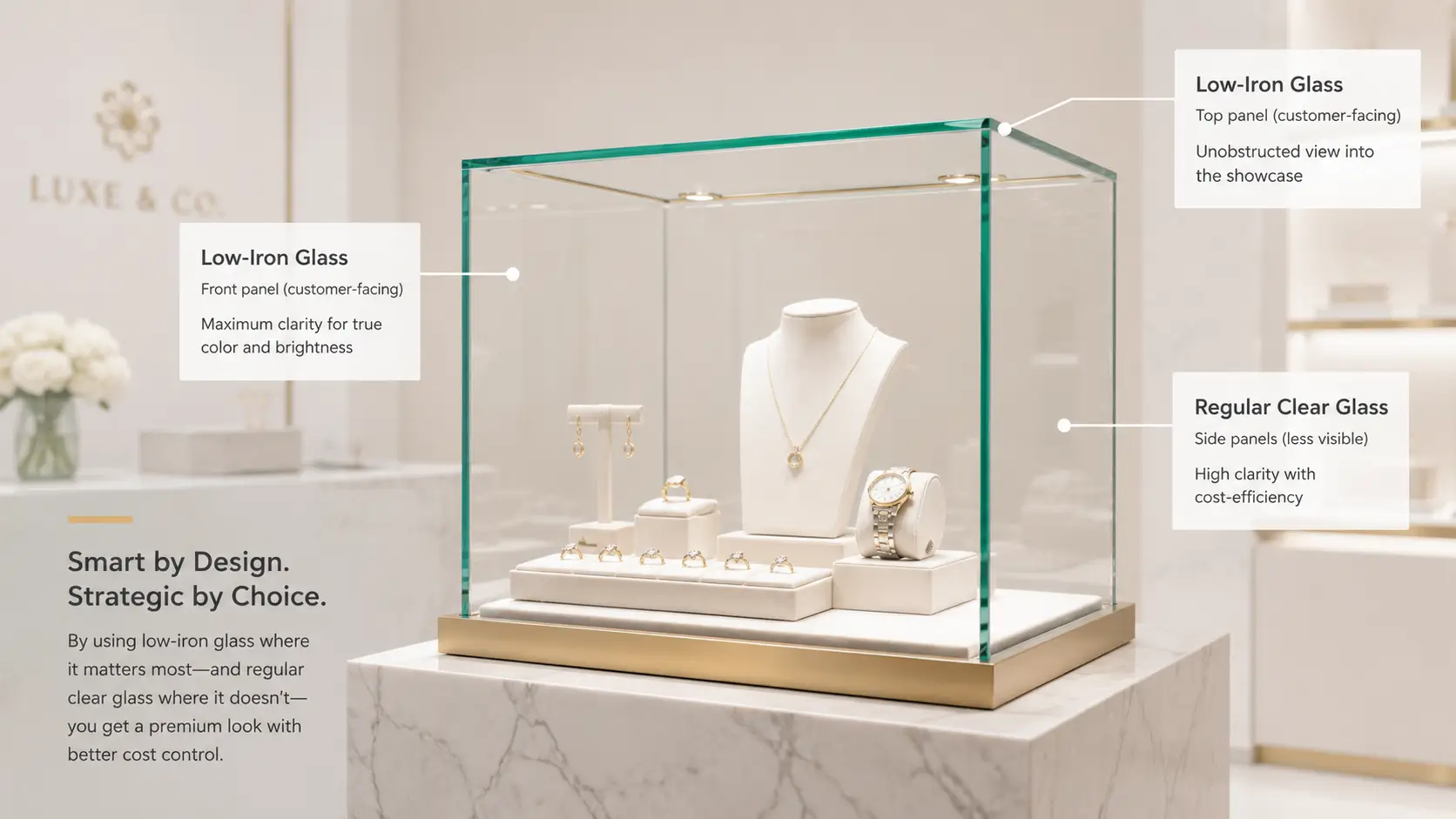
A practical approach is to use both glass types within the same fixture or project. Low-iron glass can be specified for customer-facing panels, display tops, and other highly visible areas, while regular clear glass can be used for less noticeable panels or internal shelving. This selective approach helps achieve a premium appearance where it matters most while keeping the overall project cost under control.
In Conclusion
Why Choose ONI Shopfitting for Custom Store Fixtures?
Choosing the right glass is only one part of creating a successful retail display. Fixture design, materials, lighting, hardware, manufacturing quality, and installation all contribute to the final appearance and performance of the store fixture.
ONI Shopfitting provides customized fixture solutions from design development to manufacturing and project delivery. Services include custom dimensions, materials and finishes, 3D design, factory-direct production, glass and lighting integration, prototyping, quality control, packaging, shipping, and support for both single-store projects and multi-store rollouts.
FAQ
 Get in touch with us today to start your project.
 WhatsApp/Call: +86 186 2096 3396
 Email: sales1@onishopfitting.com
 Website: www.onishopfitting.com
 Factory Location: Guangzhou, China
 Check out our social media case studies:Guangzhou ONI Shopfitting Limited