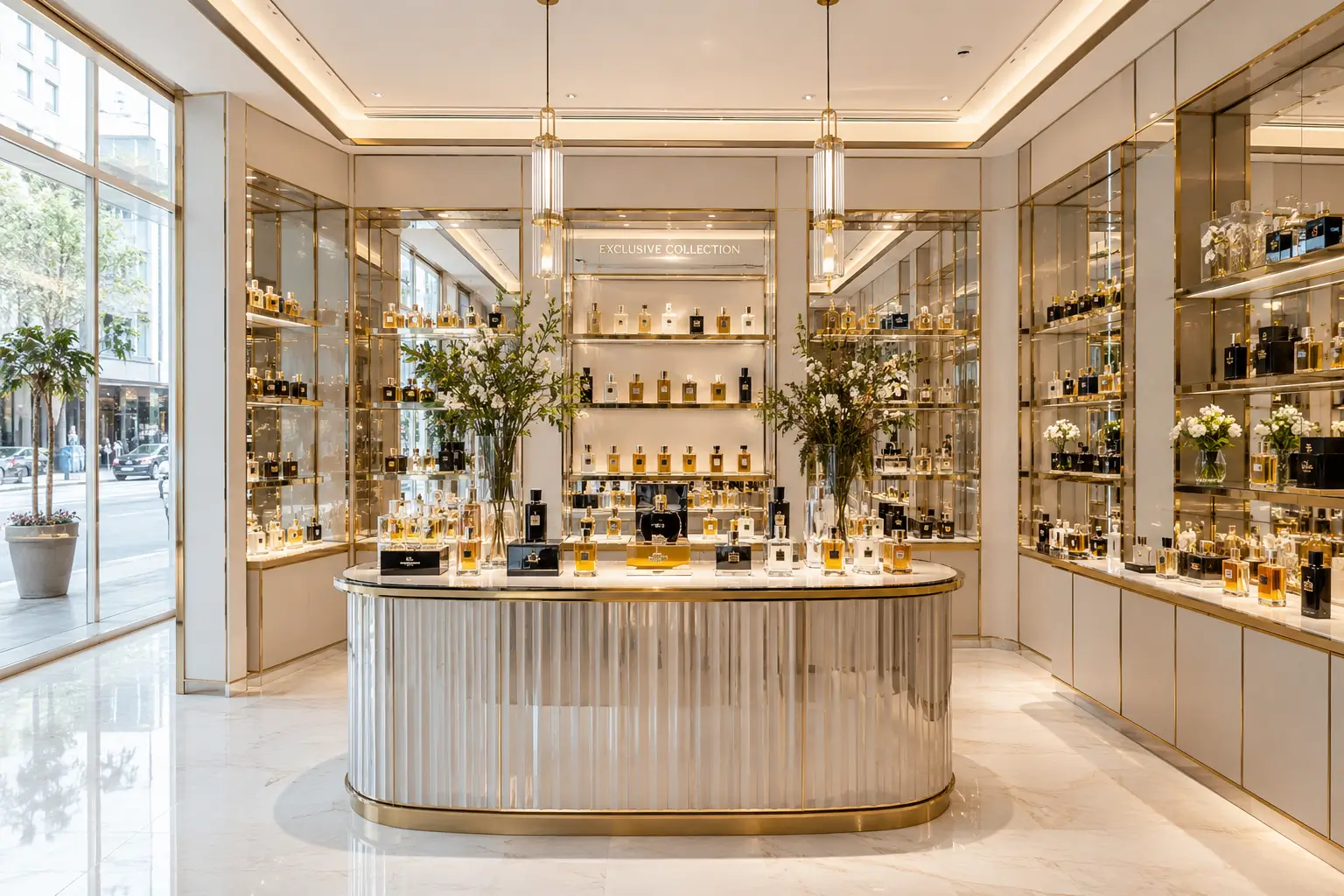
Custom perfume display cabinets do more than hold fragrance bottles—they create a refined retail environment that strengthens product visibility, brand identity, and customer engagement.
By combining glass shelving, integrated lighting, premium finishes, tester areas, secure storage, and carefully planned product zoning, perfume cabinets help customers discover, compare, and sample fragrances more comfortably. A well-designed display system can also highlight signature collections, support brand storytelling, and keep the store organized without losing its luxury appeal.
To create perfume display cabinets that are both visually premium and commercially effective, retailers need to consider structure, materials, lighting, tester placement, storage, security, and brand presentation. The following explain the key design elements that shape a successful fragrance display system.
Why Custom Perfume Display Cabinets is Important?
Perfume is not sold only through packaging or scent. In a physical store, customers first experience fragrance through light, reflection, color, spacing, and the way each bottle is positioned within the cabinet. A custom perfume display cabinet gives the retailer control over those details, so the product looks intentional instead of simply placed on a shelf. When the fixture is designed around the brand, even a small fragrance bottle can feel valuable before the customer picks it up.
Standard cabinets often create practical problems for fragrance retail. Shelf heights may not match bottle collections, tester areas may become crowded, and lighting may create glare instead of clarity. Custom cabinets solve these problems by adjusting dimensions, shelf spacing, glass type, storage locations, lighting angles, and service access around the real selling process. For luxury fragrance stores, this matters because presentation must support both beauty and daily operation.
A well-designed cabinet also improves the customer journey. It can separate hero products from daily bestsellers, guide shoppers from discovery to testing, and make staff consultation easier. This is why many fragrance brands choose custom perfume and cosmetic showcase solutions instead of generic display furniture. The cabinet becomes part of the store experience, not just a container for merchandise.
Define the Fragrance Brand Story First
Before cabinet drawings begin, the brand story should be clear. A niche perfume boutique may want a warm, intimate atmosphere with darker finishes, soft reflections, and lower lighting contrast. A contemporary fragrance chain may prefer clean white surfaces, champagne metal trims, bright glass shelves, and a more open display rhythm. These decisions affect the cabinet shape, finish selection, lighting temperature, handle details, and even how testers are arranged.
Brand identity should also influence product hierarchy. Signature scents, seasonal launches, gift sets, refill lines, and discovery kits should not compete for the same visual position. Custom perfume cabinets can create zones that tell a story step by step: first the hero bottle, then the collection, then the tester, and finally related products. This makes browsing easier and helps the customer understand the brand without needing every detail explained by staff.
For international rollouts, brand consistency becomes even more important. A fragrance brand opening counters in shopping malls, department stores, airports, and boutique streets needs cabinets that can adapt to different footprints while keeping the same recognizable design language. ONI Shopfitting supports this through custom retail display solutions that turn visual concepts into repeatable store fixture systems for different locations.
Plan the Customer Journey Around Discovery and Testing
Perfume shopping is a slow, sensory process. Customers compare notes, spray testers, pause, return to the shelf, and often ask staff for guidance. A cabinet layout should support this behavior instead of forcing shoppers to lean over crowded shelves or search for testers in random positions. The best perfume display cabinets create a clear journey from visual attraction to product interaction.
Discovery zones should be easy to read from a distance. This can be achieved through hero niches, backlit panels, elevated plinths, glass risers, and clean spacing between collections. Once the customer comes closer, testers should be placed at comfortable hand height with enough surface area for blotter strips, sample cards, and consultation tools. This is where store design directly affects conversion, because a customer who can test easily is more likely to stay longer and compare more products.
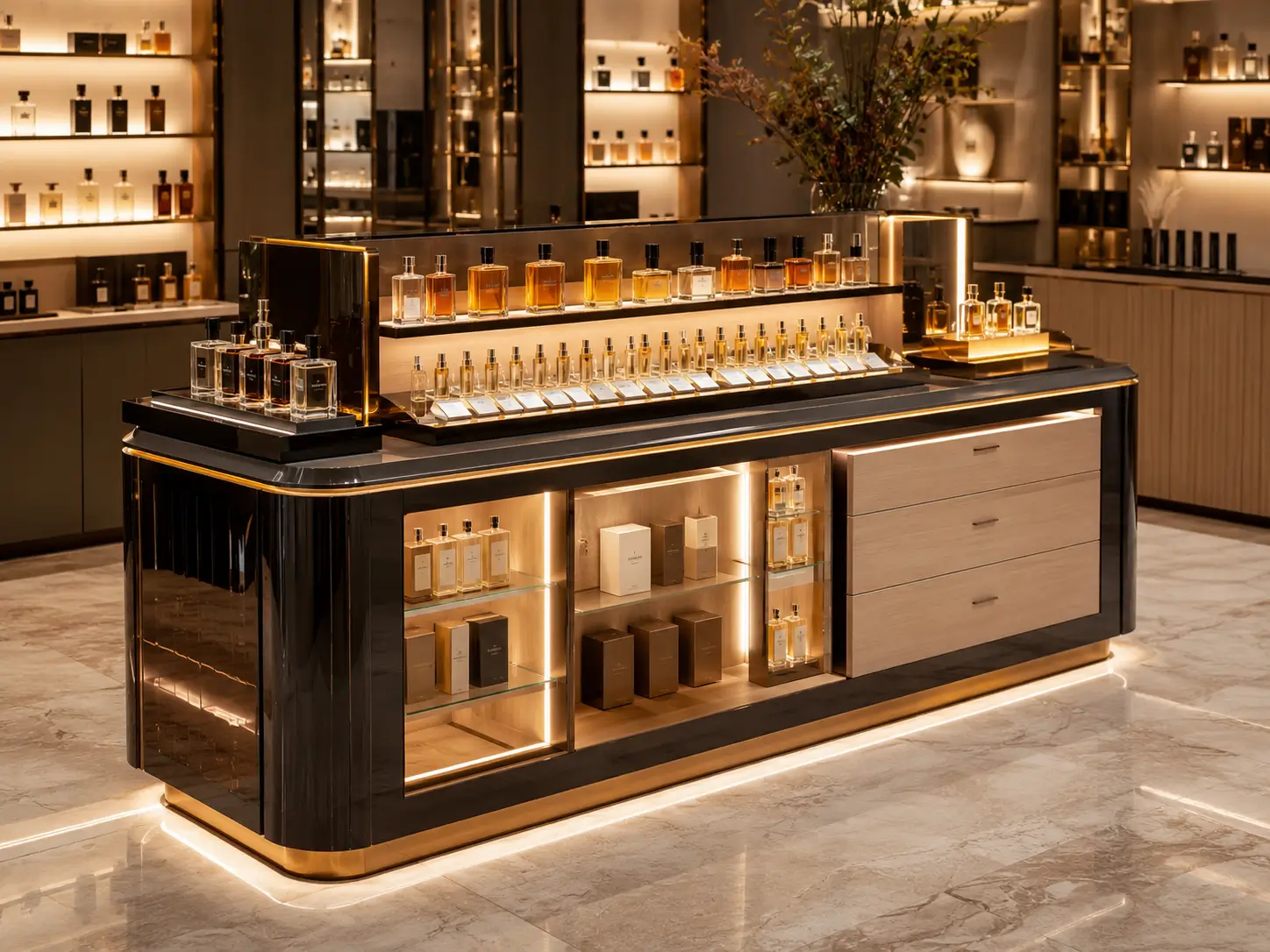
Retailers can also use cabinet planning to reduce friction for staff. Drawers, lower cabinets, and rear-access storage should hold extra testers, tissue, blotters, stock, cleaning tools, and packaging materials. When staff can replenish products quickly and keep the display clean, the store feels more premium throughout the day.
Use Surface Finishes to Create a Luxury Feeling
In perfume retail, customers buy more than a cabinet; they respond to touch, reflection, and texture. Surface finish has a major influence on perceived luxury because it controls how the cabinet catches light and how close-up details feel to the hand. High-gloss lacquer, brushed stainless steel, champagne PVD metal, wood veneer, stone-effect panels, mirror backs, microfiber pads, and leather-like surfaces each create a different emotional signal.
The most successful perfume cabinets usually combine several finish types instead of relying on one material. A glossy surface can create brightness, while a brushed metal trim adds precision and edge definition. A mirror back panel can increase depth, while a soft tray insert protects bottle bases and adds a tactile detail. This layered approach makes the cabinet look refined without becoming visually heavy.
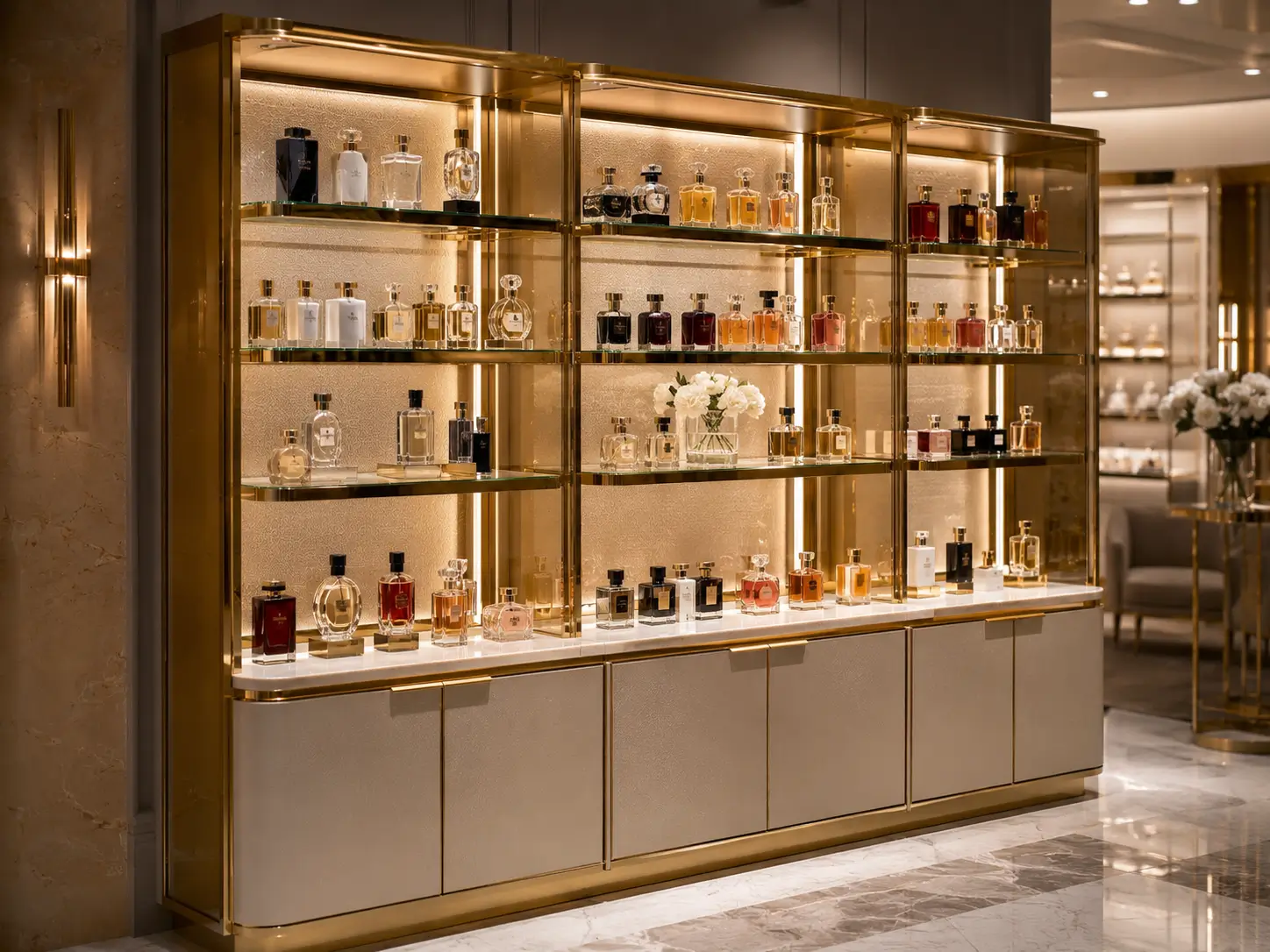
Finishes should also be chosen for durability and maintenance. Perfume stores deal with fingerprints, spray residue, alcohol exposure, cleaning routines, and constant customer contact. Customer-facing areas may use premium decorative finishes, while structural zones can use stronger materials that support stability and cost control. For brands needing a reference direction, a luxury fragrance display cabinet can show how glass, lighting, and refined materials work together.
Design Lighting Around the Perfume Bottle
Lighting should be planned around the perfume bottle rather than treated as a simple cabinet accessory. Fragrance bottles often combine transparent glass, reflective surfaces, colored liquids, metallic caps, embossed details, and printed labels. Poorly positioned lighting can create strong glare, distort product colors, or make labels difficult to read. A well-designed lighting system enhances the shape, texture, and transparency of each bottle while keeping branding and product information clearly visible.
Custom perfume display cabinets can incorporate LED shelf lighting, vertical side lighting, backlit panels, integrated light strips, or focused accent lights. Warm light can create a luxurious and intimate atmosphere, while neutral light helps preserve accurate bottle and packaging colors. The light source should remain hidden where possible, distribute brightness evenly, and avoid shining directly into customers’ eyes. Cabinets should also provide convenient access to drivers, wiring, and light strips for future maintenance or replacement.
Energy efficiency and heat control are equally important because perfume displays may remain illuminated throughout long retail hours. Low-heat, energy-efficient LED systems can reduce operating costs, protect cabinet finishes, and prevent excessive heat around fragrance products. ONI also shares retail lighting ideas through its cosmetic store lighting guide, which is relevant to fragrance and beauty fixture planning.
Balance Visibility, Security, and Accessibility
Perfume display cabinets need to present fragrance products clearly while providing reliable protection for valuable inventory. Luxury perfume bottles are compact, easy to pick up, and often expensive, which makes security an important part of cabinet design. However, excessive locks or fully enclosed displays can reduce customer interaction and make the retail environment feel less welcoming. A successful design should protect products without preventing customers from discovering, viewing, and testing fragrances.
Different security measures can be selected according to the product value and display function. Tempered glass doors, concealed locks, secure drawers, reinforced shelves, magnetic closures, and staff-access panels can improve protection while maintaining a clean and premium appearance. Tester bottles may be displayed in open areas under staff supervision, while boxed inventory, premium collections, and limited-edition fragrances can be stored in lockable cabinets. This layered approach allows customers to explore products freely while helping retailers control inventory risk.
Security also depends on the overall construction quality of the fixture. Stable cabinet bases, polished glass edges, durable hinges, strong shelf supports, secure electrical wiring, and reliable hardware all contribute to safer daily operation. By considering visibility, accessibility, structural safety, and product protection from the beginning, retailers can create perfume cabinets that support both a refined shopping experience and long-term commercial use.
Create a Better Tester and Sampling Area
The tester area is one of the most active parts of a perfume store. Customers need space to spray, smell, compare, and wait between scents. If the tester zone is too small, bottles become messy, blotter strips spread across the counter, and the luxury feeling quickly disappears. Custom perfume display cabinets can solve this by building tester surfaces directly into the fixture layout.
A good sampling area should include a durable top surface, easy-clean materials, comfortable working height, clear tester positions, and hidden storage for blotters and cleaning supplies. The cabinet can also include small product signs, removable trays, or dedicated holders for discovery sets. These details make the testing process feel guided and intentional instead of crowded and improvised.
Tester planning should match the store’s selling style. A self-service boutique may need more open tester access, while a high-end consultation counter may place testers closer to staff and create a more personal experience. For fragrance retailers that also sell cosmetics, skincare, or gift sets, modular tester zones make it easier to adjust the store layout during seasonal campaigns and product launches.
Choose Materials That Match Luxury Positioning
Material selection affects both the visual result and the long-term performance of perfume cabinets. Common materials include tempered glass, stainless steel, MDF, plywood, lacquer, acrylic, mirror panels, stone-effect surfaces, wood veneer, LED components, leather-like tray inserts, and microfiber lining. Each material has a different role, so the cabinet should be engineered as a complete system rather than a collection of decorative parts.
For example, tempered glass protects products while keeping the display transparent. Stainless steel trims can create a crisp premium edge, while MDF or plywood provides the cabinet body for customized shapes. Wood veneer adds warmth, lacquer adds polish, and microfiber or soft tray inserts protect product surfaces. When these materials are combined correctly, the cabinet feels luxurious and remains practical for daily use.
Weight, installation, shipping, and maintenance should be reviewed during material selection. A flagship boutique can use more immersive and detailed finishes, while a department store counter may require stronger durability and easier maintenance. Airport retail fixtures may need even more robust materials because of higher traffic and faster shopping behavior. ONI’s experience in engineering, production, packing, and global delivery helps brands make these decisions before manufacturing begins.
Design Storage for Daily Retail Operation
A luxury perfume cabinet should look clean from the customer side, but it must also work hard behind the display surface. Staff need easy access to stock, boxed products, gift packaging, ribbons, tester refills, cleaning supplies, and promotional materials. Without planned storage, the store may rely on visible boxes or frequent trips to a back room, both of which reduce efficiency.
Custom cabinets can include drawers, sliding doors, lockable compartments, pull-out trays, rear service panels, and adjustable shelves. These storage features should be placed according to staff workflow. Fast-moving products should be easier to reach, while backup stock can be stored in lower compartments. For counters, staff-side storage can support consultation and checkout without cluttering the customer-facing display.
Storage also helps maintain the luxury image of the store. When replacement products and tools are hidden but accessible, staff can keep surfaces clean and displays consistent throughout the day. This is especially important for fragrance launches, holiday gifting seasons, and high-traffic retail environments where display standards must remain high from opening to closing.
Connect Cabinets With the Full Store Experience
Perfume display cabinets should not be designed separately from the rest of the store. Wall bays, island counters, tester tables, cashier counters, consultation desks, brand graphics, mirrors, and lighting all need to work together. If one cabinet looks premium but the surrounding environment feels disconnected, the customer experience becomes less convincing.
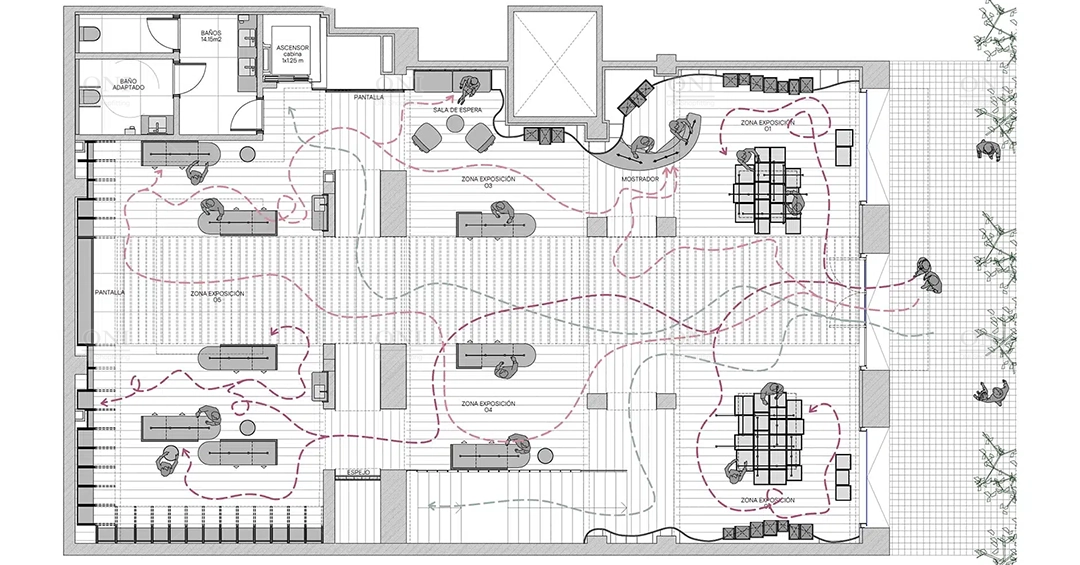
A complete store plan should define where customers enter, which products they see first, where they pause, how they test, and where staff complete consultation or payment. Cabinets can then be positioned to support this movement. Wall cabinets may create brand storytelling zones, island displays can attract customers from multiple directions, and consultation counters can support high-value purchases with a calmer service experience.
This full-store approach is especially useful for brands expanding across multiple locations. A cabinet module can be standardized for brand consistency, while dimensions and combinations can be adjusted for different store footprints. Related fixture directions, such as a frosted oak cosmetics cabinet, can also inspire material combinations for fragrance, cosmetics, and skincare areas within one retail environment.
ONI Shopfitting Supports Perfume Display Projects
ONI Shopfitting supports perfume display cabinet projects from early concept development to production and delivery. With 25 years of industry experience and a 30,000-square-meter headquarters in Guangzhou, China, ONI can help retailers, designers, contractors, and regional shopfitting partners turn design ideas into manufacturable fixture systems. This includes material selection, structural detailing, lighting integration, prototyping, production, quality control, packaging, and logistics coordination.
For global fragrance brands, ONI’s value is not only production capacity but also project coordination. A store fixture program may require consistent cabinets across boutiques, department store counters, pop-up stores, travel retail spaces, and partner locations. ONI can help standardize key design elements while adapting modules to site conditions, local installation requirements, and different retail formats.
The same support is valuable for interior design firms and contractors. Designers need a manufacturer that can protect creative intent while solving technical details, and contractors need reliable production timing, clear documentation, and packaged fixtures that are easier to install. ONI’s one-stop retail store display cabinet solution gives project teams a practical path from concept to finished retail environment.
Summary
Custom perfume display cabinets combine premium finishes, carefully planned lighting, secure product presentation, practical storage, and brand storytelling to create a refined fragrance retail experience. When these elements work together, the cabinets do more than hold perfume bottles—they improve product visibility, encourage customer interaction, protect valuable inventory, support daily store operations, and strengthen the overall brand image.
Frequently Asked Questions
What materials are best for custom perfume display cabinets?
Tempered glass, stainless steel, lacquered MDF, plywood, mirror panels, wood veneer, acrylic, LED components, and soft tray linings are commonly used. The best choice depends on brand positioning, durability needs, store format, and the desired luxury atmosphere.
How does lighting improve perfume display cabinets?
Lighting highlights bottle shape, liquid color, label detail, and shelf hierarchy. Integrated LEDs, backlighting, and side lighting can make products more visible and premium, while careful placement reduces glare and supports a more comfortable customer experience.
Can ONI Shopfitting customize perfume cabinets for multiple store locations?
Yes. ONI Shopfitting can support scalable perfume cabinet programs for boutiques, counters, department stores, pop-ups, and international rollouts, including design engineering, production, packaging, logistics, and installation guidance.
Scroll to Top
Contact Us Now
Fill out the form below, and we will be in touch shortly.
Thank you for your inquiry! We have received your message and will get back to you as soon as possible.