
Cosmetic Display Cabinets and Stands for Lipstick, Foundation, and Skincare Products

Cosmetic display cabinets and stands help beauty retailers present lipstick, foundation, and skincare products with stronger visibility, clearer product organization, and better customer interaction.

Cosmetic display cabinets and stands can be used for lipstick, foundation, skincare, fragrance, beauty tools, and tester products. They improve product visibility, make testers easier to access, provide practical storage, support customer browsing, and strengthen brand presentation. The right display solution should be planned according to product type, store layout, lighting design, material selection, display capacity, and brand positioning.

To create a more effective cosmetic retail display, you need to understand how different product categories should be presented. The following explains how to plan display cabinets and stands for lipstick, foundation, skincare, and other beauty products in a clear and practical way.

What Are Cosmetic Display Cabinets and Stands?
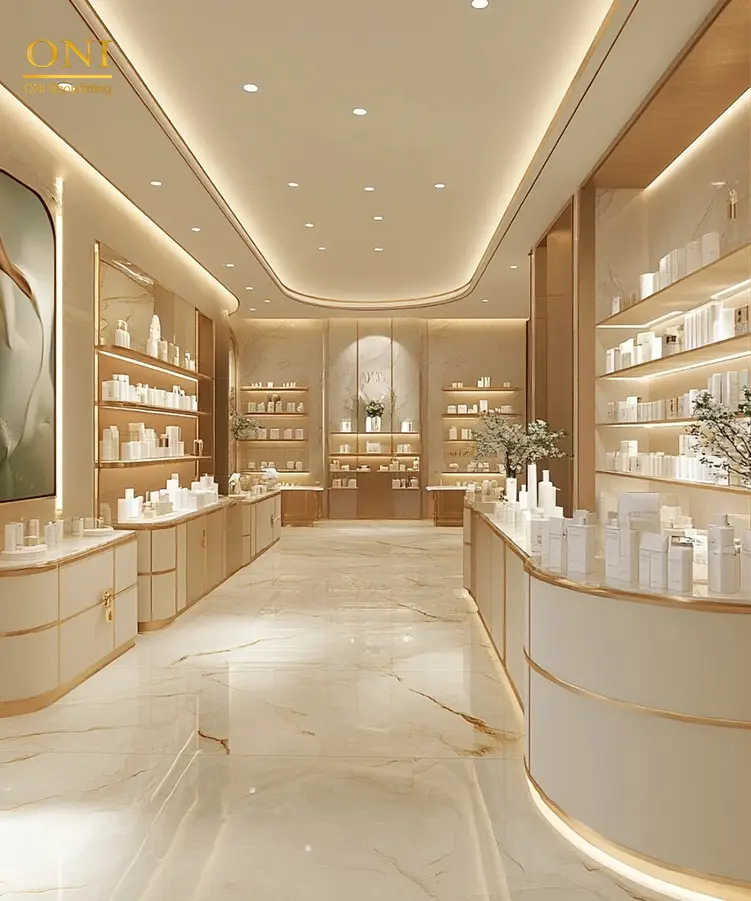
Cosmetic display cabinets and stands are specialized retail fixtures designed for beauty products. They are different from ordinary shelves because cosmetic products are usually small, highly visual, and frequently tested by customers before purchase.
A cosmetic display cabinet is often used for structured product presentation, wall displays, illuminated shelving, premium skincare lines, and secure storage. A cosmetic display stand is usually more flexible and can be used for lipstick collections, foundation testers, seasonal promotions, new arrivals, or freestanding product zones.
Together, cabinets and stands help create a complete retail display system. For brands planning a full store environment, ONI Shopfitting’s custom retail display solutions show how fixture design, product presentation, and store layout can work together.
cosmetics showcase

Why Product Category Should Guide Display Design

Different cosmetic categories require different display logic. Lipstick is usually selected by shade, finish, and collection. Foundation is selected by skin tone, undertone, formula, and coverage. Skincare is often selected by routine, ingredient, skin concern, or product benefit.

Because customer behavior changes by category, the display structure should also change. A lipstick stand should make color comparison fast. A foundation display should help customers identify the right shade. A skincare cabinet should communicate trust, cleanliness, and product value.

When display design follows product category logic, customers can find what they need more easily and make purchase decisions with more confidence. Clear category zoning, suitable shelf height, tester placement, lighting, mirrors, signage, and storage all help improve the shopping experience. For beauty retailers, category-based display design is not only about making products look attractive. It also helps guide customers from browsing to testing, comparison, consultation, and final purchase.

Lipstick Display Cabinets and Stands

Lipstick products need strong color visibility and precise organization. Customers often compare several shades before making a decision, so the fixture should make shade families, finishes, and collections easy to understand at a glance.
A good lipstick display stand may use angled trays, acrylic holders, tester slots, product wells, mirrors, and lighting. These details help customers browse quickly while keeping testers separated from sellable products.
For premium lipstick collections, the display should also support brand identity. High-gloss lacquer, metal trims, illuminated logos, and custom color panels can make the display feel more refined while still keeping the products easy to access.

Foundation Display Cabinets and Tester Units

Foundation displays require careful planning because shade selection is one of the most sensitive parts of the beauty shopping journey. Customers need to compare light, medium, and deep shades, as well as undertones such as warm, cool, and neutral.

A foundation display cabinet or tester unit should organize products in a clear sequence. The layout should help customers and staff locate shades quickly, while mirrors and good lighting support more accurate testing.

For foundation products, the display should also provide enough tester space, clean sample areas, and practical storage for backup stock. Tiered shelves, drawer storage, shade labels, LED lighting, and integrated mirrors can make the testing process smoother and more professional. A well-designed foundation display does not only present products clearly. It also helps customers compare shades with confidence, improves staff consultation efficiency, and creates a more trustworthy beauty retail experience.


Skincare Product Display Cabinets

Skincare products usually need a cleaner and more professional display style. Unlike color cosmetics, skincare often communicates product benefits, ingredients, routines, and trust.
A skincare display cabinet can organize products by function, such as cleanser, toner, serum, moisturizer, sunscreen, mask, or treatment. This helps customers understand the routine and compare products more confidently.
For premium skincare brands, the cabinet should feel calm and well-structured. ONI’s frosted oak cosmetics cabinet is a useful example of how warm materials, shelving, and lighting can support a refined beauty retail environment.

Wall-Mounted Cosmetic Display Cabinets

Wall-mounted cosmetic display cabinets help retailers use vertical space efficiently. They are especially useful for skincare, fragrance, makeup collections, and brand category walls where product organization and visual impact are both important. A wall cabinet can include shelving, illuminated panels, mirrors, drawer storage, tester trays, signage, and brand graphics. This allows the wall to become a complete product presentation area rather than simple shelving.

For cosmetic stores with limited floor space, wall-mounted cabinets can display more products without making the store feel crowded. They help keep the main walkway open while creating a strong visual background for the brand. Adjustable shelves, LED lighting, glass panels, and hidden storage can also make the display more flexible for different product sizes and seasonal promotions.

A well-designed cosmetic wall cabinet should balance display capacity, product visibility, lighting, storage, and brand identity. When planned together with gondola displays, tester stations, and cashier areas, wall-mounted cabinets can create a cleaner, more organized, and more professional beauty retail environment.

Freestanding Cosmetic Display Stands

Freestanding cosmetic display stands are useful when retailers need flexible product placement. They can be positioned near entrances, in central aisles, beside checkout counters, or inside promotional areas.
This type of display works well for new arrivals, seasonal campaigns, best sellers, travel-size products, and limited-edition collections. Because customers can often approach the stand from multiple sides, it can create stronger product interaction.
The height and structure of a freestanding stand should be carefully controlled. If the stand is too tall, it may block store visibility. If it is too light, it may not feel stable enough for high-traffic retail spaces.

Tester Zones and Customer Interaction

Tester zones are essential in cosmetic retail because many customers want to try colors, textures, formulas, or fragrances before buying. A well-designed tester area can increase confidence and encourage purchase decisions. The tester zone should feel clean, convenient, and easy to maintain. Mirrors, tissue holders, disposable applicator storage, removable trays, and easy-clean surfaces can improve the customer experience while helping staff keep the area organized.

For beauty retailers, tester zones are not only functional areas. They are also important interaction points between customers, products, and sales staff. When testers are arranged clearly by category, shade, formula, or product benefit, customers can compare products more easily and spend more time engaging with the brand.

A practical tester zone should provide enough countertop space, proper lighting, clear product labels, hidden storage, and safe electrical planning for illuminated mirrors or display fixtures. Good design can reduce clutter, improve hygiene, support staff consultation, and make the testing process feel more professional. When planned together with display cabinets and product shelves, tester zones can help turn browsing into product trial, consultation, and purchase.

Storage, Refill, and Staff Operation
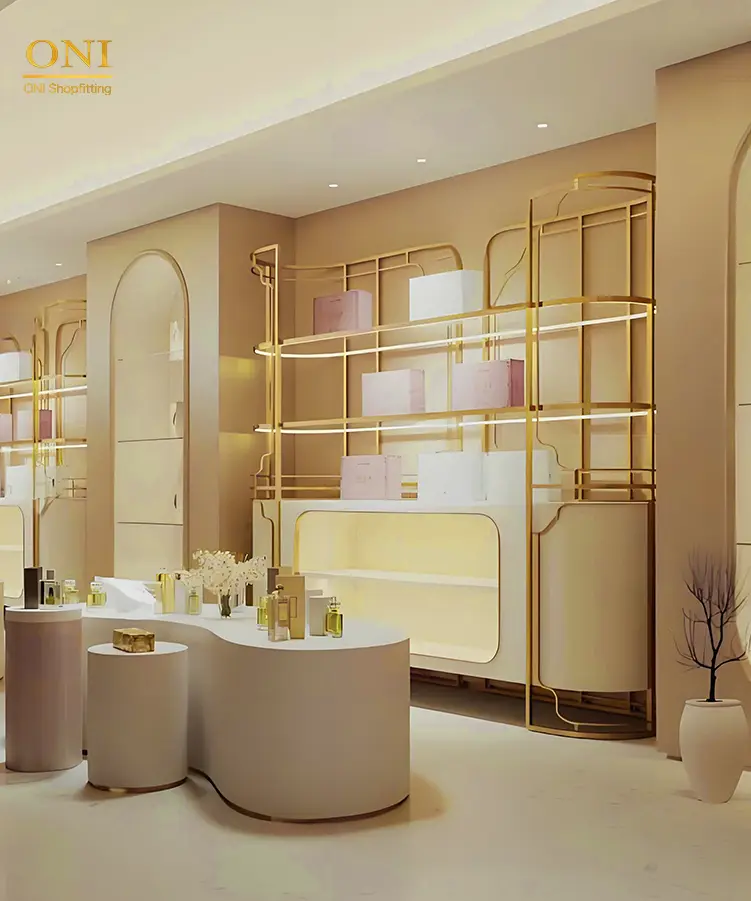
Cosmetic display cabinets and stands must support daily store operation, not only visual presentation. Staff need to refill products, replace testers, clean surfaces, update signage, and manage stock during busy retail hours.
A well-designed display can include hidden drawers, bottom storage, removable trays, labeled stock areas, and easy-access compartments. These details are often not obvious to customers, but they make a major difference for store efficiency.
Good operational design also keeps the sales floor neat. When extra stock is stored close to the display area, staff can refill quickly without leaving empty spaces or disrupting the customer experience.
ccosmetic retail stores


Materials, Lighting, and Finishes

Material selection affects durability, maintenance, and brand image. Cosmetic fixtures must handle frequent touching, product testing, cleaning, refilling, and long daily operating hours.
Common materials include MDF, plywood, acrylic, tempered glass, stainless steel, mirrors, lacquer, wood veneer, and LED components. Acrylic is useful for product holders and tester trays, while tempered glass and metal trims create a more premium look.
Lighting should be planned according to product type. ONI’s guide to cosmetic store lighting for cosmetic display fixtures explains how lighting can be integrated into shelves, counters, mirrors, and display cabinets.

Choosing the Right Display Solution

The right display solution depends on product type, store size, customer behavior, and brand positioning. A small beauty store may need compact wall cabinets and countertop stands, while a larger store may use wall systems, freestanding stands, gondolas, tester counters, and consultation areas together.
Retailers should think about how customers move through the store. Lipstick and foundation may need high-interaction zones, skincare may need a calmer presentation area, and promotions may need freestanding displays near high-traffic paths.
A complete cosmetic store usually combines several fixture types. For luxury beauty presentation references, ONI’s marble and gold cosmetic display concept shows how materials, lighting, and display cabinets can support a premium retail atmosphere.

Summary

Cosmetic display cabinets and stands help beauty retailers improve product visibility, tester access, storage, and brand presentation. ONI Shopfitting provides custom cosmetic display fixtures and full-store solutions for global beauty retail projects. Contact us now for a free quote.

Frequently Asked Questions

1. What is the best display for lipstick products?

Lipstick products are best displayed with shade-focused stands, angled trays, tester slots, mirrors, and lighting that helps customers compare colors quickly.

2. How should foundation products be displayed?

Foundation should be displayed by shade, undertone, formula, or collection, with tester access, mirror support, accurate lighting, and nearby staff consultation space.

3. Can ONI Shopfitting customize cosmetic display cabinets and stands?

Yes. ONI Shopfitting can customize cosmetic cabinets, lipstick stands, foundation tester units, skincare displays, lighting, materials, storage, and brand finishes.
Scroll to Top

Contact Us Now

Fill out the form below, and we will be in touch shortly.

Thank you for your inquiry! We have received your message and will get back to you as soon as possible.
Processing your request...