Different jewelry collections require different display solutions. The right showcase should match how each product is viewed, handled, illuminated, secured, and restocked.
Rings often suit horizontal glass counters, while necklaces need more vertical space. Bracelets, earrings, high-value pieces, and featured collections also require different showcase types and display positions.
For jewelry retailers, effective store planning means matching each collection with the right fixture while keeping the overall environment consistent. Below, we explore how to plan jewelry store display showcases for different jewelry collections.
Quick Jewelry Display Showcase Selection Guide
Different jewelry collections have different display requirements. The right showcase should support the way customers view and interact with the product while also considering lighting, accessibility, storage, display density, and security.
The table below compares common jewelry collections with suitable display showcases and highlights the main factor to consider for each category.
Jewelry Collection
Recommended Display Showcase
Main Planning Priority
Engagement & diamond rings
Horizontal glass counter
Close viewing, lighting and easy try-on
Necklaces & pendants
Wall showcase or tall glass cabinet
Vertical presentation and product spacing
Bracelets & bangles
Glass counter or island showcase
Multi-angle viewing and storage
Earrings
Counter or wall showcase
Clear organization and focused lighting
High-value jewelry
Locked feature showcase or secure cabinet
Security, controlled access and low density
New / featured collections
Island, entrance display or feature showcase
High visibility and visual impact
These recommendations provide a useful starting point, but the final showcase choice should also reflect the store layout, product quantity, brand positioning, and customer flow. Premium collections, for example, often benefit from more open spacing and lower display density than larger commercial ranges.
Choosing Display Showcases for Different Jewelry Collections
Each jewelry category creates a different merchandising challenge. The showcase should make the product easier to understand while also supporting lighting, daily sales operations, storage, and security.
1. Ring Display Showcases
Rings are usually best presented in horizontal glass display counters because customers need to examine stones, settings, finishes, and craftsmanship from a short distance. Engagement rings, wedding rings, diamond rings, and other fine jewelry also involve frequent try-on, so convenient staff access is important.
The display surface should provide a comfortable viewing angle, while integrated LED lighting can help highlight gemstones and fine details. GIA research on diamond appearance also shows that lighting and the surrounding viewing environment can significantly affect how a diamond appears. Premium rings generally benefit from more space between pieces, whereas larger collections can use organized trays or modular holders.
Built-in drawers or concealed storage below the display area can also keep additional sizes and inventory close to staff without overcrowding the visible showcase.
2. Necklace and Pendant Display Showcases
Necklaces need more vertical presentation space than most other jewelry categories. When they are displayed too flat or too closely together, customers may not fully see their length, shape, pendant position, or overall proportion.
Vertical wall showcases, tall glass cabinets, feature niches, and counters with necklace stands are therefore suitable choices. Premium or statement pieces can be positioned closer to eye level, with enough space around them to create a stronger focal point.
Directional or concealed lighting can emphasize gemstones, pendants, and metal finishes without making the lighting system itself visually dominant. Lower display density also helps individual necklaces remain easier to understand.
3. Bracelet and Bangle Display Showcases
Bracelets and bangles work well in glass counters and island showcases. Because they occupy more horizontal space than rings or earrings, the layout should clearly separate different collections rather than filling every available area.
Island showcases are particularly useful because customers can view the merchandise from several directions. Bracelets can also be grouped by collection, material, color, style, or price range to make differences easier to recognize. Since bracelet inventory can require considerable storage space, drawers beneath the display deck are a practical way to keep additional stock close to the selling area.
4. Earring Display Showcases
Earrings are small and highly detailed, so organization and viewing angle are especially important.
They can be displayed in horizontal counters, vertical wall showcases, small feature cabinets, or modular trays. Premium pieces may use individual holders, while larger collections can use a more systematic tray arrangement.
The front of the earring should remain easy to see. For diamond or gemstone earrings, slightly angled holders can improve visibility and light reflection. Focused lighting is useful for highlighting small details, although it should be positioned carefully to avoid excessive glare on the showcase glass.
5. High-Value Jewelry Display Showcases
High-value jewelry requires a stronger balance between presentation and protection. Suitable options include locked glass showcases, secure wall cabinets, freestanding feature displays, and VIP consultation showcases.
Depending on the project, the showcase can incorporate locking systems, suitable safety glass, concealed locks, reinforced structures, secure storage drawers, or provisions for alarms and sensors. Security should ideally be considered during fixture design rather than added after production. The Jewelers’ Security Alliance also maintains jewelry-industry resources related to showcases and retail security.
6. New and Featured Collection Displays
New arrivals and featured collections should be placed where they can attract attention quickly. Entrance displays, central island showcases, freestanding cabinets, and feature walls are effective options, especially when positioned along the main customer circulation path.
To distinguish these collections from regular merchandise, the display can use stronger visual emphasis through dedicated lighting, different display heights, branded elements, or more open product spacing. This helps create a clear focal point and makes the collection feel more important within the store.
How to Plan Jewelry Displays as a Complete Store?
Choosing the right showcase for each jewelry collection is only the first step. A good jewelry store layout should also make it easy for customers to move through the space and understand what each area is displaying. For example, new or featured collections can be placed near the entrance to attract attention, while wall displays, island showcases, and jewelry counters can guide customers naturally toward consultation and checkout areas.
The position of each display should also match how the jewelry is sold. High-value pieces are often better placed deeper inside the store, where staff can provide more personal service and control access more easily. Everyday or promotional collections can be placed in more visible, high-traffic areas. This helps the store create a smoother customer journey while making different product categories easier to browse.
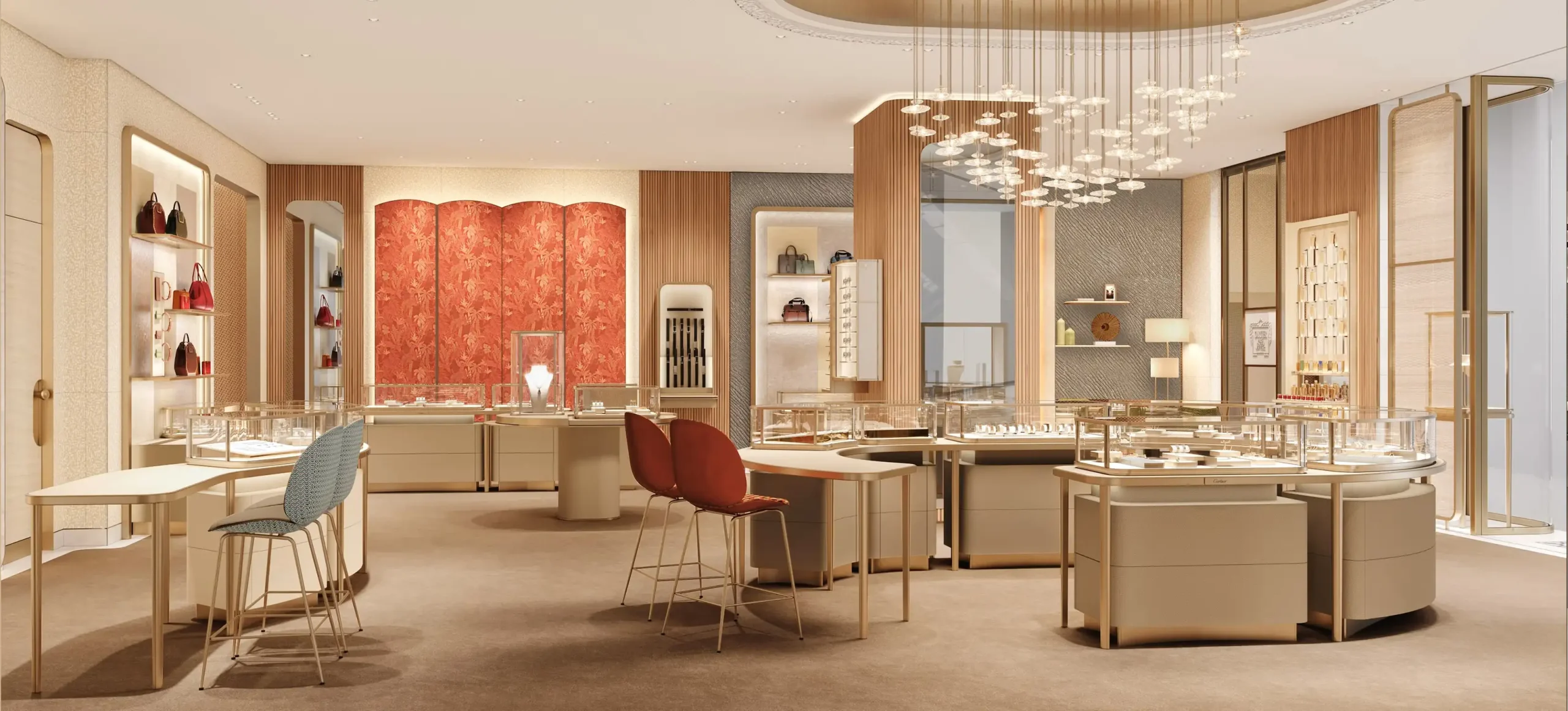
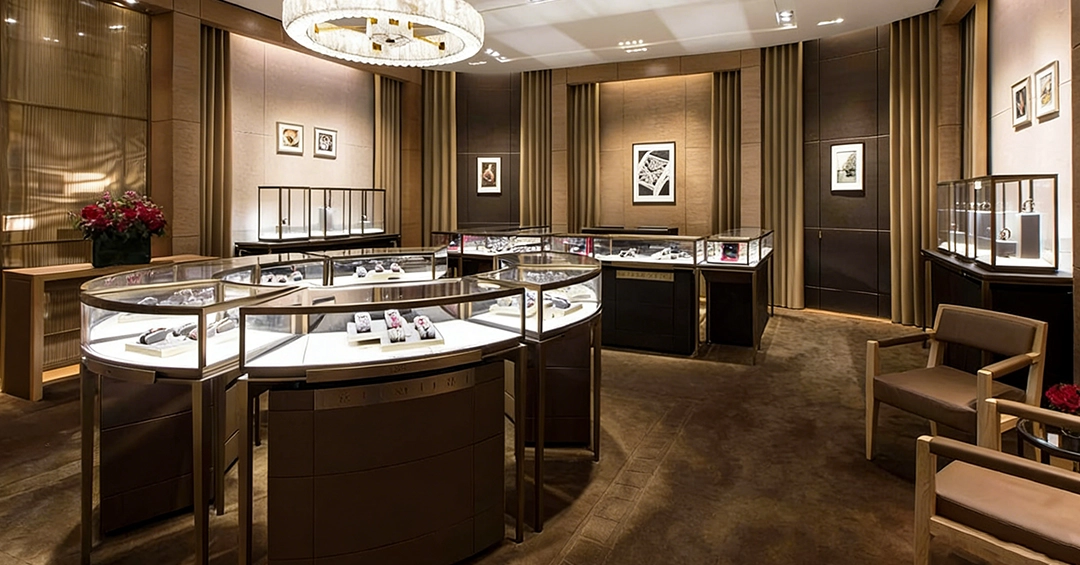
Although different collections may need different showcase styles, the overall store should still look consistent. Using coordinated materials, finishes, lighting, colors, and cabinet proportions can connect the different display areas together. Custom jewelry store displays make this easier because ring counters, necklace wall cabinets, island showcases, and secure luxury displays can be designed for different functions while still following the same brand style.
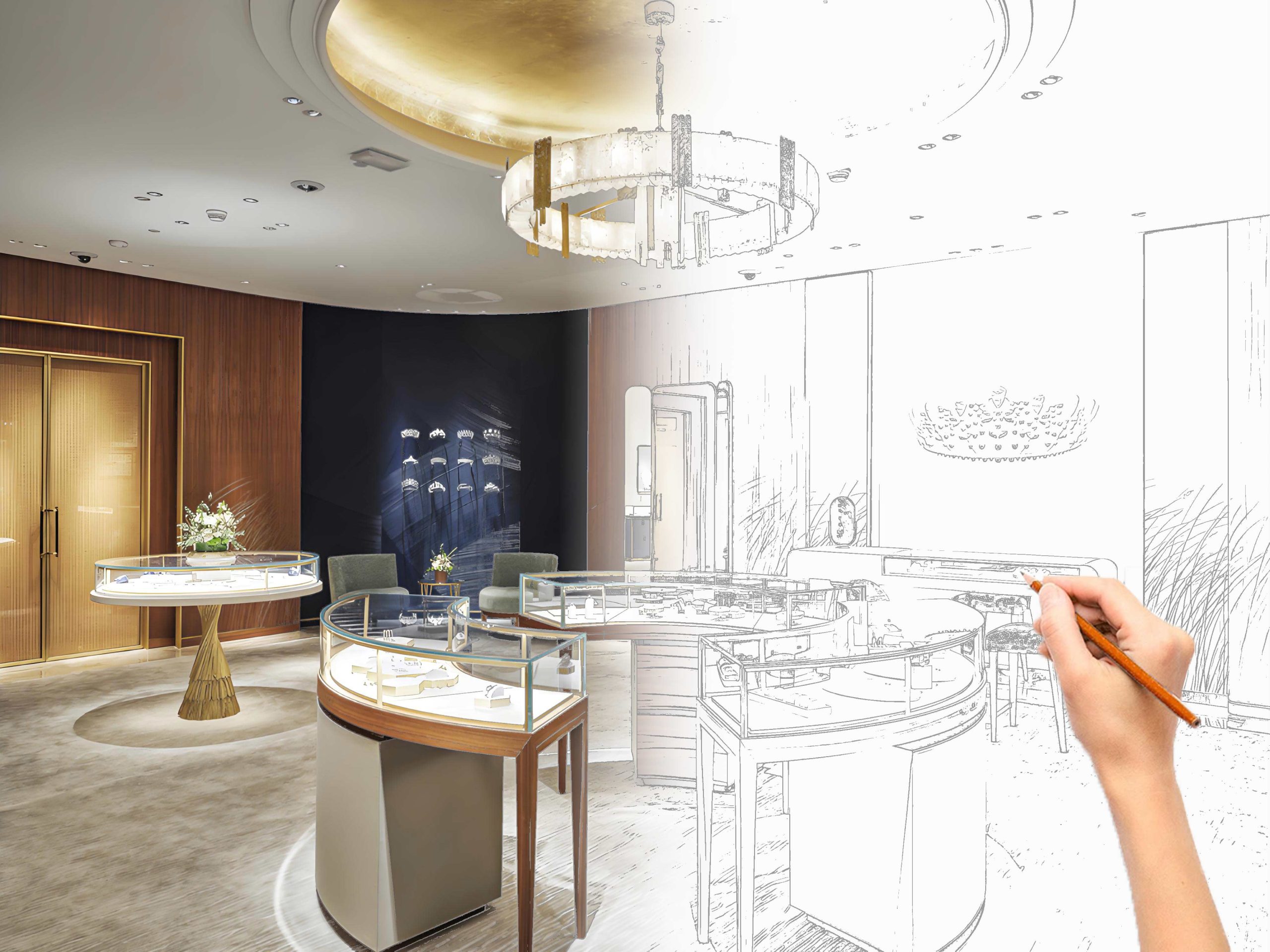
Before production begins, practical details such as showcase dimensions, glass specifications, lighting positions, drawer access, storage, locks, and installation requirements should also be reviewed. Resolving these details during design development helps reduce unnecessary changes later.
Summary
Effective jewelry store displays should be planned around the needs of each jewelry collection. Rings need close viewing and easy staff access, necklaces require more vertical space, earrings need clear organization, while high-value jewelry benefits from stronger security and lower display density.
Once these requirements are clear, different showcase types can be combined into one consistent store design through coordinated materials, finishes, lighting, and branding. The goal is not to repeat one cabinet style everywhere, but to create a display system where each showcase supports both the jewelry and the customer experience.
FAQ
Can One Type of Jewelry Showcase Be Used Throughout the Whole Store?
Yes, but it is usually not ideal. Different jewelry collections have different viewing, handling, and security needs, so several coordinated showcase types generally work better.
How Do I Choose Between Wall Showcases, Counters, and Island Displays?
Wall showcases suit vertical displays and save floor space. Counters are better for close viewing and try-on, while island showcases provide multi-directional visibility for central or featured collections.
What Information Should I Provide When Requesting Custom Jewelry Showcases?
Provide your store layout, jewelry categories, fixture quantities, preferred style, and project location. Adding key requirements for materials, lighting, storage, and security will help the manufacturer prepare a more accurate proposal.

 Get in touch with us today to start your jewelry store fixtures project.
 WhatsApp/Call: +86 186 2096 3396
 Email: sales1@onishopfitting.com
 Website: www.onishopfitting.com